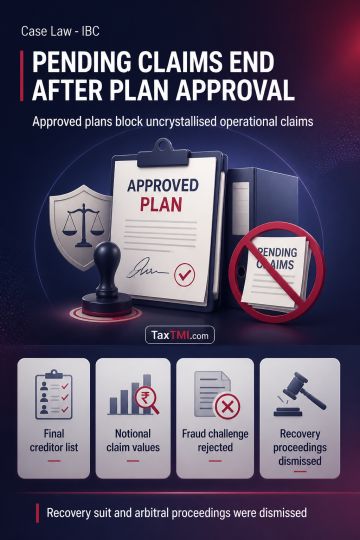
Clean slate principle extinguishes uncrystallised operational claims and bars continuation of pending recovery and arbitral proceedings after plan app...
Works contract classification governs composite layout-development contracts where VAT-paid goods are transferred alongside construction and infrastru...
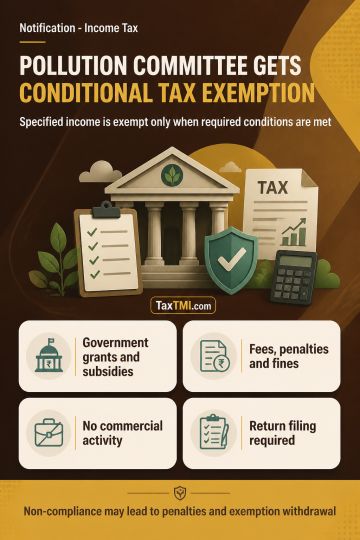
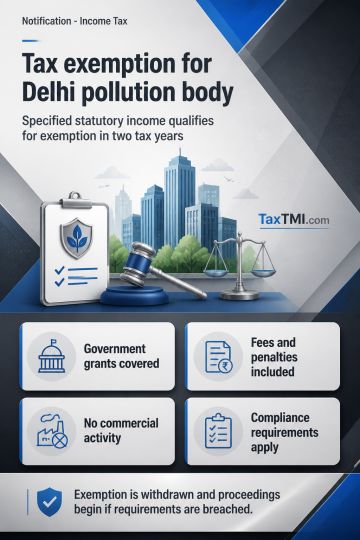
Specified income tax exemption for pollution control body remains conditional on non-commercial activity, unchanged income character, and return filin...
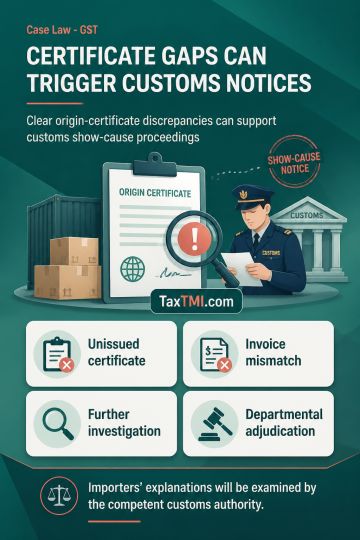
Jurisdictional facts in certificate-of-origin discrepancies can support customs show-cause proceedings, leaving factual explanations for departmental ...
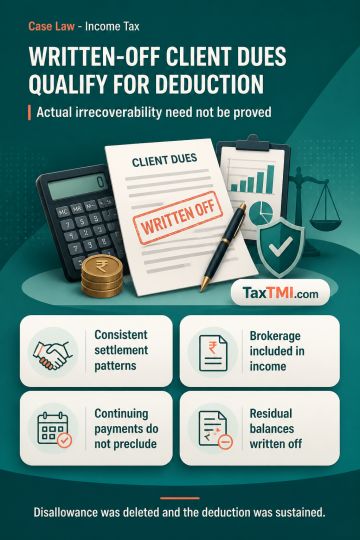
Bad-debt deduction for share-broking client dues may be claimed where outstanding client balances are treated as irrecoverable and written off in the accounts. Under amended section 36(1)(vii), actual irrecoverability need not be established. Continuing transactions or payments by clients do not preclude the claim where the broker follows a consistent settlement pattern under which clients pay agreed amounts and residual balances are written off. Client receivables qualify as debts when brokerage included in those receivables has been taken into account in computing income. The disallowance of the written-off client dues was deleted and the deduction sustained.
Bad-debt deduction for share-broking client dues may be claimed where outstanding client balances are treated as irrecoverable and written off in the accounts. Under amended section 36(1)(vii), actual irrecoverability need not be established. Continuing transactions or payments by clients do not preclude the claim where the broker follows a consistent settlement pattern under which clients pay agreed amounts and residual balances are written off. Client receivables qualify as debts when brokerage included in those receivables has been taken into account in computing income. The disallowance of the written-off client dues was deleted and the deduction sustained.
Note: It is a system-generated summary and is for quick reference only.
 TaxTMI
 of 4790







 Join Channel


 TaxTMI