Transaction value rejection requires reliable corroboration; refundable VAT is excluded and temporary registration does not defeat new-vehicle exempti...
Appellate jurisdiction remains available where a wrist-worn gold ornament cannot conclusively be characterised as imported baggage at the preliminary ...
Written complaint requirement bars cognizance on police reports for securities offences, while unsupported breach of trust and cheating allegations fa...
Risk-based postal import clearance standardises electronic assessment, document requests, duty realisation and delivery controls at Foreign Post Offic...
Customs Cargo Service Provider appointment extends custodianship to additional terminal land, subject to cargo-control, security and licence condition...
Page of 4786
Press 'Enter' after typing page number.
61 to 80 of 95714 Results
❮
❯
❯❯
0 / 200
Expand Note
Add to Folder
No Folders have been created
+
Are you sure you want to delete "My most important" ?
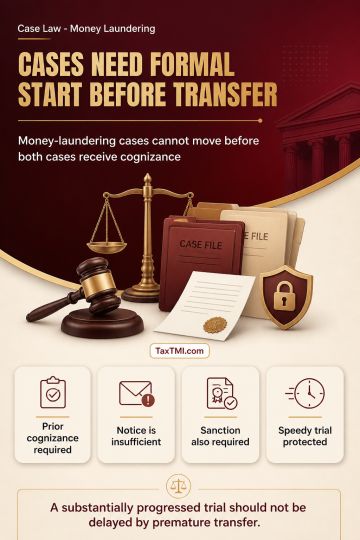
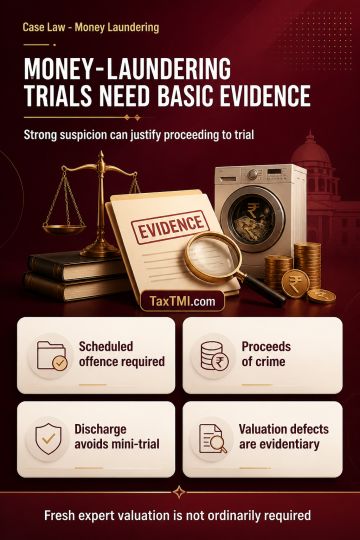
Money-laundering prosecution is described as requiring a scheduled offence, proceeds of crime generated from that offence, and their projection as untainted, including knowing assistance in related processes. Challenges to investigation or discharge grounds in predicate offences are presented as outside the scope of the money-laundering proceeding. The notes explain that discharge requires assessment of a prima facie case and that strong suspicion may justify trial without a mini-trial. They also state that alleged defects in an authorised valuation report are evidentiary matters, and fresh expert valuation is not ordinarily required; loss quantification mainly concerns the predicate offence.
Money-laundering prosecution is described as requiring a scheduled offence, proceeds of crime generated from that offence, and their projection as untainted, including knowing assistance in related processes. Challenges to investigation or discharge grounds in predicate offences are presented as outside the scope of the money-laundering proceeding. The notes explain that discharge requires assessment of a prima facie case and that strong suspicion may justify trial without a mini-trial. They also state that alleged defects in an authorised valuation report are evidentiary matters, and fresh expert valuation is not ordinarily required; loss quantification mainly concerns the predicate offence.
Note: It is a system-generated summary and is for quick reference only.
 TaxTMI
 of 4786

















 Join Channel


 TaxTMI