Just a moment...

Top
Help
×

By creating an account you can:

Logo TaxTMI
>
Call Us / Help / Feedback

Contact Us At :

E-mail: [email protected]

Call / WhatsApp at: +91 99117 96707

For more information, Check Contact Us

FAQs :

To know Frequently Asked Questions, Check FAQs

Most Asked Video Tutorials :

For more tutorials, Check Video Tutorials

Submit Feedback/Suggestion :

Email :
Please provide your email address so we can follow up on your feedback.
Category :
Description :
Min 15 characters0/2000
Add to...
You have not created any category. Kindly create one to bookmark this item!
Create New Category
Hide
Title :
Description :
❮❮ Hide
Default View
Expand ❯❯
Close ✕
🔎 Highlights - Adv. Search
TEXT SEARCH:

Press 'Enter' to add multiple search terms. Rules for Better Search

Search In:
Main Text + AI Text
  • Main Text
  • Main Text + AI Text
  • AI Text
Law:
---- All Laws----
  • ---- All Laws----
  • Income Tax
  • Direct Taxes
  • Benami Property
  • Central GST Laws
  • SGST - State GST Laws
  • Customs
  • FTP - Foreign Trade Policy
  • SEZ - Special Economic Zone
  • FEMA - Foreign Exchange Management
  • Companies Law
  • SEBI - Securities & Exchange Board of India
  • IBC - Insolvency and Bankruptcy
  • Law of Competition
  • PMLA - Money-Laundering
  • Indian Laws
  • Bill / Finance Bills
  • Wealth Tax
  • Service Tax
  • Central Excise
  • VAT / Sales Tax
Month:
---- All Months ----
  • ---- All Months ----
  • January
  • February
  • March
  • April
  • May
  • June
  • July
  • August
  • September
  • October
  • November
  • December
Year:
---- All Years ----
  • ---- All Years ----
  • 2026
  • 2025
  • 2024
  • 2023
  • 2022
  • 2021
  • 2020
  • 2019
  • 2018
  • 2017
  • 2016
  • 2015
  • 2014
  • 2013
  • 2012
  • 2011
Sort By: ?
In Sort By 'Default', exact matches for text search are shown at the top, followed by the remaining results in their regular order.
RelevanceDefaultDate
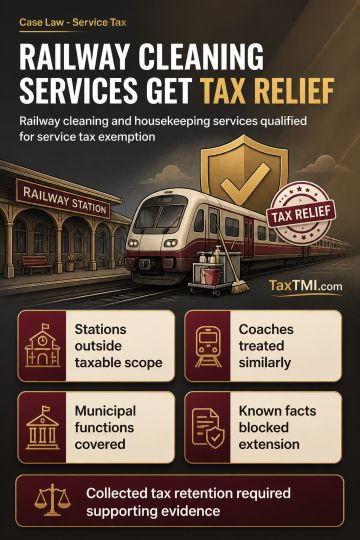
    Railway cleaning and onboard housekeeping qualified as exempt municipal sanitation services, while known facts prevented extended limitation.
    Secured creditor priority defeats State tax encumbrances, protecting SARFAESI auction purchasers from subsequent recovery against purchased assets.
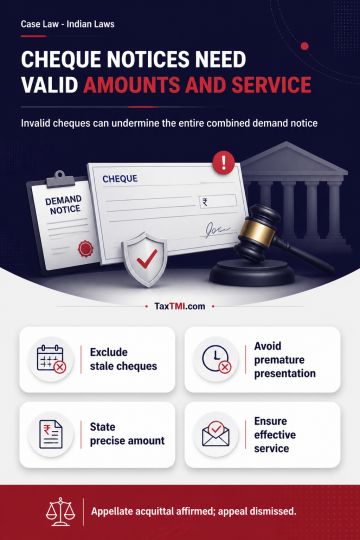
    Statutory demand notice must exclude stale or prematurely presented cheques and require valid service for cheque dishonour prosecution.
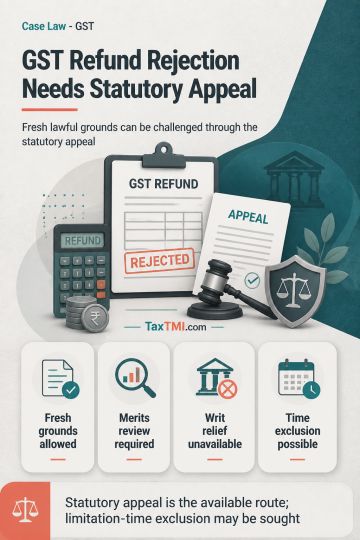
    Consequential GST refund rejection requires statutory appeal where fresh lawful grounds remain open after appellate remand.
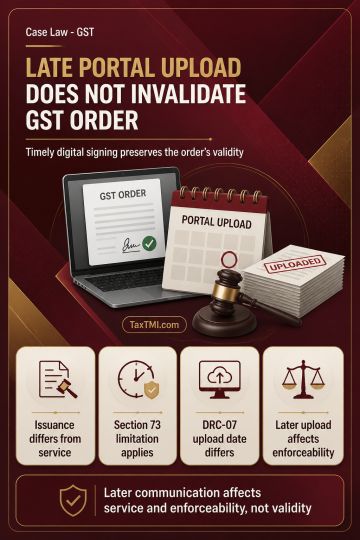
    GST adjudication order issuance within limitation remains valid despite later portal upload, which concerns service and enforceability.
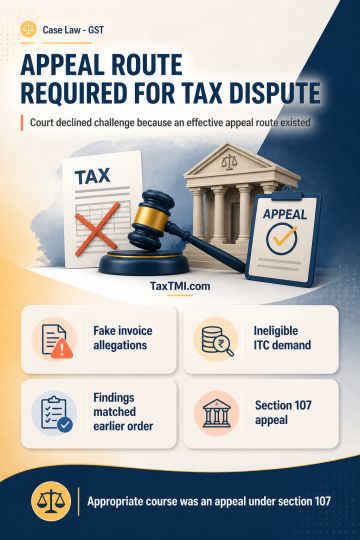
    Alternative statutory appeal remedy bars writ challenge to ineligible input tax credit demand based on alleged fake invoices.
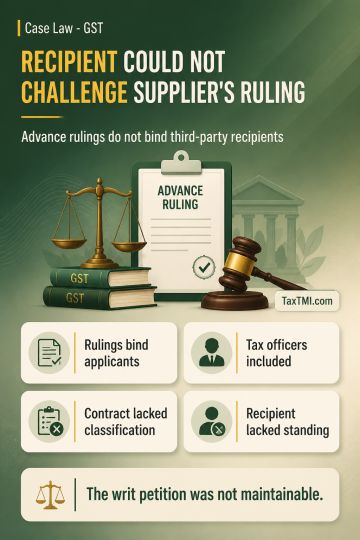
    Binding effect of advance rulings excludes supply recipients, leaving contractual GST reimbursement insufficient to establish writ standing.
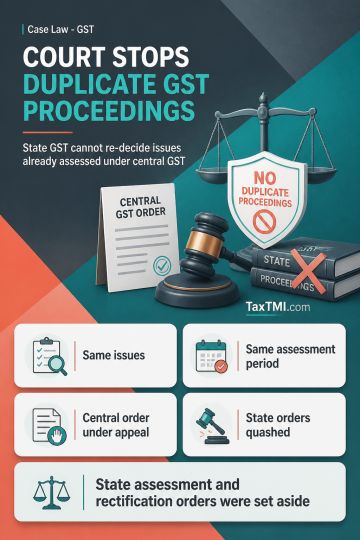
    Duplicative GST adjudication for the same issues and assessment period invalidates subsequent State GST assessment and rectification orders.
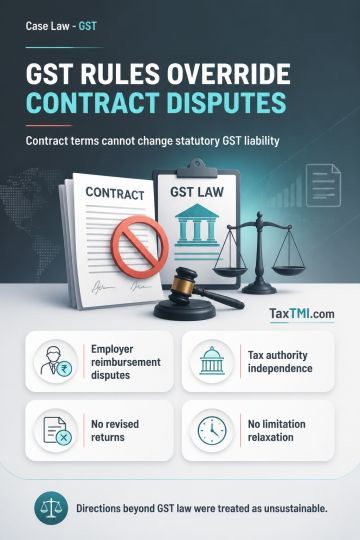
    Statutory GST liability overrides works-contract reimbursement disputes, limiting contractual claims and barring non-statutory return or waiver relief...
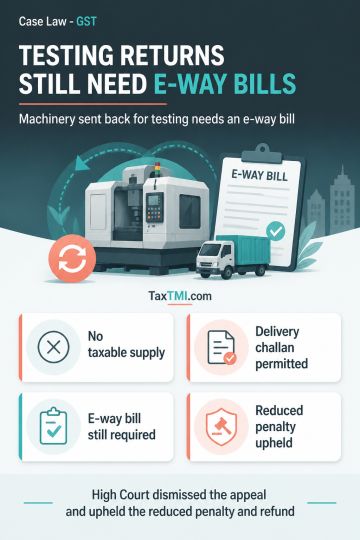
    E-way bill compliance applies to machinery returned for testing under delivery challans, despite no taxable supply arising.
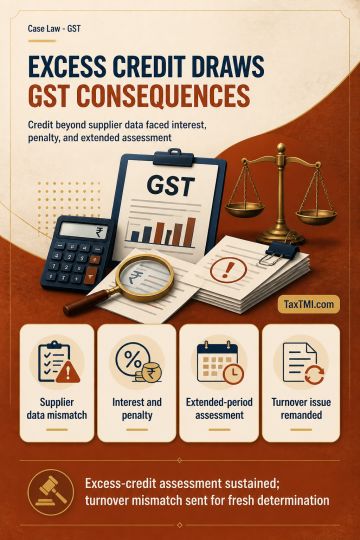
    Excess input tax credit beyond reflected supplier data attracts extended-period assessment, interest and penalty; turnover mismatch requires documenta...
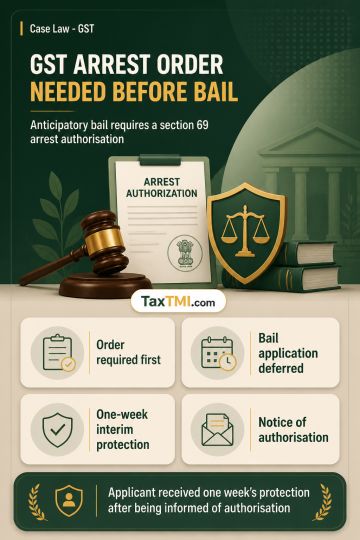
    Arrest authorisation under GST law is required before anticipatory bail can be considered, with limited interim protection available.
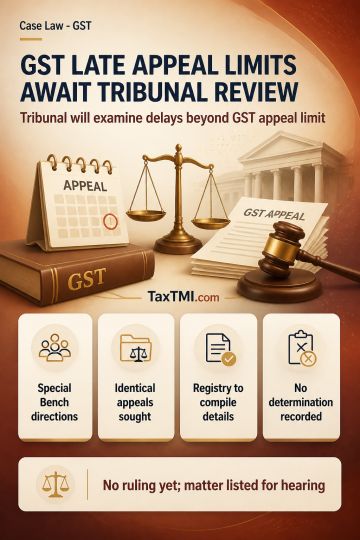
    Condonation beyond the statutory appeal-delay cap under GST awaits consideration after analogous appeals are placed before the Tribunal.
    Effective hearing in faceless reassessment requires notices to reach the assessee, prompting remand for fresh assessment proceedings.
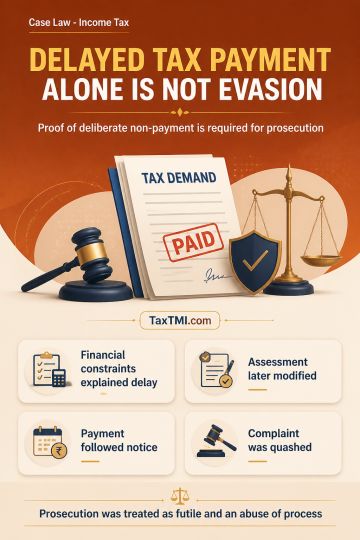
    Wilful tax-payment evasion requires evidence beyond delayed payment; financial constraints and later payment negate prosecution.
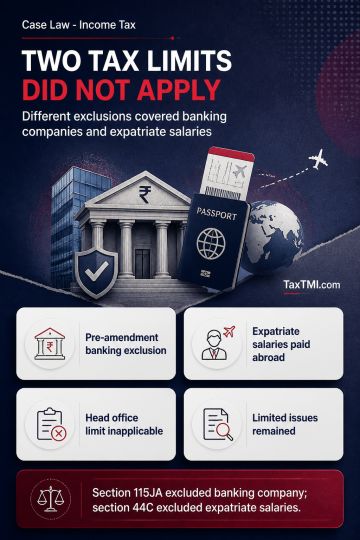
    Minimum alternate tax exclusions for pre-amendment banking companies and expatriate Indian branch salaries remain outside head office expenditure limi...
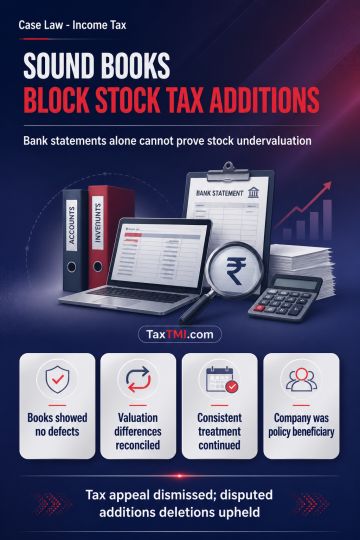
    Closing stock bank statements alone cannot justify tax additions where books are sound and valuation differences are reconciled.
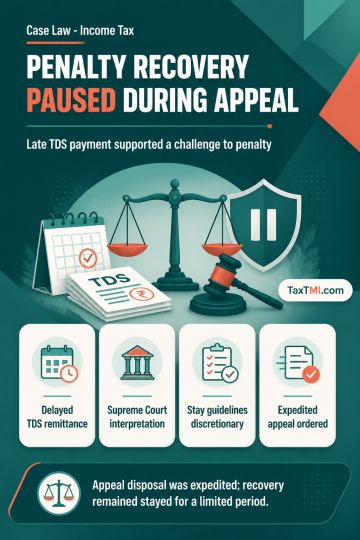
    Penalty recovery stay: delayed TDS deduction and remittance may not attract Section 271C, pending appellate determination.
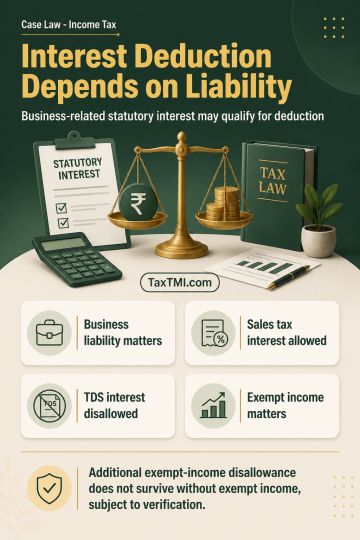
    Interest on delayed statutory payments is deductible only where the underlying liability qualifies as business expenditure.
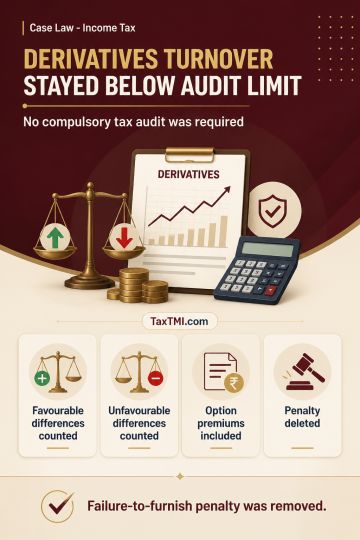
    Futures and options turnover computation kept derivatives activity below the tax-audit threshold, resulting in deletion of non-furnishing penalty.
❯❯
MaximizeMaximizeMaximize
0 / 200
Expand Note
Add to Folder

No Folders have been created

    +

    Are you sure you want to delete "My most important" ?

    NOTE:

    Highlights
    Showing Results for :
    Reset Filters
    Results Found:
    Show All SummariesHide All Summaries

    Highlights

    Back

    All Highlights

    Showing Results for :
    Reset Filters
      No Records Found

      Highlights

      Back

      All Highlights

      whatsappJoin Channel
      Showing Results for : Reset Filters
      Companies Law

      Tender eligibility conditions based on financial...

      Tender creditworthiness conditions may extend to de facto Promoter Directors, with post-participation challenges generally barred absent arbitrariness.

      Contents
      Summary
      Note

      Note

      -

      Bookmark

      Print

      Print

      Companies LawJuly 24, 2026Case LawsHC
      Tender eligibility conditions based on financial creditworthiness may exclude companies whose Promoter Directors are defaulters or associated with non-performing credit facilities, because persons controlling a closely held company affect its commercial standing. The discussion treats a "Promoter Director" as extending beyond formal promoter classification to a person exercising direct or indirect control over management or policy, including through continuing executive functions. Tender terms remain within the contractual domain, with judicial review limited to arbitrariness, irrationality, mala fides or bias. A bidder that participates with knowledge of the conditions and undertakes compliance cannot ordinarily challenge them after disqualification. The reported decision found no manifest arbitrariness or Article 14 violation, while leaving the underlying question of default open in the pending writ petition.

      Topics

      ActsIncome Tax