Defined public benefit can retain charitable character; registration renewal requires examining genuine activities and legal compliance, not surplus a...
Capital reduction is distinct from share buy-back, preventing buy-back tax; restructuring interest and related business deductions also survive scruti...
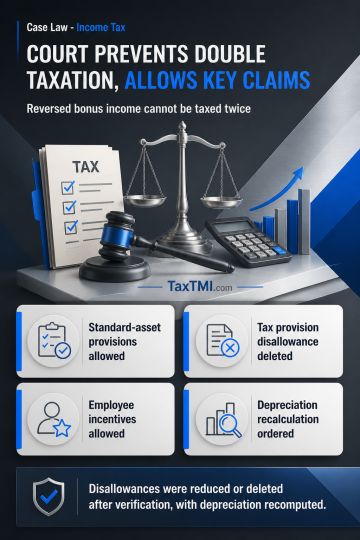
Transfer pricing and tax deductions upheld on established principles, while employee contributions and warranty provisions returned for fresh examinat...
Captive transfer pricing relies on industrial consumer tariffs, while genuine quotations can benchmark effluent treatment transfers under the Other Me...
Specific tariff classification for ophthalmic instruments and extended limitation principles determine the treatment of duty demands, confiscation, an...
Integrated golf function determines classification, placing launch monitors and simulators under other golf equipment rather than measuring instrument...
Abetment of attempted export requires proof that the alleged abettor intentionally aided the offence by an act or unlawful omission; merely introducing an intermediary or being unable to secure that person's appearance does not establish participation in a smuggling conspiracy. A Customs House Agent's regulatory duties include verifying client identity and prescribed documentation, but do not require employees to inspect goods inside containers already examined and sealed by customs authorities. Accordingly, an employee who only arranged containers in the ordinary course of business could not be held liable for misdeclared prohibited goods without material connecting him to the conspiracy.
Abetment of attempted export requires proof that the alleged abettor intentionally aided the offence by an act or unlawful omission; merely introducing an intermediary or being unable to secure that person's appearance does not establish participation in a smuggling conspiracy. A Customs House Agent's regulatory duties include verifying client identity and prescribed documentation, but do not require employees to inspect goods inside containers already examined and sealed by customs authorities. Accordingly, an employee who only arranged containers in the ordinary course of business could not be held liable for misdeclared prohibited goods without material connecting him to the conspiracy.
Note: It is a system-generated summary and is for quick reference only.
 TaxTMI
 of 4782


















 Join Channel



 TaxTMI
