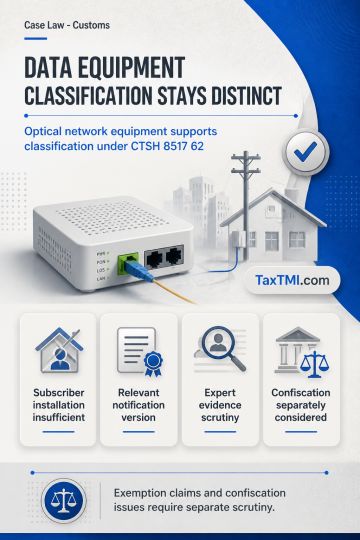
Data transmission equipment classification under CTSH 8517 62 remains distinct from residual classification, with exemption evidence requiring scrutin...
Abetment of attempted export requires proof that the alleged abettor intentionally aided the offence by an act or unlawful omission; merely introducing an intermediary or being unable to secure that person's appearance does not establish participation in a smuggling conspiracy. A Customs House Agent's regulatory duties include verifying client identity and prescribed documentation, but do not require employees to inspect goods inside containers already examined and sealed by customs authorities. Accordingly, an employee who only arranged containers in the ordinary course of business could not be held liable for misdeclared prohibited goods without material connecting him to the conspiracy.
Abetment of attempted export requires proof that the alleged abettor intentionally aided the offence by an act or unlawful omission; merely introducing an intermediary or being unable to secure that person's appearance does not establish participation in a smuggling conspiracy. A Customs House Agent's regulatory duties include verifying client identity and prescribed documentation, but do not require employees to inspect goods inside containers already examined and sealed by customs authorities. Accordingly, an employee who only arranged containers in the ordinary course of business could not be held liable for misdeclared prohibited goods without material connecting him to the conspiracy.
Note: It is a system-generated summary and is for quick reference only.
 TaxTMI
 of 4782















 Join Channel



 TaxTMI
