Public servant status under anti-corruption law extends to recognised stock exchange leadership; constitutional and sanction challenges do not succeed...
Acquiescence, homebuyer protection and clean-slate resolution principles prevent landowners from disrupting an integrated project through late termina...
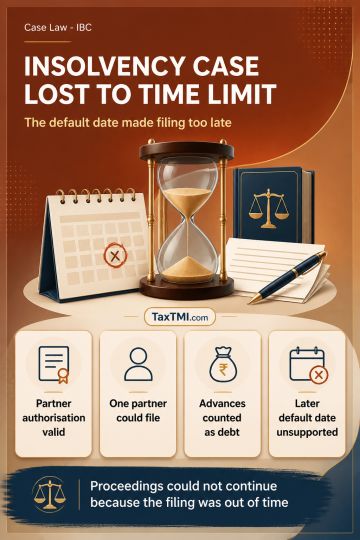
A Section 7 insolvency application was treated as time-barred because the record supported 31 March 2019 as the nearest ascertainable date of default, while a later date asserted by affidavit lacked evidentiary basis. The limitation period had therefore expired before the demand notice and filing, rendering the application not maintainable. The notes also state that a surviving-partner majority could authorise commencement of insolvency proceedings and that one partner could file in the firm's name. Advances recorded as repayable in balance sheets and ledgers constituted financial debt, even without a formal loan agreement or interest payment.
A Section 7 insolvency application was treated as time-barred because the record supported 31 March 2019 as the nearest ascertainable date of default, while a later date asserted by affidavit lacked evidentiary basis. The limitation period had therefore expired before the demand notice and filing, rendering the application not maintainable. The notes also state that a surviving-partner majority could authorise commencement of insolvency proceedings and that one partner could file in the firm's name. Advances recorded as repayable in balance sheets and ledgers constituted financial debt, even without a formal loan agreement or interest payment.
Note: It is a system-generated summary and is for quick reference only.
 TaxTMI
 of 4782



 Join Channel


 TaxTMI