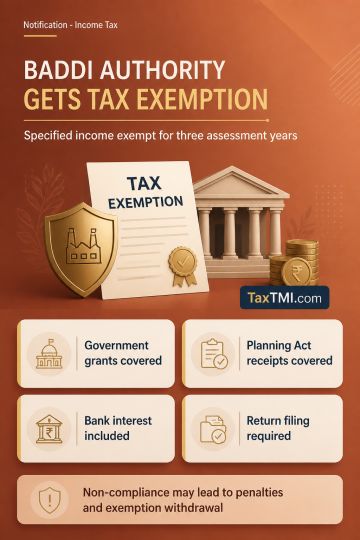
Specified income of Baddi Barotiwala Nalagarh Development Authority receives conditional tax exemption, retrospectively covering its designated assess...
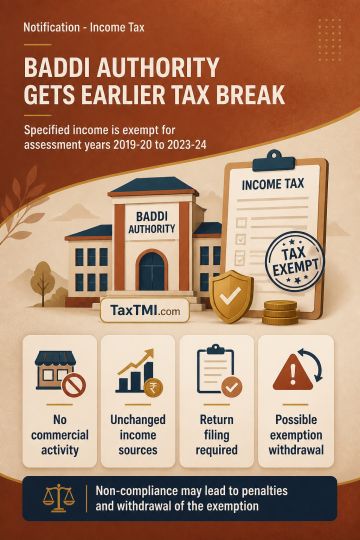
Specified development authority income receives retrospective tax exemption, subject to non-commercial activity, unchanged income sources, and return-...
Unified Brand India framework introduces voluntary Trust Mark certification and funding support for export branding, packaging and global promotional ...
Origin Declaration authentication governs preferential tariff claims under India-UK CETA, requiring a validated reference number before import clearan...
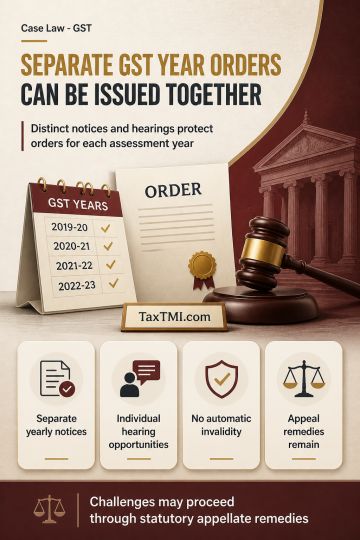
Separate assessment orders for different years remain valid when distinct notices and hearing opportunities prevent prejudice from combined proceeding...
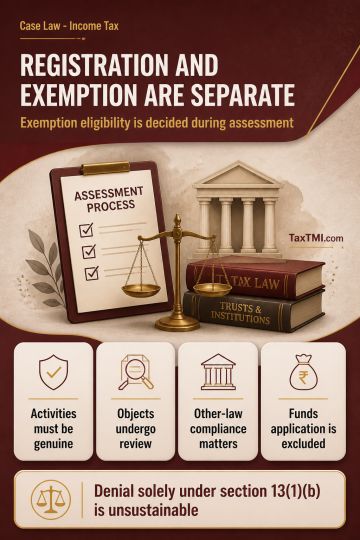
Defined public benefit can retain charitable character; registration renewal requires examining genuine activities and legal compliance, not surplus a...
Page of 4786
Press 'Enter' after typing page number.
861 to 880 of 95714 Results
❮
❯
❯❯
0 / 200
Expand Note
Add to Folder
No Folders have been created
+
Are you sure you want to delete "My most important" ?
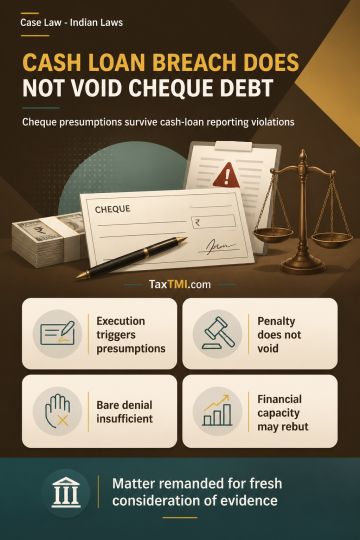
Admission of cheque execution triggers presumptions of consideration and legally enforceable debt under the cheque-dishonour framework. A cash loan exceeding the limit under section 269SS of the Income-tax Act may attract penalty under section 271D, but does not render the underlying transaction illegal, void or unenforceable; it does not itself rebut those presumptions. The presumption in favour of the cheque holder remains rebuttable, but a bare denial is insufficient. The accused must explain the cheque's issuance and possession, while credible evidence that the payee lacked financial capacity to lend may rebut the presumption. The matter was remanded for fresh consideration of the evidence.
Admission of cheque execution triggers presumptions of consideration and legally enforceable debt under the cheque-dishonour framework. A cash loan exceeding the limit under section 269SS of the Income-tax Act may attract penalty under section 271D, but does not render the underlying transaction illegal, void or unenforceable; it does not itself rebut those presumptions. The presumption in favour of the cheque holder remains rebuttable, but a bare denial is insufficient. The accused must explain the cheque's issuance and possession, while credible evidence that the payee lacked financial capacity to lend may rebut the presumption. The matter was remanded for fresh consideration of the evidence.
Note: It is a system-generated summary and is for quick reference only.
 TaxTMI
 of 4786









 Join Channel


 TaxTMI