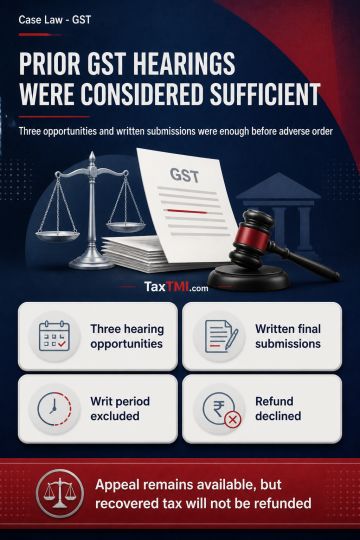
Personal hearing requirements in GST adjudication were satisfied by prior opportunities and written submissions; appellate limitation received writ-pe...
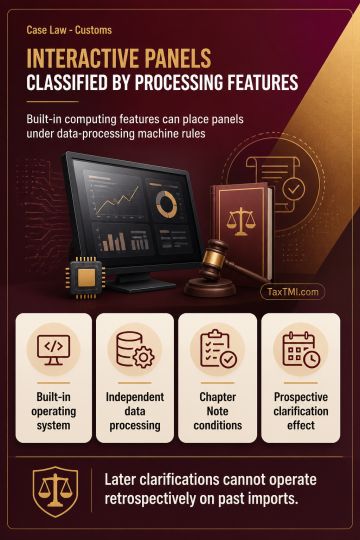
Interactive flat panels meeting automatic data processing conditions are distinguished from monitors, while later classification clarifications apply ...
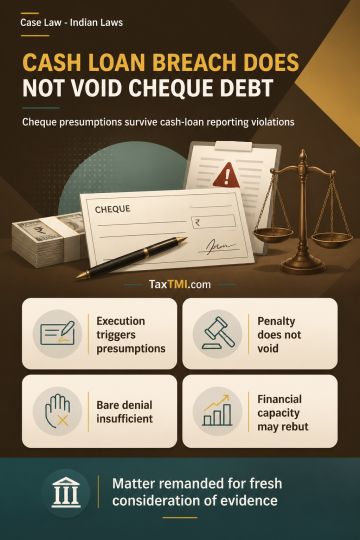
Admission of cheque execution triggers presumptions of consideration and legally enforceable debt under the cheque-dishonour framework. A cash loan exceeding the limit under section 269SS of the Income-tax Act may attract penalty under section 271D, but does not render the underlying transaction illegal, void or unenforceable; it does not itself rebut those presumptions. The presumption in favour of the cheque holder remains rebuttable, but a bare denial is insufficient. The accused must explain the cheque's issuance and possession, while credible evidence that the payee lacked financial capacity to lend may rebut the presumption. The matter was remanded for fresh consideration of the evidence.
Admission of cheque execution triggers presumptions of consideration and legally enforceable debt under the cheque-dishonour framework. A cash loan exceeding the limit under section 269SS of the Income-tax Act may attract penalty under section 271D, but does not render the underlying transaction illegal, void or unenforceable; it does not itself rebut those presumptions. The presumption in favour of the cheque holder remains rebuttable, but a bare denial is insufficient. The accused must explain the cheque's issuance and possession, while credible evidence that the payee lacked financial capacity to lend may rebut the presumption. The matter was remanded for fresh consideration of the evidence.
Note: It is a system-generated summary and is for quick reference only.
 TaxTMI
 of 4782







 Join Channel


 TaxTMI