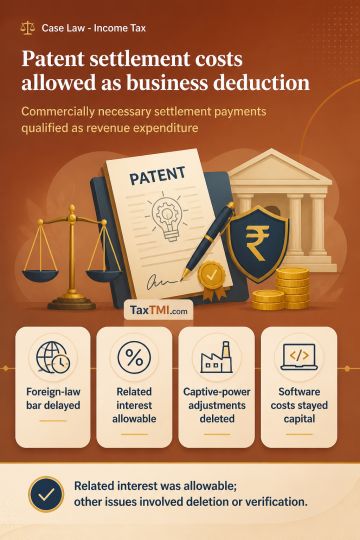
Patent-settlement expenditure treated as commercially expedient revenue outlay, with foreign-law restrictions inapplicable before the prospective amen...
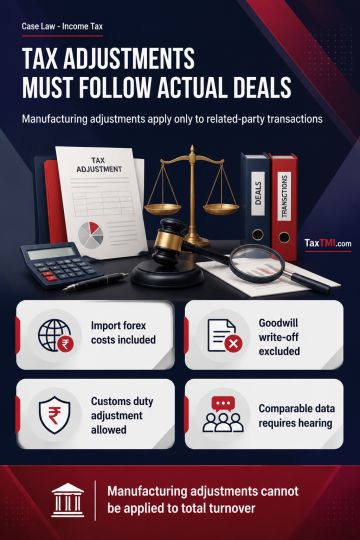
International transaction benchmarking restricts transfer pricing adjustments to associated-enterprise dealings, while functional comparability govern...
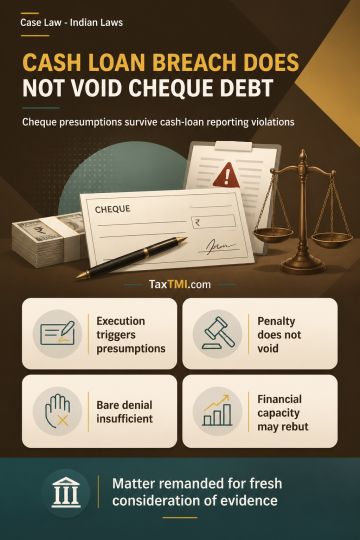
Admission of cheque execution triggers presumptions of consideration and legally enforceable debt under the cheque-dishonour framework. A cash loan exceeding the limit under section 269SS of the Income-tax Act may attract penalty under section 271D, but does not render the underlying transaction illegal, void or unenforceable; it does not itself rebut those presumptions. The presumption in favour of the cheque holder remains rebuttable, but a bare denial is insufficient. The accused must explain the cheque's issuance and possession, while credible evidence that the payee lacked financial capacity to lend may rebut the presumption. The matter was remanded for fresh consideration of the evidence.
Admission of cheque execution triggers presumptions of consideration and legally enforceable debt under the cheque-dishonour framework. A cash loan exceeding the limit under section 269SS of the Income-tax Act may attract penalty under section 271D, but does not render the underlying transaction illegal, void or unenforceable; it does not itself rebut those presumptions. The presumption in favour of the cheque holder remains rebuttable, but a bare denial is insufficient. The accused must explain the cheque's issuance and possession, while credible evidence that the payee lacked financial capacity to lend may rebut the presumption. The matter was remanded for fresh consideration of the evidence.
Note: It is a system-generated summary and is for quick reference only.
 TaxTMI
 of 4788




 Join Channel


 TaxTMI
