Transaction value rejection requires reliable corroboration; refundable VAT is excluded and temporary registration does not defeat new-vehicle exempti...
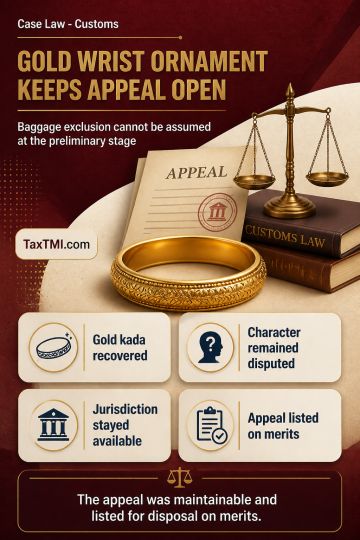
Appellate jurisdiction remains available where a wrist-worn gold ornament cannot conclusively be characterised as imported baggage at the preliminary ...
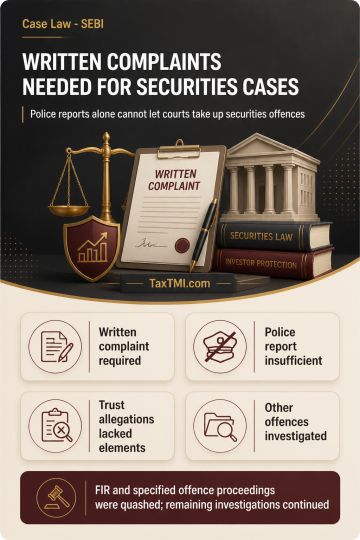
Written complaint requirement bars cognizance on police reports for securities offences, while unsupported breach of trust and cheating allegations fa...
Risk-based postal import clearance standardises electronic assessment, document requests, duty realisation and delivery controls at Foreign Post Offic...
Customs Cargo Service Provider appointment extends custodianship to additional terminal land, subject to cargo-control, security and licence condition...
Page of 4790
Press 'Enter' after typing page number.
141 to 160 of 95794 Results
❮
❯
❯❯
0 / 200
Expand Note
Add to Folder
No Folders have been created
+
Are you sure you want to delete "My most important" ?
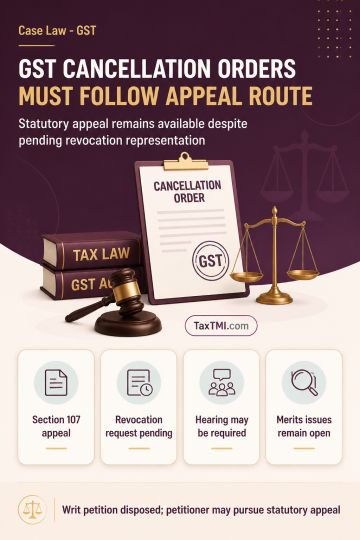
Availability of a statutory appeal against cancellation of GST registration is presented as barring recourse to writ jurisdiction. Section 107 of the CGST Act permits an aggrieved person to challenge any order before the appellate authority, including a cancellation order. The discussion notes that a pending representation seeking revocation does not make the appellate remedy unavailable. It also refers to Section 75(4), which requires a hearing where requested in writing by the person chargeable with tax or penalty, or where an adverse decision is contemplated. The writ petition was disposed of with liberty to pursue the statutory appeal, while merits issues remained open.
Availability of a statutory appeal against cancellation of GST registration is presented as barring recourse to writ jurisdiction. Section 107 of the CGST Act permits an aggrieved person to challenge any order before the appellate authority, including a cancellation order. The discussion notes that a pending representation seeking revocation does not make the appellate remedy unavailable. It also refers to Section 75(4), which requires a hearing where requested in writing by the person chargeable with tax or penalty, or where an adverse decision is contemplated. The writ petition was disposed of with liberty to pursue the statutory appeal, while merits issues remained open.
Note: It is a system-generated summary and is for quick reference only.
 TaxTMI
 of 4790







 Join Channel


 TaxTMI