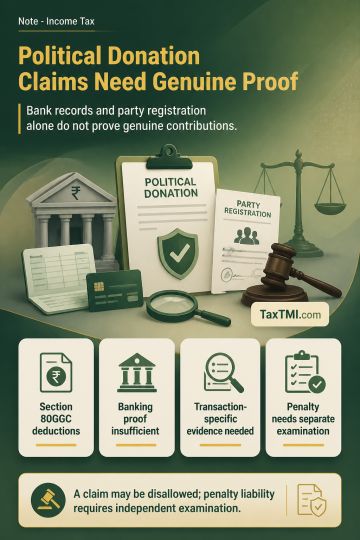
Political contribution deductions require genuine transactions; banking records and party registration alone cannot defeat evidence of accommodation e...
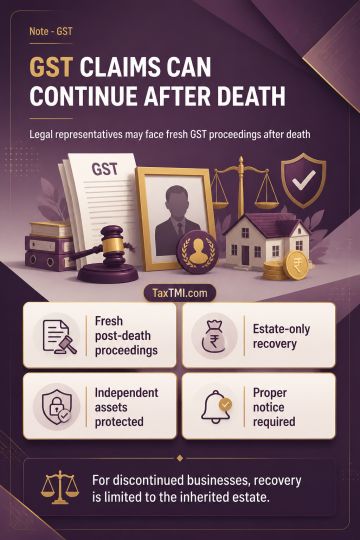
Post-death GST liability permits fresh proceedings against legal representatives, while discontinued-business recovery remains limited to the inherite...
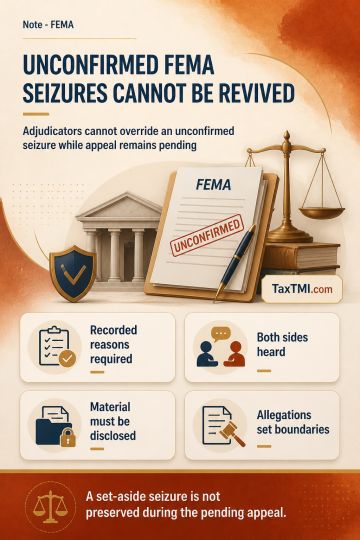
Non-confirmation of FEMA seizure prevents adjudicators from overriding pending appellate findings on recorded reasons and suspected foreign asset hold...
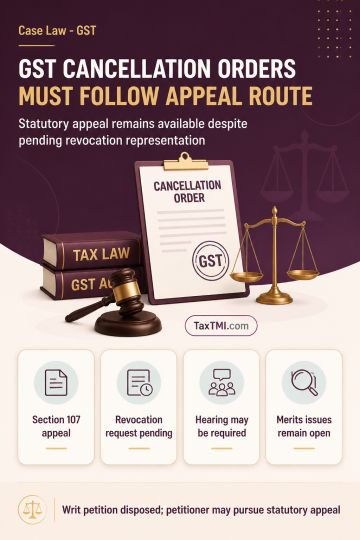
Availability of a statutory appeal against cancellation of GST registration is presented as barring recourse to writ jurisdiction. Section 107 of the CGST Act permits an aggrieved person to challenge any order before the appellate authority, including a cancellation order. The discussion notes that a pending representation seeking revocation does not make the appellate remedy unavailable. It also refers to Section 75(4), which requires a hearing where requested in writing by the person chargeable with tax or penalty, or where an adverse decision is contemplated. The writ petition was disposed of with liberty to pursue the statutory appeal, while merits issues remained open.
Availability of a statutory appeal against cancellation of GST registration is presented as barring recourse to writ jurisdiction. Section 107 of the CGST Act permits an aggrieved person to challenge any order before the appellate authority, including a cancellation order. The discussion notes that a pending representation seeking revocation does not make the appellate remedy unavailable. It also refers to Section 75(4), which requires a hearing where requested in writing by the person chargeable with tax or penalty, or where an adverse decision is contemplated. The writ petition was disposed of with liberty to pursue the statutory appeal, while merits issues remained open.
Note: It is a system-generated summary and is for quick reference only.
 TaxTMI
  TaxTMI