Retrospective cancellation of charitable registration under section 12AB(4) was unsustainable; related-party benefit allegations did not prove nongenu...
Merger control notice and disclosure rules: Supreme Court limits penalties, rejects reopening of approved combination, and sets aside adverse findings...
Page of 4805
Press 'Enter' after typing page number.
2701 to 2720 of 96100 Results
❮
❯
❯❯
0 / 200
Expand Note
Add to Folder
No Folders have been created
+
Are you sure you want to delete "My most important" ?
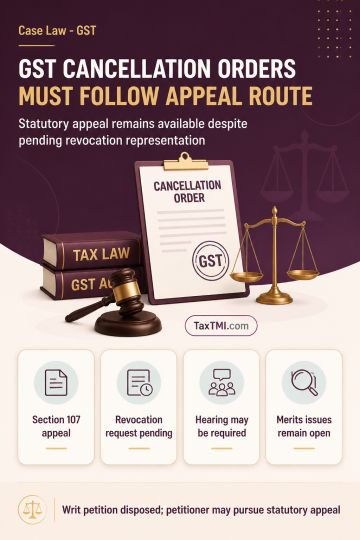
Availability of a statutory appeal against cancellation of GST registration is presented as barring recourse to writ jurisdiction. Section 107 of the CGST Act permits an aggrieved person to challenge any order before the appellate authority, including a cancellation order. The discussion notes that a pending representation seeking revocation does not make the appellate remedy unavailable. It also refers to Section 75(4), which requires a hearing where requested in writing by the person chargeable with tax or penalty, or where an adverse decision is contemplated. The writ petition was disposed of with liberty to pursue the statutory appeal, while merits issues remained open.
Availability of a statutory appeal against cancellation of GST registration is presented as barring recourse to writ jurisdiction. Section 107 of the CGST Act permits an aggrieved person to challenge any order before the appellate authority, including a cancellation order. The discussion notes that a pending representation seeking revocation does not make the appellate remedy unavailable. It also refers to Section 75(4), which requires a hearing where requested in writing by the person chargeable with tax or penalty, or where an adverse decision is contemplated. The writ petition was disposed of with liberty to pursue the statutory appeal, while merits issues remained open.
Note: It is a system-generated summary and is for quick reference only.
 TaxTMI
 of 4805


 Join Channel


 TaxTMI
