Necessary-party requirements limit impleadment of independent entities, while deferred consideration does not create an appealable adverse determinati...
Food supplement classification requires common parlance and authoritative tests, preventing treatment as proprietary Ayurvedic medicines without suppo...
Specified regulatory authority income receives conditional tax exemption, subject to non-commercial activity, unchanged income character, and return f...
Tax exemption for regulatory authority income applies retrospectively, subject to non-commercial activity, unchanged income sources, and return-filing...
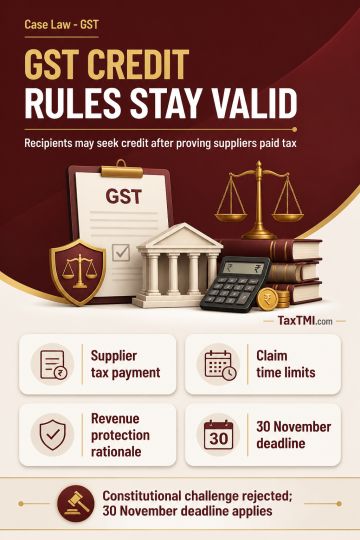
Input tax credit conditions remain constitutionally valid, with eligible recipient claims considered under GST circulars and retrospective filing dead...
Advertisement, marketing and brand-promotion expenditure...
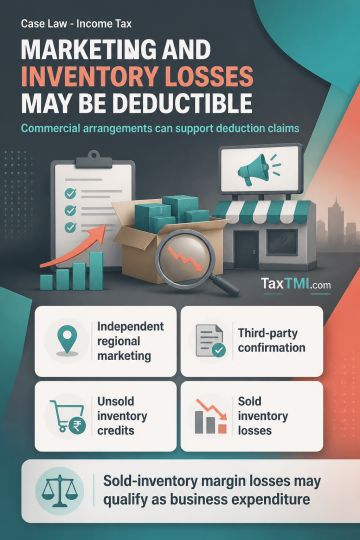
Business expenditure deductibility covers independent brand promotion and unreimbursed inventory price-drop margin losses where commercially genuine and verifiable.
Contents
Summary
Note
Bookmark
Share
✓ Copied successfully !
Print
Print Options
For full text, please login
Login to TaxTMI
Verification Pending
The Email Id has not been verified. Click on the link we have sent on
Advertisement, marketing and brand-promotion expenditure incurred by a super authorised mobile-phone distributor is discussed as deductible business expenditure where a lower purchase price reflects a commercial arrangement for independent regional marketing, rather than reimbursement by the brand owner. Third-party confirmation and the absence of evidence that expenditure was fictitious, inflated or unincurred support its business necessity. The notes also address price-drop credits to downstream dealers: brand-owner reimbursement is limited to unsold inventory and its invoice price, while the distributor's unreimbursed margin reversal on sold inventory may constitute a genuine, verifiable commercial loss deductible as business expenditure.
Advertisement, marketing and brand-promotion expenditure incurred by a super authorised mobile-phone distributor is discussed as deductible business expenditure where a lower purchase price reflects a commercial arrangement for independent regional marketing, rather than reimbursement by the brand owner. Third-party confirmation and the absence of evidence that expenditure was fictitious, inflated or unincurred support its business necessity. The notes also address price-drop credits to downstream dealers: brand-owner reimbursement is limited to unsold inventory and its invoice price, while the distributor's unreimbursed margin reversal on sold inventory may constitute a genuine, verifiable commercial loss deductible as business expenditure.
Note: It is a system-generated summary and is for quick reference only.
 TaxTMI
 of 4784



















 Join Channel


 TaxTMI