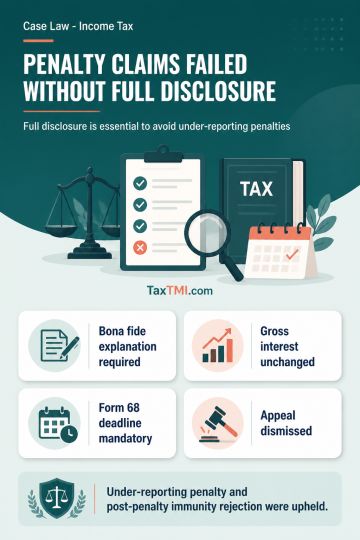
Bona fide disclosure requirements govern under-reporting penalties, and post-penalty immunity applications cannot secure available statutory protectio...
Certificate-of-origin verification procedure governs preferential customs benefits; denial without retroactive verification was set aside with consequ...
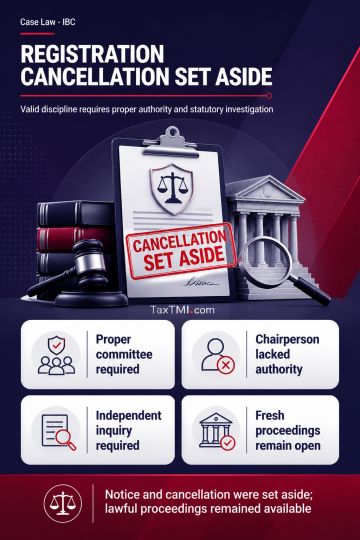
Disciplinary Committee jurisdiction and mandatory investigation requirements invalidated cancellation of an insolvency professional's registration and...
Retention of seized property survives where recorded reasons support proceeds of crime, while stayed investigation periods are excluded from limitatio...
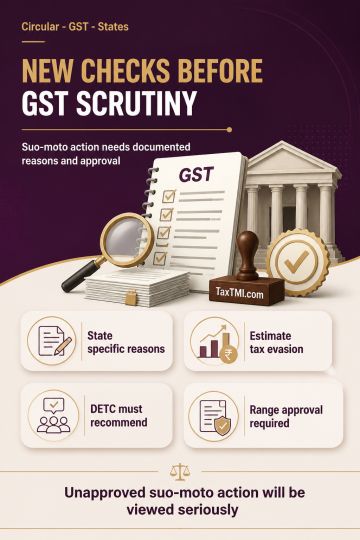
Proposals for suo-moto audit or scrutiny under the HGST Act, 2017 must state clear, specific and duly justified reasons, supported by available records, intelligence inputs, data analysis or another verifiable information source. Each proposal must also specify the tentative quantum of tax evasion. The concerned DETC must first examine and recommend the proposal, after which the case file must be sent to the Joint Excise and Taxation Commissioner (Range) for necessary approval. Field formations must comply strictly; suo-moto action initiated without this prescribed process will be viewed seriously.
Proposals for suo-moto audit or scrutiny under the HGST Act, 2017 must state clear, specific and duly justified reasons, supported by available records, intelligence inputs, data analysis or another verifiable information source. Each proposal must also specify the tentative quantum of tax evasion. The concerned DETC must first examine and recommend the proposal, after which the case file must be sent to the Joint Excise and Taxation Commissioner (Range) for necessary approval. Field formations must comply strictly; suo-moto action initiated without this prescribed process will be viewed seriously.
Note: It is a system-generated summary and is for quick reference only.
 TaxTMI
 of 4782











 Join Channel


 TaxTMI