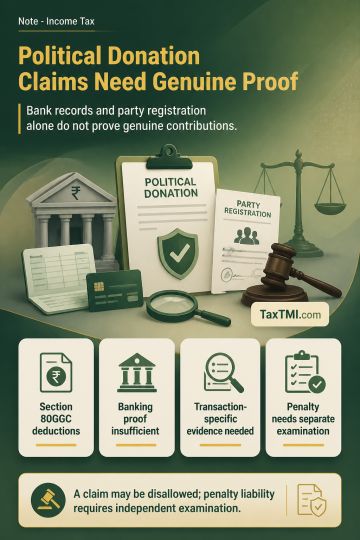
Political contribution deductions require genuine transactions; banking records and party registration alone cannot defeat evidence of accommodation e...
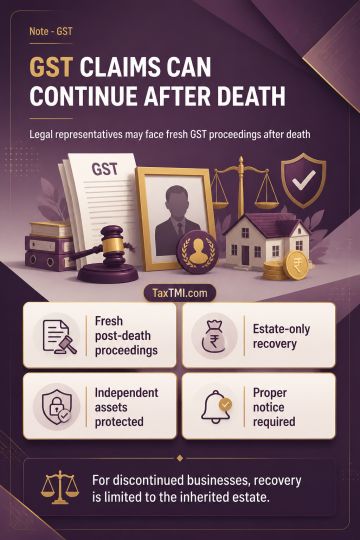
Post-death GST liability permits fresh proceedings against legal representatives, while discontinued-business recovery remains limited to the inherite...
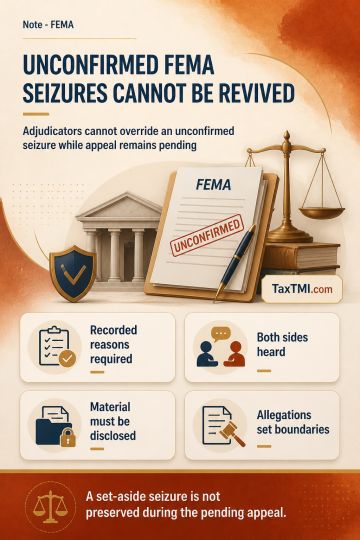
Non-confirmation of FEMA seizure prevents adjudicators from overriding pending appellate findings on recorded reasons and suspected foreign asset hold...
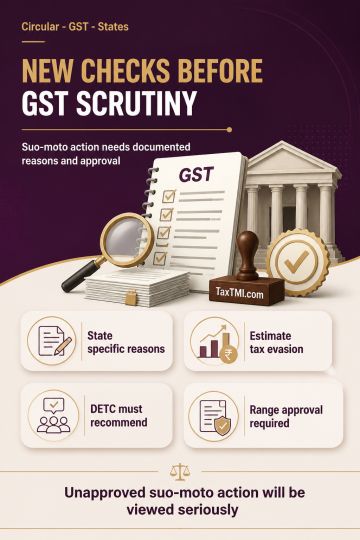
Proposals for suo-moto audit or scrutiny under the HGST Act, 2017 must state clear, specific and duly justified reasons, supported by available records, intelligence inputs, data analysis or another verifiable information source. Each proposal must also specify the tentative quantum of tax evasion. The concerned DETC must first examine and recommend the proposal, after which the case file must be sent to the Joint Excise and Taxation Commissioner (Range) for necessary approval. Field formations must comply strictly; suo-moto action initiated without this prescribed process will be viewed seriously.
Proposals for suo-moto audit or scrutiny under the HGST Act, 2017 must state clear, specific and duly justified reasons, supported by available records, intelligence inputs, data analysis or another verifiable information source. Each proposal must also specify the tentative quantum of tax evasion. The concerned DETC must first examine and recommend the proposal, after which the case file must be sent to the Joint Excise and Taxation Commissioner (Range) for necessary approval. Field formations must comply strictly; suo-moto action initiated without this prescribed process will be viewed seriously.
Note: It is a system-generated summary and is for quick reference only.
 TaxTMI
  TaxTMI