Inherited property sale proceeds require capital-gains treatment where ownership is supported by evidence, not suspicion or unverified signature doubt...
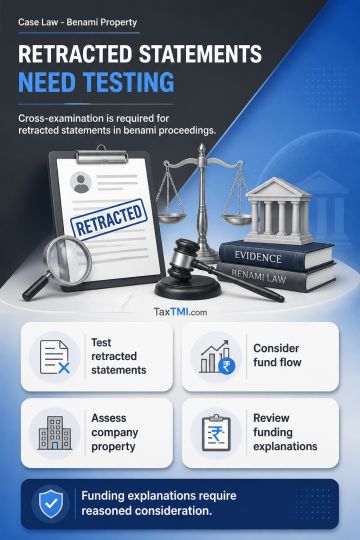
Cross-examination of retracted statements is essential where foundational evidence supports a benami allegation and documented funding explanations re...
Capital-goods exemption covers plant-modernisation accessories, while the import restriction applies only to earlier capital-goods components and spar...
Constitutional judicial review permits challenges to ECIRs and connected money-laundering proceedings where coercive action affects fundamental intere...
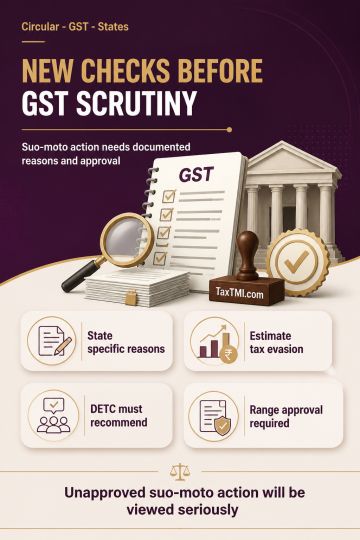
Proposals for suo-moto audit or scrutiny under the HGST Act, 2017 must state clear, specific and duly justified reasons, supported by available records, intelligence inputs, data analysis or another verifiable information source. Each proposal must also specify the tentative quantum of tax evasion. The concerned DETC must first examine and recommend the proposal, after which the case file must be sent to the Joint Excise and Taxation Commissioner (Range) for necessary approval. Field formations must comply strictly; suo-moto action initiated without this prescribed process will be viewed seriously.
Proposals for suo-moto audit or scrutiny under the HGST Act, 2017 must state clear, specific and duly justified reasons, supported by available records, intelligence inputs, data analysis or another verifiable information source. Each proposal must also specify the tentative quantum of tax evasion. The concerned DETC must first examine and recommend the proposal, after which the case file must be sent to the Joint Excise and Taxation Commissioner (Range) for necessary approval. Field formations must comply strictly; suo-moto action initiated without this prescribed process will be viewed seriously.
Note: It is a system-generated summary and is for quick reference only.
 TaxTMI
 of 4790
















 Join Channel


 TaxTMI