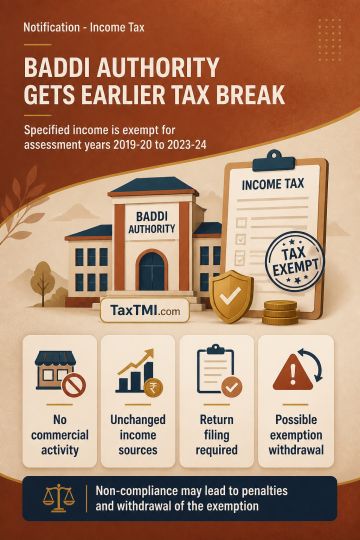
Specified income of Baddi Barotiwala Nalagarh Development Authority receives conditional tax exemption, retrospectively covering its designated assess...
Specified development authority income receives retrospective tax exemption, subject to non-commercial activity, unchanged income sources, and return-...
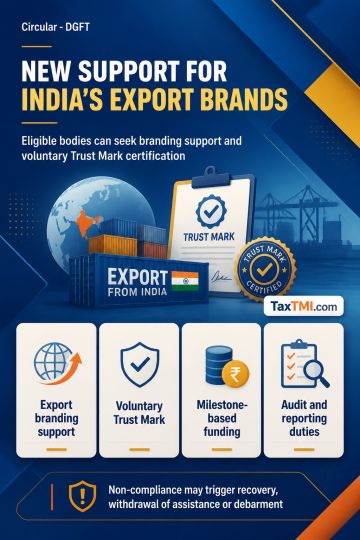
Unified Brand India framework introduces voluntary Trust Mark certification and funding support for export branding, packaging and global promotional ...
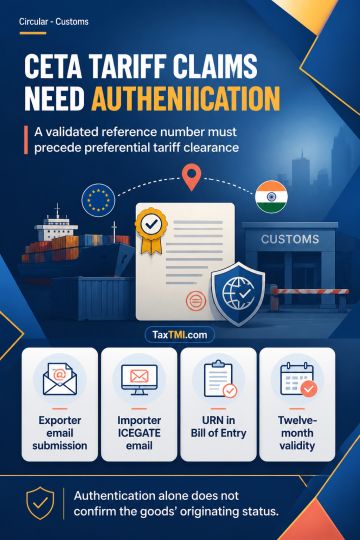
Origin Declaration authentication governs preferential tariff claims under India-UK CETA, requiring a validated reference number before import clearan...
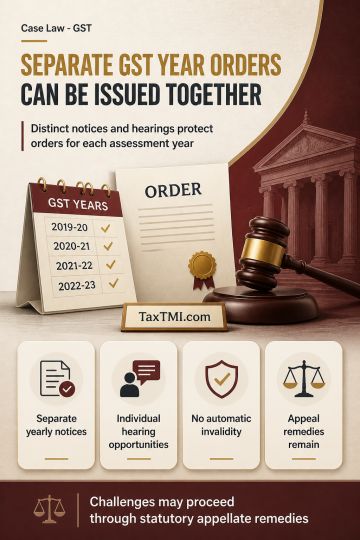
Separate assessment orders for different years remain valid when distinct notices and hearing opportunities prevent prejudice from combined proceeding...
Captive power transfers are benchmarked using the tariff charged...
Captive transfer pricing relies on industrial consumer tariffs, while genuine quotations can benchmark effluent treatment transfers under the Other Method
Contents
Summary
Note
Bookmark
Share
✓ Copied successfully !
Print
Print Options
For full text, please login
Login to TaxTMI
Verification Pending
The Email Id has not been verified. Click on the link we have sent on
Captive power transfers are benchmarked using the tariff charged by State Electricity Boards to industrial consumers, rather than rates charged by generating companies to distribution entities; the consumer tariff reflects market value and arm's length price under the applicable provisions. Transfers of steam by eligible units may qualify for deduction where supported by consistent prior treatment. Common expenses may be allocated to eligible units only where they directly relate to those units, with specified expenses allocated on a manpower basis rather than turnover, requiring recomputation. For effluent treatment plants, an authentic third-party quotation may be used under the Other Method without requiring multiple quotations; the related adjustment is therefore not sustainable. The appeal was partly allowed.
Captive power transfers are benchmarked using the tariff charged by State Electricity Boards to industrial consumers, rather than rates charged by generating companies to distribution entities; the consumer tariff reflects market value and arm's length price under the applicable provisions. Transfers of steam by eligible units may qualify for deduction where supported by consistent prior treatment. Common expenses may be allocated to eligible units only where they directly relate to those units, with specified expenses allocated on a manpower basis rather than turnover, requiring recomputation. For effluent treatment plants, an authentic third-party quotation may be used under the Other Method without requiring multiple quotations; the related adjustment is therefore not sustainable. The appeal was partly allowed.
Note: It is a system-generated summary and is for quick reference only.
 TaxTMI
 of 4782








 Join Channel



 TaxTMI

