Transaction value rejection requires reliable corroboration; refundable VAT is excluded and temporary registration does not defeat new-vehicle exempti...
Appellate jurisdiction remains available where a wrist-worn gold ornament cannot conclusively be characterised as imported baggage at the preliminary ...
Written complaint requirement bars cognizance on police reports for securities offences, while unsupported breach of trust and cheating allegations fa...
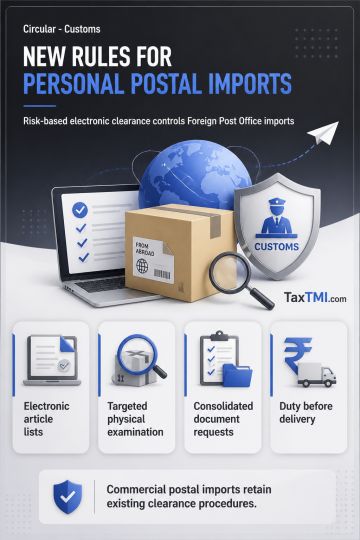
Risk-based postal import clearance standardises electronic assessment, document requests, duty realisation and delivery controls at Foreign Post Offic...
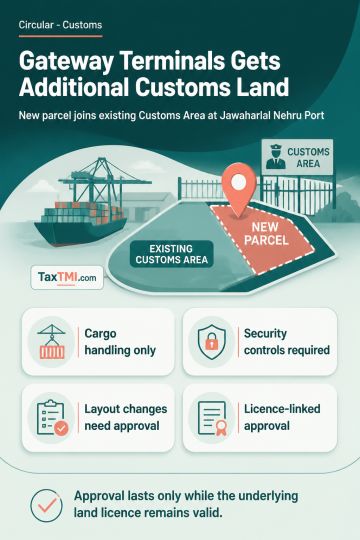
Customs Cargo Service Provider appointment extends custodianship to additional terminal land, subject to cargo-control, security and licence condition...
Captive power transfers are benchmarked using the tariff charged...
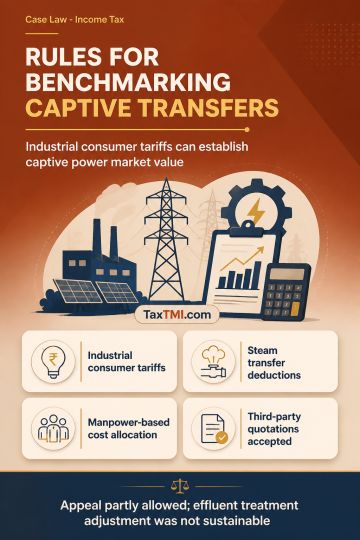
Captive transfer pricing relies on industrial consumer tariffs, while genuine quotations can benchmark effluent treatment transfers under the Other Method
Contents
Summary
Note
Bookmark
Share
✓ Copied successfully !
Print
Print Options
For full text, please login
Login to TaxTMI
Verification Pending
The Email Id has not been verified. Click on the link we have sent on
Captive power transfers are benchmarked using the tariff charged by State Electricity Boards to industrial consumers, rather than rates charged by generating companies to distribution entities; the consumer tariff reflects market value and arm's length price under the applicable provisions. Transfers of steam by eligible units may qualify for deduction where supported by consistent prior treatment. Common expenses may be allocated to eligible units only where they directly relate to those units, with specified expenses allocated on a manpower basis rather than turnover, requiring recomputation. For effluent treatment plants, an authentic third-party quotation may be used under the Other Method without requiring multiple quotations; the related adjustment is therefore not sustainable. The appeal was partly allowed.
Captive power transfers are benchmarked using the tariff charged by State Electricity Boards to industrial consumers, rather than rates charged by generating companies to distribution entities; the consumer tariff reflects market value and arm's length price under the applicable provisions. Transfers of steam by eligible units may qualify for deduction where supported by consistent prior treatment. Common expenses may be allocated to eligible units only where they directly relate to those units, with specified expenses allocated on a manpower basis rather than turnover, requiring recomputation. For effluent treatment plants, an authentic third-party quotation may be used under the Other Method without requiring multiple quotations; the related adjustment is therefore not sustainable. The appeal was partly allowed.
Note: It is a system-generated summary and is for quick reference only.
 TaxTMI
 of 4792








 Join Channel


 TaxTMI