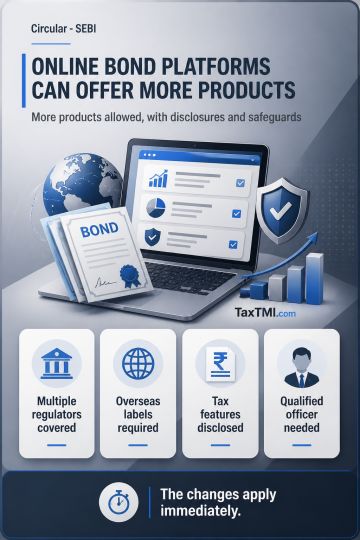
Online bond platforms may offer overseas-regulated products and tax-specific bonds subject to disclosures, compliance safeguards and revised complianc...
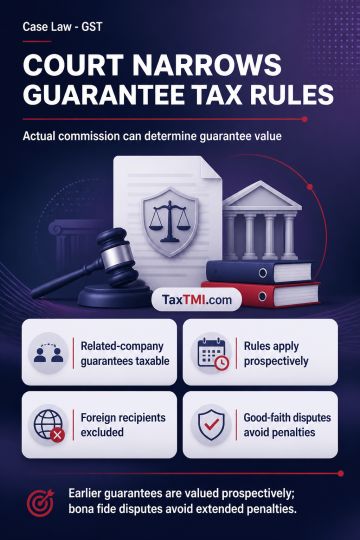
Corporate guarantee valuation permits actual ascertainable commission while barring retroactive application and extended-period penalties for bona fid...
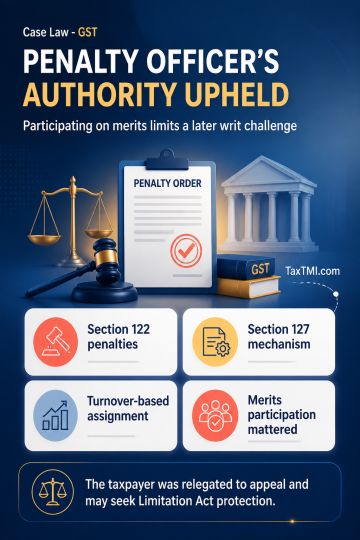
Proper-officer jurisdiction under UPGST penalty provisions upheld; participation on merits prevents bypassing the statutory appellate remedy through w...
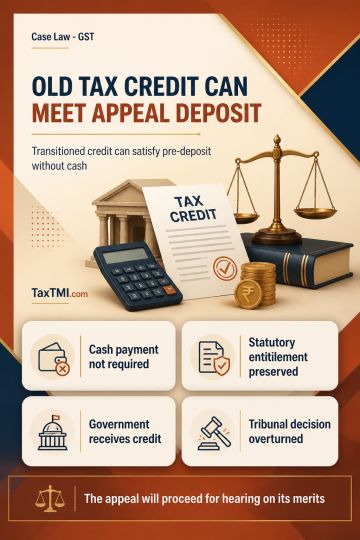
Transitioned CENVAT credit may validly satisfy mandatory pre-deposit requirements for legacy service tax appeals through Electronic Credit Ledger debi...
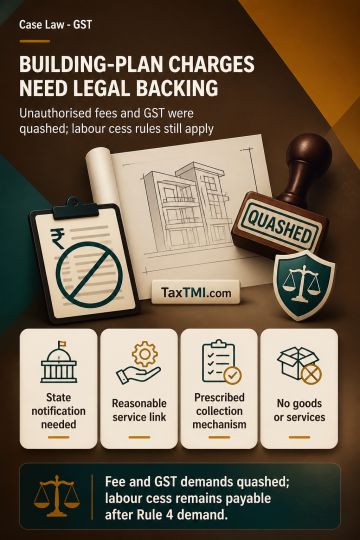
Building-plan sanction charges require statutory authority; unauthorised fees and GST were quashed, while labour cess must follow prescribed collectio...
Pure-agent exclusion fails where hotel booking facilitators receive third-party services themselves, making entire customer consideration taxable as r...
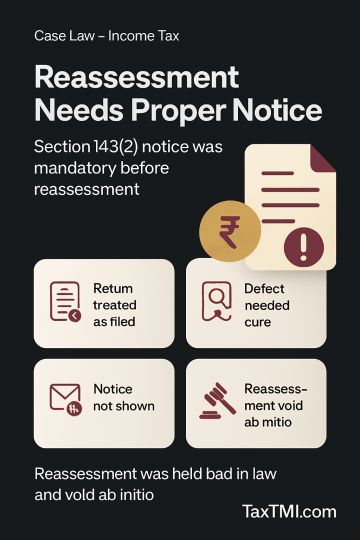
A return filed in response to notice under section 148 was treated as a return under section 139, and if it was defective for want of e-verification, the Assessing Officer had to intimate the defect and allow cure under section 139(9). Once the Assessing Officer acted on that return, issuance of notice under section 143(2) became mandatory before framing reassessment. As no such notice was shown, the Tribunal held the reassessment bad in law and void ab initio, following earlier Delhi High Court decisions.
A return filed in response to notice under section 148 was treated as a return under section 139, and if it was defective for want of e-verification, the Assessing Officer had to intimate the defect and allow cure under section 139(9). Once the Assessing Officer acted on that return, issuance of notice under section 143(2) became mandatory before framing reassessment. As no such notice was shown, the Tribunal held the reassessment bad in law and void ab initio, following earlier Delhi High Court decisions.
Note: It is a system-generated summary and is for quick reference only.
 TaxTMI
 of 4798






 Join Channel


 TaxTMI