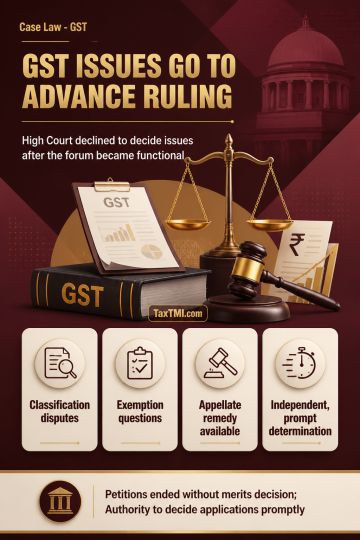
Advance-ruling mechanism governs pending GST classification, exemption and taxability disputes, limiting writ review once the specialised forum functi...
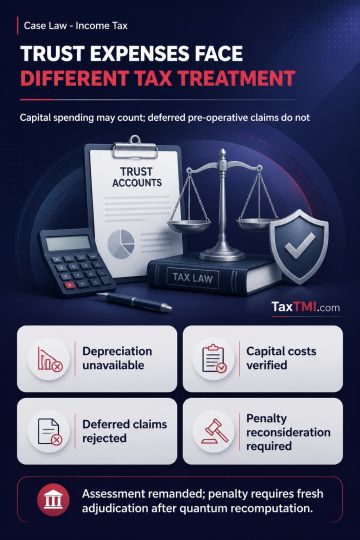
Charitable trust income application permits verified capital expenditure but rejects deferred pre-operative claims and requires reconsideration of con...
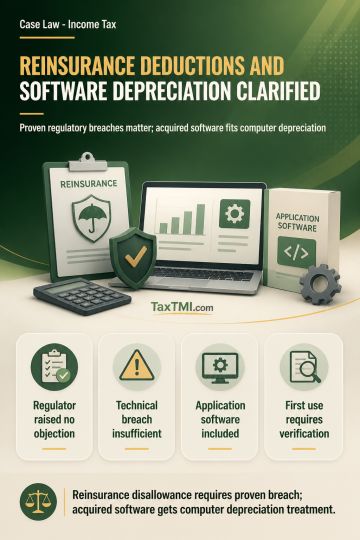
Reinsurance premium deductions require established regulatory breaches, while independently acquired software qualifies within the computer depreciati...
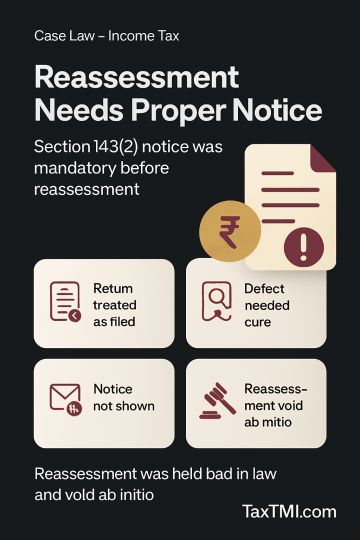
A return filed in response to notice under section 148 was treated as a return under section 139, and if it was defective for want of e-verification, the Assessing Officer had to intimate the defect and allow cure under section 139(9). Once the Assessing Officer acted on that return, issuance of notice under section 143(2) became mandatory before framing reassessment. As no such notice was shown, the Tribunal held the reassessment bad in law and void ab initio, following earlier Delhi High Court decisions.
A return filed in response to notice under section 148 was treated as a return under section 139, and if it was defective for want of e-verification, the Assessing Officer had to intimate the defect and allow cure under section 139(9). Once the Assessing Officer acted on that return, issuance of notice under section 143(2) became mandatory before framing reassessment. As no such notice was shown, the Tribunal held the reassessment bad in law and void ab initio, following earlier Delhi High Court decisions.
Note: It is a system-generated summary and is for quick reference only.
 TaxTMI
 of 4790













 Join Channel


 TaxTMI
