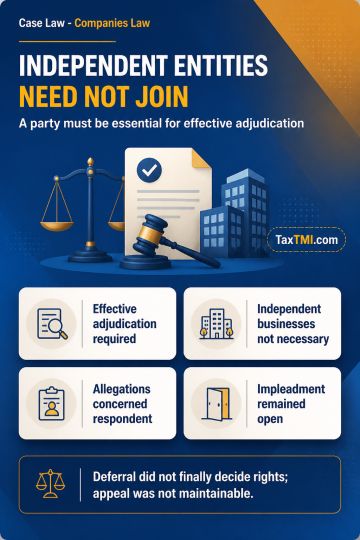
Necessary-party requirements limit impleadment of independent entities, while deferred consideration does not create an appealable adverse determinati...
Food supplement classification requires common parlance and authoritative tests, preventing treatment as proprietary Ayurvedic medicines without suppo...
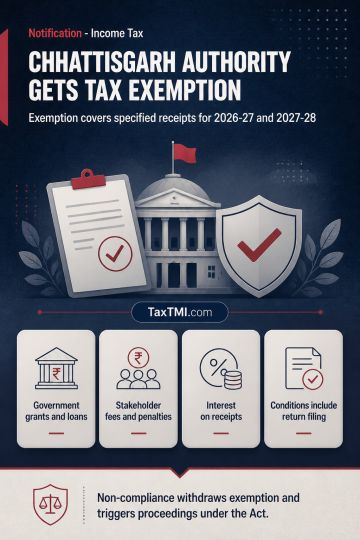
Specified regulatory authority income receives conditional tax exemption, subject to non-commercial activity, unchanged income character, and return f...
Tax exemption for regulatory authority income applies retrospectively, subject to non-commercial activity, unchanged income sources, and return-filing...
Input tax credit conditions remain constitutionally valid, with eligible recipient claims considered under GST circulars and retrospective filing dead...
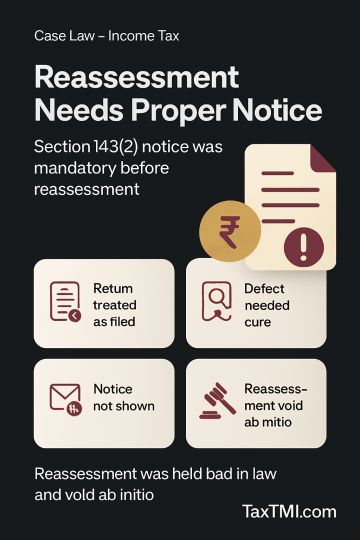
A return filed in response to notice under section 148 was treated as a return under section 139, and if it was defective for want of e-verification, the Assessing Officer had to intimate the defect and allow cure under section 139(9). Once the Assessing Officer acted on that return, issuance of notice under section 143(2) became mandatory before framing reassessment. As no such notice was shown, the Tribunal held the reassessment bad in law and void ab initio, following earlier Delhi High Court decisions.
A return filed in response to notice under section 148 was treated as a return under section 139, and if it was defective for want of e-verification, the Assessing Officer had to intimate the defect and allow cure under section 139(9). Once the Assessing Officer acted on that return, issuance of notice under section 143(2) became mandatory before framing reassessment. As no such notice was shown, the Tribunal held the reassessment bad in law and void ab initio, following earlier Delhi High Court decisions.
Note: It is a system-generated summary and is for quick reference only.
 TaxTMI
 of 4792
















 Join Channel


 TaxTMI

