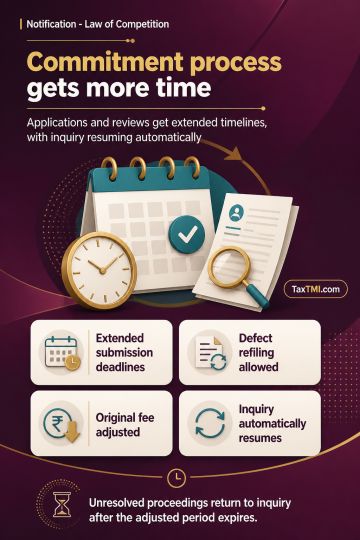
Commitment proceedings gain extended timelines, structured defect refiling, and automatic resumption of inquiry after the adjusted completion period e...
Centralised assessment transfer becomes unwarranted once the searched person's assessment is complete, requiring restoration to the appropriate charge...
Co-operative deduction eligibility excludes refund and commercial-bank interest, while qualifying co-operative investments require entity-wise verific...
Enhanced tax rate on surrendered unexplained income applies prospectively, while cash-deposit telescoping requires verification of available surrender...
Page of 4800
Press 'Enter' after typing page number.
1 to 20 of 96000 Results
❮
❯
❯❯
0 / 200
Expand Note
Add to Folder
No Folders have been created
+
Are you sure you want to delete "My most important" ?
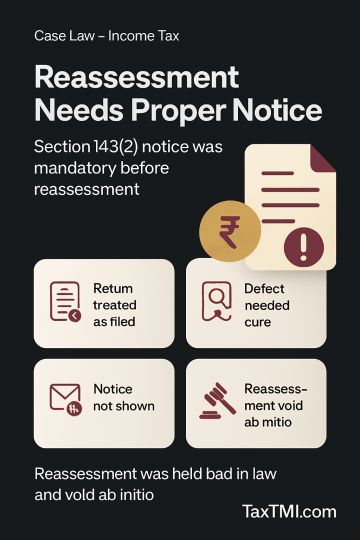
A return filed in response to notice under section 148 was treated as a return under section 139, and if it was defective for want of e-verification, the Assessing Officer had to intimate the defect and allow cure under section 139(9). Once the Assessing Officer acted on that return, issuance of notice under section 143(2) became mandatory before framing reassessment. As no such notice was shown, the Tribunal held the reassessment bad in law and void ab initio, following earlier Delhi High Court decisions.
A return filed in response to notice under section 148 was treated as a return under section 139, and if it was defective for want of e-verification, the Assessing Officer had to intimate the defect and allow cure under section 139(9). Once the Assessing Officer acted on that return, issuance of notice under section 143(2) became mandatory before framing reassessment. As no such notice was shown, the Tribunal held the reassessment bad in law and void ab initio, following earlier Delhi High Court decisions.
Note: It is a system-generated summary and is for quick reference only.
 TaxTMI


















 Join Channel


 TaxTMI