Prolonged sterilisation of development rights supports capital-gains treatment, while business-income disallowances cannot govern capital-gains comput...
Additional evidence in transfer pricing dispute leads to fresh examination, while tax deductions, TDS credit, fee and refund interest require verifica...
Category II AIF pass-through taxation preserves non-business income character; investment receipts cannot be reclassified without applying recognised ...
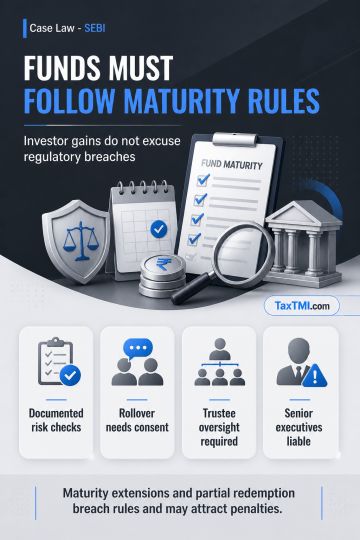
Mutual fund maturity rules require proper rollover, redemption, disclosure, and due diligence; investor gains cannot excuse regulatory breaches or pen...
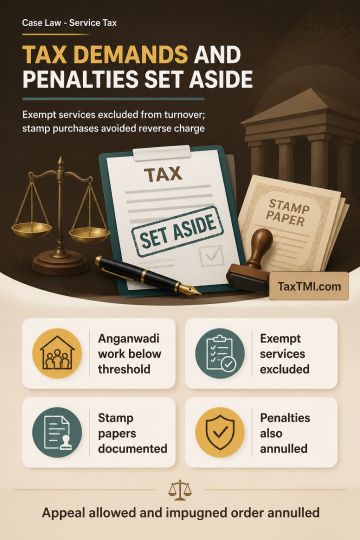
Threshold exemption excludes exempt services, while stamp-paper purchases avoid reverse charge; consequential service tax penalties were also set asid...
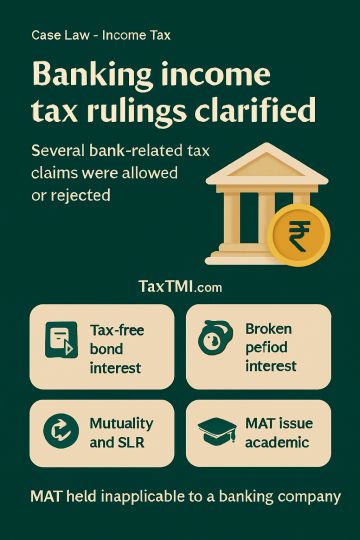
Exempt tax-free bond interest was not met with proportional disallowance where the bonds were earlier-year investments and sufficient own interest-free funds were available; the deletion of disallowance was sustained. Broken period interest on securities held as stock-in-trade was allowed as revenue expenditure. Foreign-currency loan interest from Indian borrowers was taxable on gross basis under the concessional regime. Interest between a foreign bank's head office and Indian branch was treated as self-dealing, so no taxable income or deductible expense arose. Section 14A did not apply to mutuality receipts, SLR default interest was compensatory and deductible, and a fresh expatriate salary claim was not admitted for want of foundational facts. The book-profit issue for standard assets became academic because MAT was held inapplicable to a banking company; interest on overseas placements was remanded only on actual accrual.
Exempt tax-free bond interest was not met with proportional disallowance where the bonds were earlier-year investments and sufficient own interest-free funds were available; the deletion of disallowance was sustained. Broken period interest on securities held as stock-in-trade was allowed as revenue expenditure. Foreign-currency loan interest from Indian borrowers was taxable on gross basis under the concessional regime. Interest between a foreign bank's head office and Indian branch was treated as self-dealing, so no taxable income or deductible expense arose. Section 14A did not apply to mutuality receipts, SLR default interest was compensatory and deductible, and a fresh expatriate salary claim was not admitted for want of foundational facts. The book-profit issue for standard assets became academic because MAT was held inapplicable to a banking company; interest on overseas placements was remanded only on actual accrual.
Note: It is a system-generated summary and is for quick reference only.
 TaxTMI
 of 4784

















 Join Channel


 TaxTMI
