Content ownership determines GST treatment of printed publications: customer-supplied text is a taxable printing service, owned content is exempt good...
Employee recoveries, input tax credit and notice pay recovery under GST: AAR distinguishes taxable supplies from non-taxable perquisites and penalties...
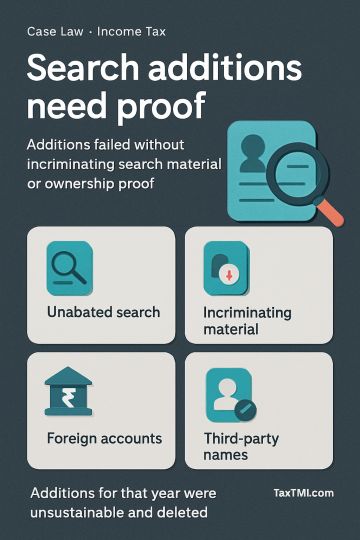
In completed or unabated assessments under section 153A, additions are confined to incriminating material found during the search; material already available with the Revenue, such as the HSBC Geneva Base Note, cannot by itself support an addition. Applying that rule, the article notes that the additions for the relevant year were unsustainable because no incriminating search material linked to them was found. On section 69A, the threshold requirement is proof that the assessee owned the money or asset; where the foreign accounts stood in third-party names and the Revenue could not prove ownership, the additions were properly deleted.
In completed or unabated assessments under section 153A, additions are confined to incriminating material found during the search; material already available with the Revenue, such as the HSBC Geneva Base Note, cannot by itself support an addition. Applying that rule, the article notes that the additions for the relevant year were unsustainable because no incriminating search material linked to them was found. On section 69A, the threshold requirement is proof that the assessee owned the money or asset; where the foreign accounts stood in third-party names and the Revenue could not prove ownership, the additions were properly deleted.
Note: It is a system-generated summary and is for quick reference only.
 TaxTMI
  TaxTMI
 of 4828


 Join Channel