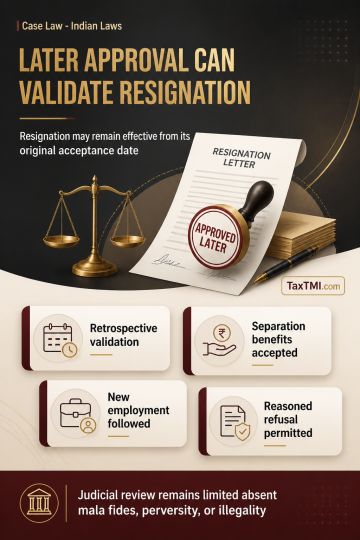
Ratification of resignation acceptance validates separation retrospectively, while withdrawal may be refused through reasoned administrative discretio...
Nature-dependent electricity contracts receive new Ind AS accounting, hedge designation, transition and financial-statement disclosure requirements fr...
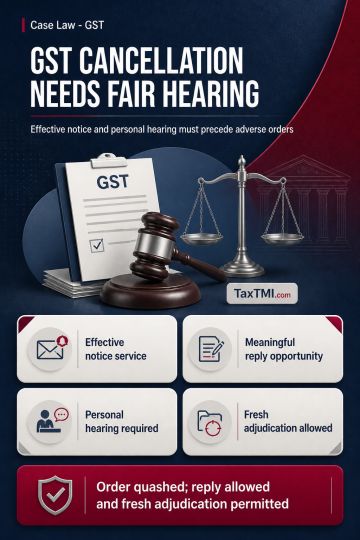
Alternative GST remedy permitted protective writ intervention for ex parte adjudication, preserving independent appellate review of input tax credit d...
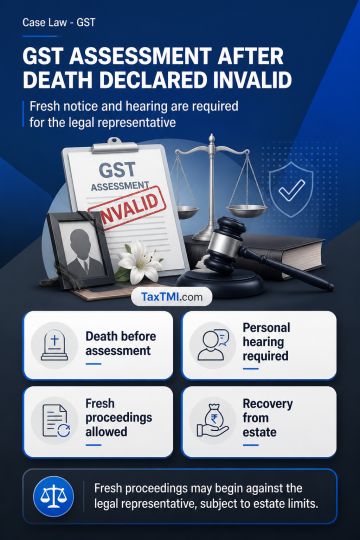
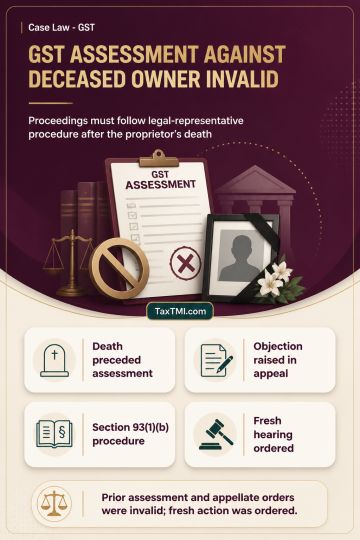
Assessment against deceased sole proprietor requires proceedings against the legal representative, rendering prior assessment and appellate orders inv...
Residential waste collection classification under SAC 999423 defeats composite-supply exemption where facilitating goods are not transferred to the lo...
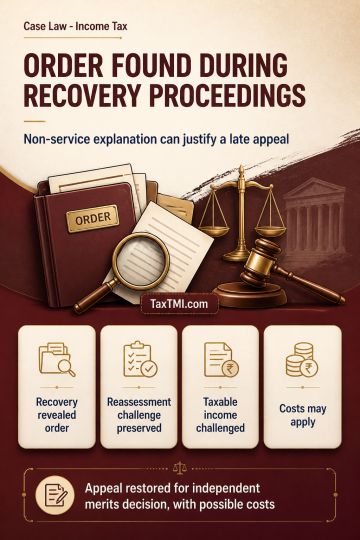
Condonation of delay permits statutory appeal restoration where inadequate service explanation prevented consideration of reassessment and taxable-inc...
Page of 4798
Press 'Enter' after typing page number.
121 to 140 of 95955 Results
❮
❯
❯❯
0 / 200
Expand Note
Add to Folder
No Folders have been created
+
Are you sure you want to delete "My most important" ?
Separate corporate personality was upheld for the two foreign companies, and section 69A could not be applied because the Revenue failed to show by cogent evidence that their bank funds belonged beneficially to the assessee. Mere earlier shareholding, directorship, or authority to operate accounts was held insufficient to lift the corporate veil, especially when no material showed flow of funds from India to the companies or receipt by the assessee from those accounts. The assessee's explanation that the transactions related to his non-resident son and son-in-law was supported by confirmations, and his prior resignation and share transfer further weakened the ownership allegation. The quantum additions were deleted, and the related penalty under section 271(1)(c) also fell.
Separate corporate personality was upheld for the two foreign companies, and section 69A could not be applied because the Revenue failed to show by cogent evidence that their bank funds belonged beneficially to the assessee. Mere earlier shareholding, directorship, or authority to operate accounts was held insufficient to lift the corporate veil, especially when no material showed flow of funds from India to the companies or receipt by the assessee from those accounts. The assessee's explanation that the transactions related to his non-resident son and son-in-law was supported by confirmations, and his prior resignation and share transfer further weakened the ownership allegation. The quantum additions were deleted, and the related penalty under section 271(1)(c) also fell.
Note: It is a system-generated summary and is for quick reference only.
 TaxTMI
 of 4798














 Join Channel



 TaxTMI