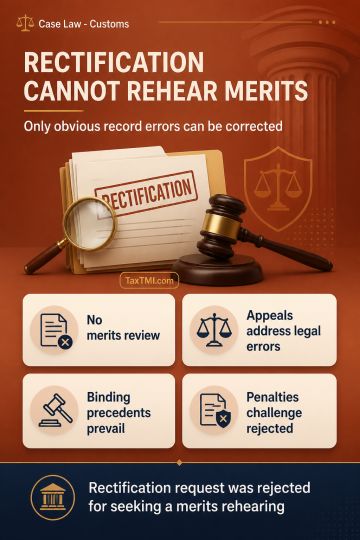
Rectification of mistake remains limited to self-evident record errors, preventing merits review through miscellaneous applications and preserving fin...
Tender creditworthiness conditions may extend to de facto Promoter Directors, with post-participation challenges generally barred absent arbitrariness...
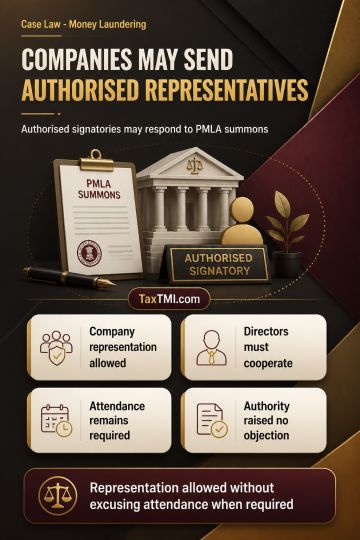
Corporate representation in PMLA summons proceedings permitted through an authorised signatory, subject to directors' continuing cooperation and atten...
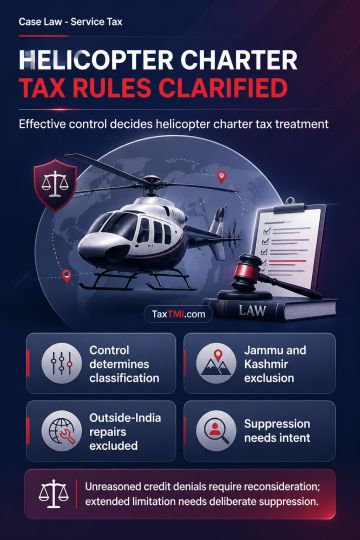
Helicopter charter classification requires effective control analysis, while territorial performance, reasoned credit orders and wilful suppression de...
Specified fund definition expands PAN exemption eligibility for registered alternative investment funds and qualifying International Financial Service...
Tax exemption for specified legal-services authority income applies retrospectively, subject to non-commercial activity, unchanged income sources, and...
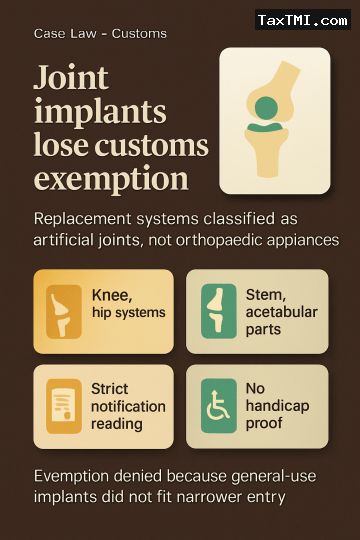
Complete knee, hip and shoulder replacement systems were classified as artificial joints, while separately imported stem and acetabular components were classified as other artificial parts of the body. The claim that they were orthopaedic appliances failed because Heading 9021 and the HSN distinguish support devices from replacement prostheses. Exemption under Sr. No. 385 of Notification No. 45/2025-Cus was denied: Entry B(1) applies only to orthopaedic appliances, and Entry E(9) requires implants for severely physically handicapped patients. The applicant did not show that these general-use implants met that narrower description, so strict construction of the exemption defeated the claim.
Complete knee, hip and shoulder replacement systems were classified as artificial joints, while separately imported stem and acetabular components were classified as other artificial parts of the body. The claim that they were orthopaedic appliances failed because Heading 9021 and the HSN distinguish support devices from replacement prostheses. Exemption under Sr. No. 385 of Notification No. 45/2025-Cus was denied: Entry B(1) applies only to orthopaedic appliances, and Entry E(9) requires implants for severely physically handicapped patients. The applicant did not show that these general-use implants met that narrower description, so strict construction of the exemption defeated the claim.
Note: It is a system-generated summary and is for quick reference only.
 TaxTMI
 of 4792












 Join Channel


 TaxTMI