Revisionary jurisdiction under section 263 upheld; faceless assessments subject to revision when AO fails requisite enquiries, remitted for fresh asse...
Limited scope of processing under section 143(1): enhancement without show cause is unsustainable; remand for residency, taxation and TDS verification...
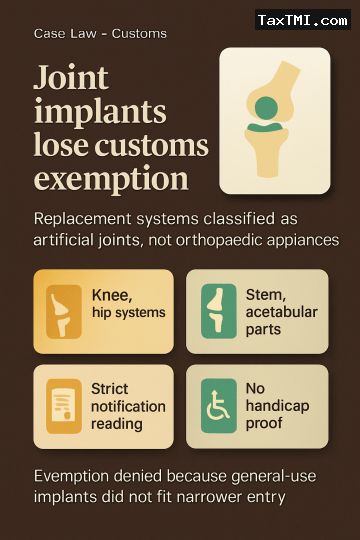
Complete knee, hip and shoulder replacement systems were classified as artificial joints, while separately imported stem and acetabular components were classified as other artificial parts of the body. The claim that they were orthopaedic appliances failed because Heading 9021 and the HSN distinguish support devices from replacement prostheses. Exemption under Sr. No. 385 of Notification No. 45/2025-Cus was denied: Entry B(1) applies only to orthopaedic appliances, and Entry E(9) requires implants for severely physically handicapped patients. The applicant did not show that these general-use implants met that narrower description, so strict construction of the exemption defeated the claim.
Complete knee, hip and shoulder replacement systems were classified as artificial joints, while separately imported stem and acetabular components were classified as other artificial parts of the body. The claim that they were orthopaedic appliances failed because Heading 9021 and the HSN distinguish support devices from replacement prostheses. Exemption under Sr. No. 385 of Notification No. 45/2025-Cus was denied: Entry B(1) applies only to orthopaedic appliances, and Entry E(9) requires implants for severely physically handicapped patients. The applicant did not show that these general-use implants met that narrower description, so strict construction of the exemption defeated the claim.
Note: It is a system-generated summary and is for quick reference only.
 TaxTMI
  TaxTMI
 of 4827


 Join Channel