Opportunity to respond to jurisdictional reports is mandatory before customs settlement duty enhancement; connected applications require consistent ad...
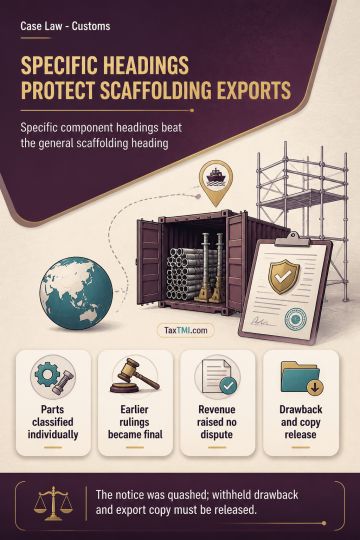
Specific customs headings for scaffolding components prevail over general classification, invalidating misclassification proceedings and enabling with...
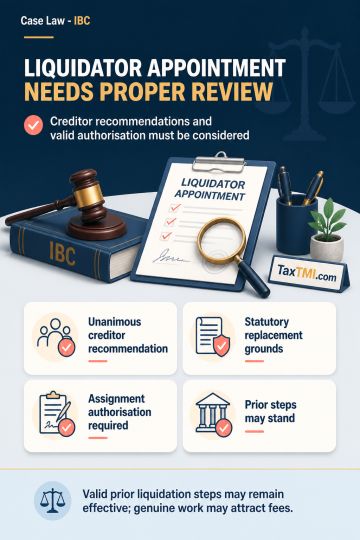
Liquidator appointment under Section 34 requires consideration of creditor recommendations, valid professional authorisation, and preservation of vali...
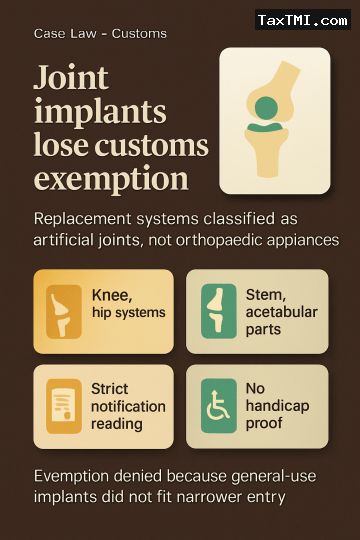
Complete knee, hip and shoulder replacement systems were classified as artificial joints, while separately imported stem and acetabular components were classified as other artificial parts of the body. The claim that they were orthopaedic appliances failed because Heading 9021 and the HSN distinguish support devices from replacement prostheses. Exemption under Sr. No. 385 of Notification No. 45/2025-Cus was denied: Entry B(1) applies only to orthopaedic appliances, and Entry E(9) requires implants for severely physically handicapped patients. The applicant did not show that these general-use implants met that narrower description, so strict construction of the exemption defeated the claim.
Complete knee, hip and shoulder replacement systems were classified as artificial joints, while separately imported stem and acetabular components were classified as other artificial parts of the body. The claim that they were orthopaedic appliances failed because Heading 9021 and the HSN distinguish support devices from replacement prostheses. Exemption under Sr. No. 385 of Notification No. 45/2025-Cus was denied: Entry B(1) applies only to orthopaedic appliances, and Entry E(9) requires implants for severely physically handicapped patients. The applicant did not show that these general-use implants met that narrower description, so strict construction of the exemption defeated the claim.
Note: It is a system-generated summary and is for quick reference only.
 TaxTMI
 of 4792













 Join Channel


 TaxTMI