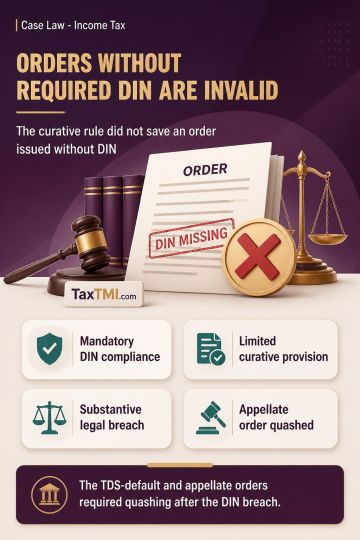
Document Identification Number compliance renders TDS-default orders invalid where mandatory DIN requirements are breached and curative provision does...
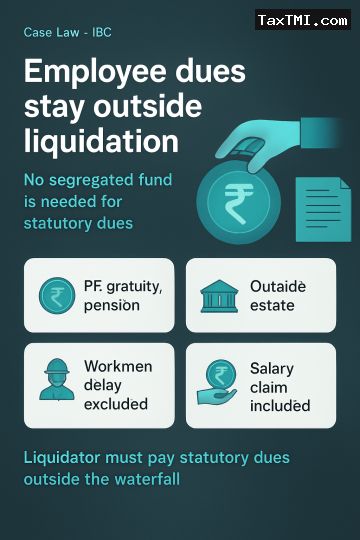
Provident fund, gratuity and pension dues were treated as statutory employee entitlements excluded from the liquidation estate, and the Tribunal rejected the argument that a segregated fund must exist on the liquidation commencement date for those dues to survive. It held that the provision is due-centric, not asset-centric, so the liquidator remains liable to pay such amounts outside distribution under the waterfall. The Tribunal also allowed exclusion of 1656 days of litigation time when computing twenty-four months' workmen dues, so prolonged CIRP delay would not defeat workmen's priority. A recovery certificate for salary dues was held to remain part of workmen's claims under the liquidation process.
Provident fund, gratuity and pension dues were treated as statutory employee entitlements excluded from the liquidation estate, and the Tribunal rejected the argument that a segregated fund must exist on the liquidation commencement date for those dues to survive. It held that the provision is due-centric, not asset-centric, so the liquidator remains liable to pay such amounts outside distribution under the waterfall. The Tribunal also allowed exclusion of 1656 days of litigation time when computing twenty-four months' workmen dues, so prolonged CIRP delay would not defeat workmen's priority. A recovery certificate for salary dues was held to remain part of workmen's claims under the liquidation process.
Note: It is a system-generated summary and is for quick reference only.
 TaxTMI
  TaxTMI
 of 4918