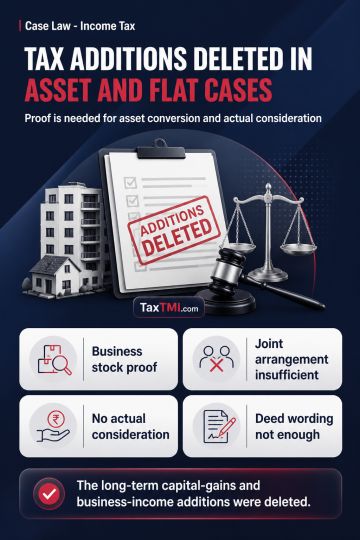
Capital Asset Conversion Requires Proven Business Stock Treatment; Paper Consideration in Spousal Flat Transfers Does Not Create Taxable Business Inco...
Human-probability test defeats political donation deduction where banking records mask accommodation-entry fund layering and evidence shows non-genuin...
Commercial property status protects capital-gains exemption when residential-house ownership limits are tested, while agricultural-land character gove...
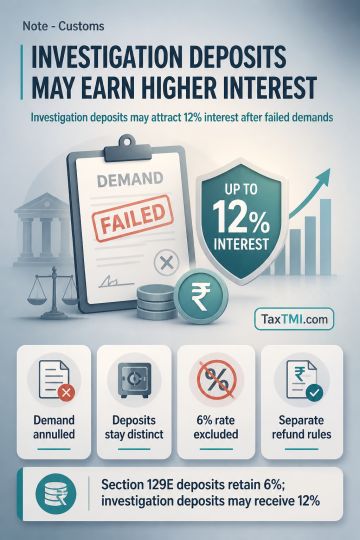
Investigation deposits refunded after failed customs demands fall outside the statutory appellate pre-deposit interest regime and may attract compensa...
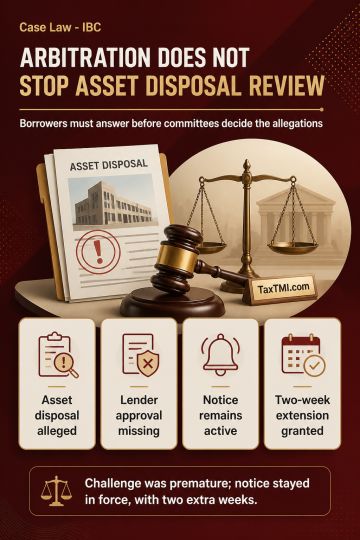
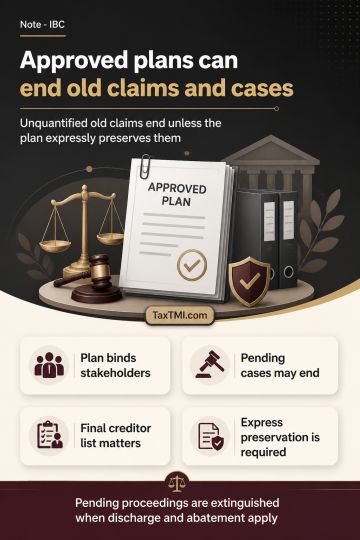
Resolution plan finality extinguishes unquantified operational-creditor claims and pending proceedings unless the approved plan expressly preserves th...
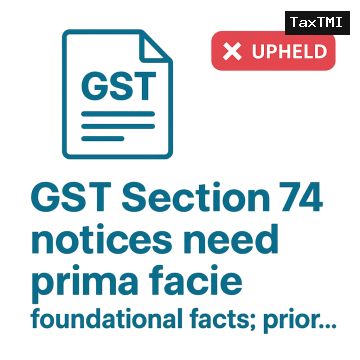
In GST proceedings, invocation of the extended period under Section 74 depends on jurisdictional or foundational facts and a prima facie view, based on available material, that non-payment, short payment, wrongful input tax credit, fraud, wilful misstatement or suppression exists. The notice should ordinarily disclose the basis for alleging the mental element, but prior communication of those grounds through scrutiny, audit, inspection or pre-notice intimation can satisfy the requirement, so a detailed notice is not invalid merely because it repeats earlier allegations. Notices were upheld where the basis had already been disclosed, while an inadequately particularised order was remitted for fresh consideration under Section 73, with possible recourse to Section 74 if information remained unprovided.
In GST proceedings, invocation of the extended period under Section 74 depends on jurisdictional or foundational facts and a prima facie view, based on available material, that non-payment, short payment, wrongful input tax credit, fraud, wilful misstatement or suppression exists. The notice should ordinarily disclose the basis for alleging the mental element, but prior communication of those grounds through scrutiny, audit, inspection or pre-notice intimation can satisfy the requirement, so a detailed notice is not invalid merely because it repeats earlier allegations. Notices were upheld where the basis had already been disclosed, while an inadequately particularised order was remitted for fresh consideration under Section 73, with possible recourse to Section 74 if information remained unprovided.
Note: It is a system-generated summary and is for quick reference only.
 TaxTMI
  TaxTMI
 of 4891