Preliminary-expense amortisation and MAT exempt-income adjustments prevailed, while trademark costs and managerial remuneration require fresh verifica...
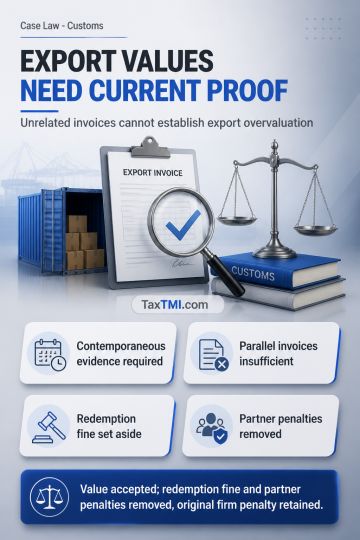
Export valuation requires contemporaneous evidence; unrelated invoices cannot prove overvaluation, and dual penalties on firm and partner are impermis...
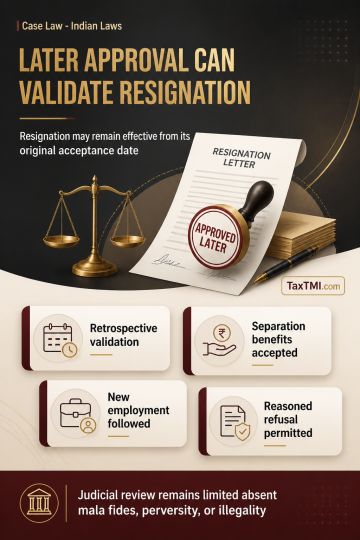
Ratification of resignation acceptance validates separation retrospectively, while withdrawal may be refused through reasoned administrative discretio...
Nature-dependent electricity contracts receive new Ind AS accounting, hedge designation, transition and financial-statement disclosure requirements fr...
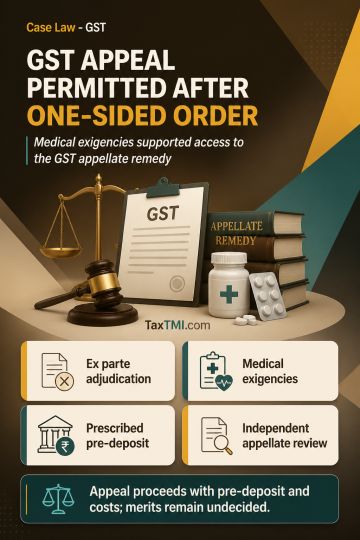
Alternative GST remedy permitted protective writ intervention for ex parte adjudication, preserving independent appellate review of input tax credit d...
Under section 50C, fair market value must be determined on the...
Fair market value under section 50C must reflect existing property condition, not hypothetical development, and statutory valuation steps must be followed.
Contents
Summary
Note
Bookmark
Share
✓ Copied successfully !
Print
Print Options
For full text, please login
Login to TaxTMI
Verification Pending
The Email Id has not been verified. Click on the link we have sent on
Under section 50C, fair market value must be determined on the property's existing condition, not on a hypothetical development or plotting basis. The text states that where the difference between declared consideration and the valuation was within the accepted tolerance band, the Departmental Valuation Officer's report could not reliably replace the actual sale price, especially because it assumed future development, deducted development expenses and developer's profit, and did not value the land as transferred. It also notes that, after a reference under section 50C(2), appellate direction to adopt stamp duty value directly was contrary to the statutory mechanism and unsustainable. The addition to long-term capital gains was deleted.
Under section 50C, fair market value must be determined on the property's existing condition, not on a hypothetical development or plotting basis. The text states that where the difference between declared consideration and the valuation was within the accepted tolerance band, the Departmental Valuation Officer's report could not reliably replace the actual sale price, especially because it assumed future development, deducted development expenses and developer's profit, and did not value the land as transferred. It also notes that, after a reference under section 50C(2), appellate direction to adopt stamp duty value directly was contrary to the statutory mechanism and unsustainable. The addition to long-term capital gains was deleted.
Note: It is a system-generated summary and is for quick reference only.
 TaxTMI
 of 4803












 Join Channel



 TaxTMI