Inherited property sale proceeds require capital-gains treatment where ownership is supported by evidence, not suspicion or unverified signature doubt...
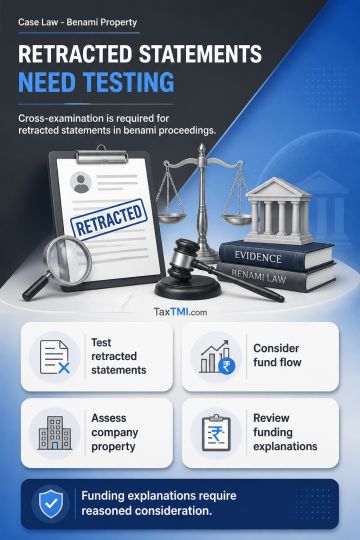
Cross-examination of retracted statements is essential where foundational evidence supports a benami allegation and documented funding explanations re...
Capital-goods exemption covers plant-modernisation accessories, while the import restriction applies only to earlier capital-goods components and spar...
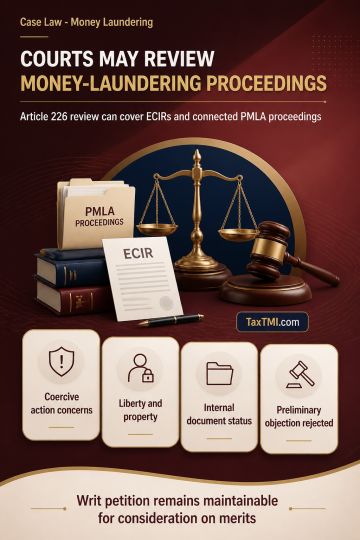
Constitutional judicial review permits challenges to ECIRs and connected money-laundering proceedings where coercive action affects fundamental intere...
In a suit on a promissory note, the HC noted that untraversed pleadings and the absence of cross-examination meant the plaintiff's case on advance and execution stood admitted, and an adverse finding on lending capacity was perverse where the defendant filed no written statement and the court did not clarify its own doubts by questioning the witness. It further held that a promissory note need not be attested, non-examination of an attestor was not fatal, and breach of the cash-loan prohibition under section 269SS may attract tax consequences but does not make the debt void or unenforceable. The plaintiff's claim was therefore upheld.
In a suit on a promissory note, the HC noted that untraversed pleadings and the absence of cross-examination meant the plaintiff's case on advance and execution stood admitted, and an adverse finding on lending capacity was perverse where the defendant filed no written statement and the court did not clarify its own doubts by questioning the witness. It further held that a promissory note need not be attested, non-examination of an attestor was not fatal, and breach of the cash-loan prohibition under section 269SS may attract tax consequences but does not make the debt void or unenforceable. The plaintiff's claim was therefore upheld.
Note: It is a system-generated summary and is for quick reference only.
 TaxTMI
 of 4778

















 Join Channel



 TaxTMI