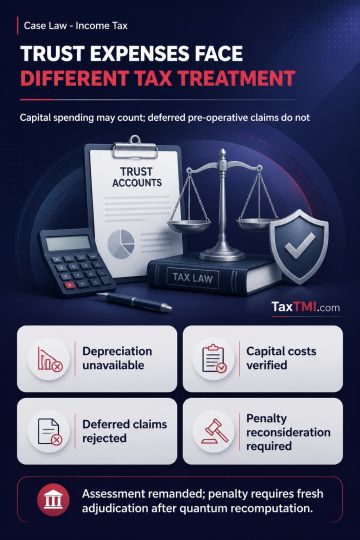
Charitable trust income application permits verified capital expenditure but rejects deferred pre-operative claims and requires reconsideration of con...
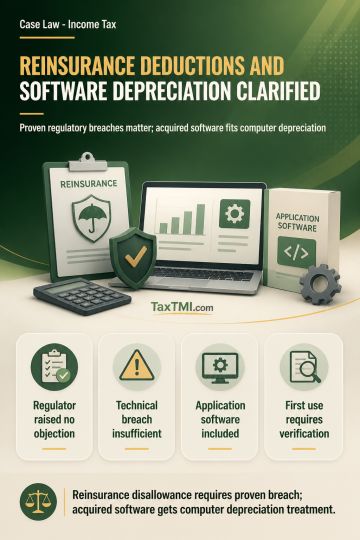
Reinsurance premium deductions require established regulatory breaches, while independently acquired software qualifies within the computer depreciati...
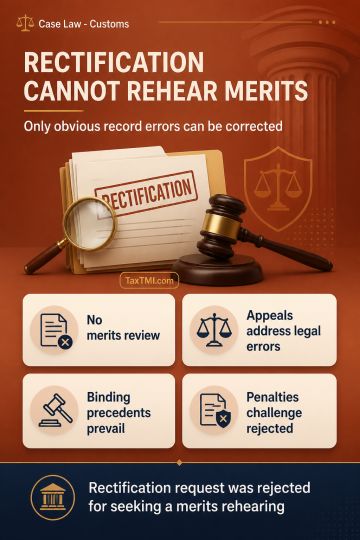
Rectification of mistake remains limited to self-evident record errors, preventing merits review through miscellaneous applications and preserving fin...
Tender creditworthiness conditions may extend to de facto Promoter Directors, with post-participation challenges generally barred absent arbitrariness...
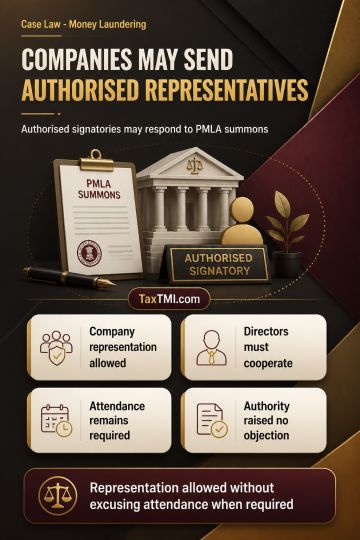
Corporate representation in PMLA summons proceedings permitted through an authorised signatory, subject to directors' continuing cooperation and atten...
Statutory presumptions under Sections 118 and 139 of the N.I. Act arose once the cheque and signature were proved, and the accused's bare plea of non-issuance, unsupported by expert evidence, witnesses, or credible material, failed to rebut the presumption of a legally enforceable debt on the preponderance of probabilities. The bank return memo also carried the statutory presumption of correctness under Section 146, so the objection that no bank official was examined was rejected. The High Court further held that revisional interference with concurrent findings is confined to patent illegality, perversity, or miscarriage of justice; finding none, it upheld the conviction and dismissed the revision.
Statutory presumptions under Sections 118 and 139 of the N.I. Act arose once the cheque and signature were proved, and the accused's bare plea of non-issuance, unsupported by expert evidence, witnesses, or credible material, failed to rebut the presumption of a legally enforceable debt on the preponderance of probabilities. The bank return memo also carried the statutory presumption of correctness under Section 146, so the objection that no bank official was examined was rejected. The High Court further held that revisional interference with concurrent findings is confined to patent illegality, perversity, or miscarriage of justice; finding none, it upheld the conviction and dismissed the revision.
Note: It is a system-generated summary and is for quick reference only.
 TaxTMI
 of 4800









 Join Channel


 TaxTMI
