Opportunity to respond to jurisdictional reports is mandatory before customs settlement duty enhancement; connected applications require consistent ad...
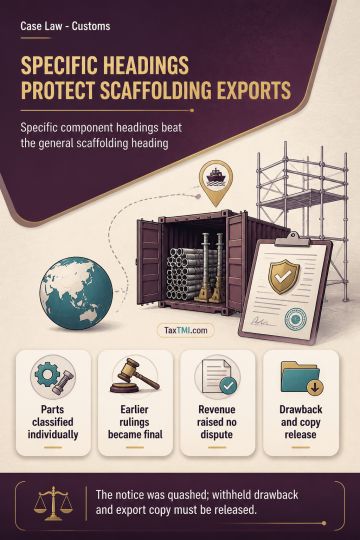
Specific customs headings for scaffolding components prevail over general classification, invalidating misclassification proceedings and enabling with...
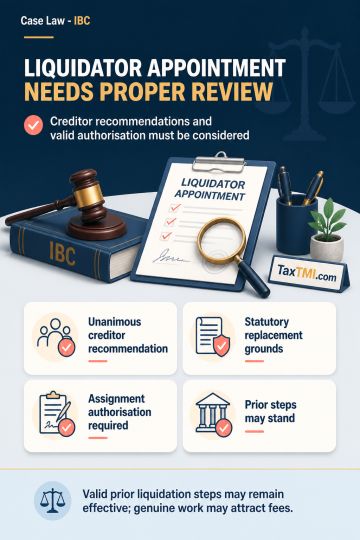
Liquidator appointment under Section 34 requires consideration of creditor recommendations, valid professional authorisation, and preservation of vali...
Income-tax exemption for specified regulatory fees and government grants applies subject to non-commercial activity and continuing compliance conditio...
Digital accessibility audit and remediation deadlines extended, while all other disability-compliance obligations for regulated entities remain unchan...
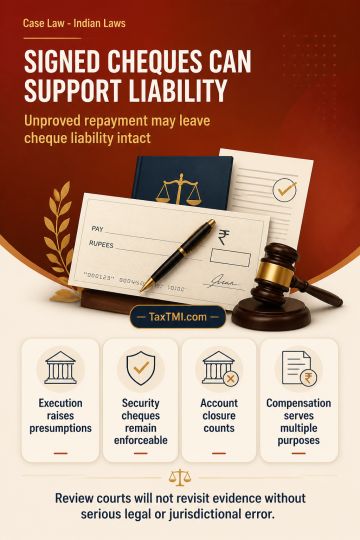
Statutory presumptions under Sections 118 and 139 of the N.I. Act arose once the cheque and signature were proved, and the accused's bare plea of non-issuance, unsupported by expert evidence, witnesses, or credible material, failed to rebut the presumption of a legally enforceable debt on the preponderance of probabilities. The bank return memo also carried the statutory presumption of correctness under Section 146, so the objection that no bank official was examined was rejected. The High Court further held that revisional interference with concurrent findings is confined to patent illegality, perversity, or miscarriage of justice; finding none, it upheld the conviction and dismissed the revision.
Statutory presumptions under Sections 118 and 139 of the N.I. Act arose once the cheque and signature were proved, and the accused's bare plea of non-issuance, unsupported by expert evidence, witnesses, or credible material, failed to rebut the presumption of a legally enforceable debt on the preponderance of probabilities. The bank return memo also carried the statutory presumption of correctness under Section 146, so the objection that no bank official was examined was rejected. The High Court further held that revisional interference with concurrent findings is confined to patent illegality, perversity, or miscarriage of justice; finding none, it upheld the conviction and dismissed the revision.
Note: It is a system-generated summary and is for quick reference only.
 TaxTMI
 of 4803











 Join Channel


 TaxTMI
