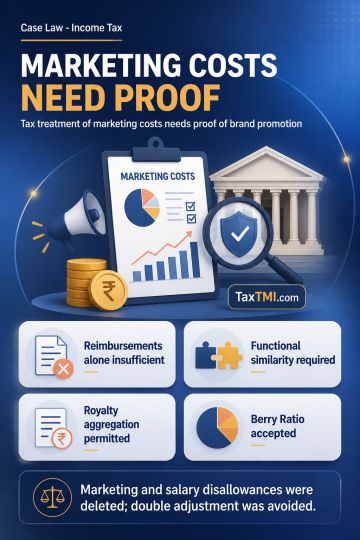
Transfer pricing requires evidence for AMP transactions, functionally reliable comparables, and appropriate aggregation or Berry Ratio benchmarking me...
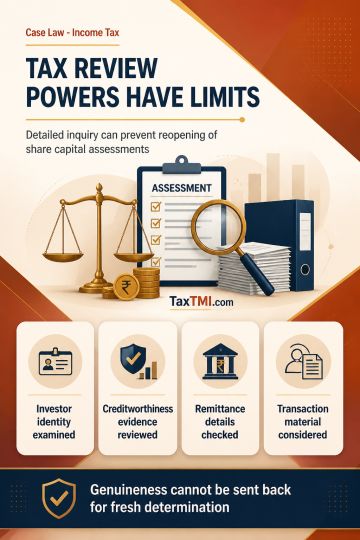
Revisionary jurisdiction cannot reopen share capital assessments where adequate inquiry supports a permissible view and no independent error is establ...
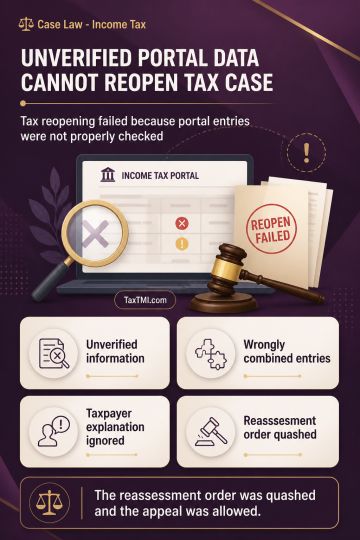
Reassessment jurisdiction fails where unverified portal information is aggregated without examining the taxpayer's explanation or relevance of entries...
Statutory sanction for delayed reassessment requires approval from the prescribed authority; approval by an inferior authority invalidates jurisdictio...
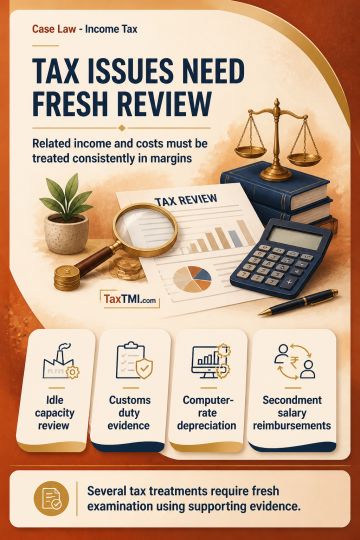
Transfer pricing margin adjustments require matching treatment of non-operating income and related costs, with comparability issues reconsidered on ev...
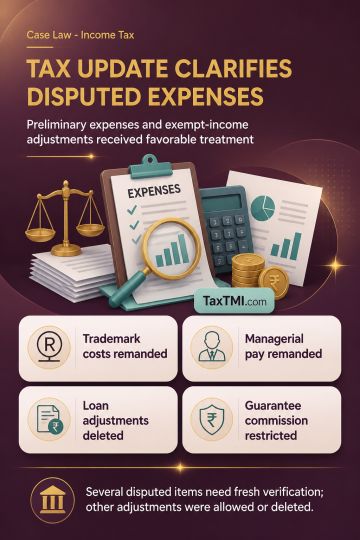
Preliminary-expense amortisation and MAT exempt-income adjustments prevailed, while trademark costs and managerial remuneration require fresh verifica...
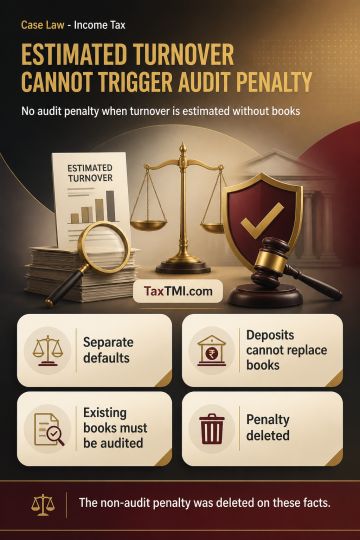
Export valuation requires contemporaneous evidence; unrelated invoices cannot prove overvaluation, and dual penalties on firm and partner are impermis...
Under the post-1.4.2021 reassessment scheme, notice under section 148 can be issued where the Assessing Officer has material indicating escapement of income, and the sufficiency of incriminating material is tested in reassessment, not at the notice stage; the reopening was therefore upheld. The Tribunal also held that section 170 governs successor liability on amalgamation and that absence of pending proceedings on the amalgamation date did not invalidate action against the successor. On merits, additions treating sale proceeds of earlier-year investments as unexplained cash credit, and related commission for alleged accommodation entries, were deleted because the transactions were supported by banking records, the investments had earlier been accepted, and reliance on third-party statements without cross-examination violated natural justice.
Under the post-1.4.2021 reassessment scheme, notice under section 148 can be issued where the Assessing Officer has material indicating escapement of income, and the sufficiency of incriminating material is tested in reassessment, not at the notice stage; the reopening was therefore upheld. The Tribunal also held that section 170 governs successor liability on amalgamation and that absence of pending proceedings on the amalgamation date did not invalidate action against the successor. On merits, additions treating sale proceeds of earlier-year investments as unexplained cash credit, and related commission for alleged accommodation entries, were deleted because the transactions were supported by banking records, the investments had earlier been accepted, and reliance on third-party statements without cross-examination violated natural justice.
Note: It is a system-generated summary and is for quick reference only.
 TaxTMI
 of 4805














 Join Channel


 TaxTMI
