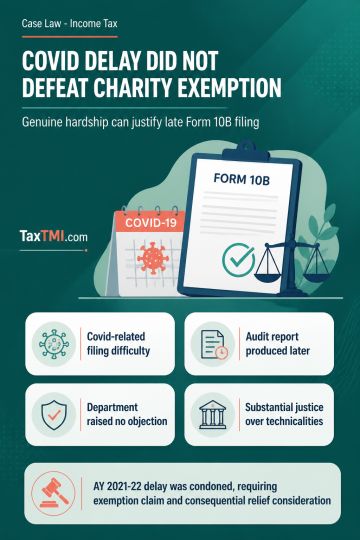
Belated Form 10B filing during Covid-19 cannot defeat charitable exemption where genuine hardship warrants condonation and substantial justice prevail...
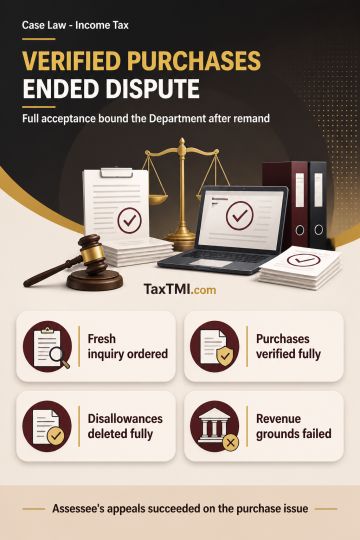
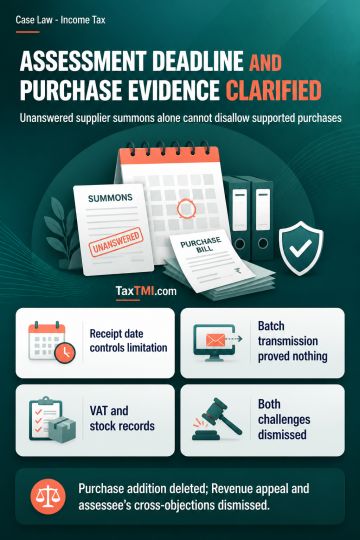
Limitation for consequential assessments runs from prescribed authority receipt, while verified purchases cannot be disallowed merely for unanswered s...
Higher depreciation for qualifying commercial vehicles, exempt-income disallowance, research deduction verification, and club-expense treatment clarif...
Charitable registration renewal cannot become an assessment of receipts, profitability or annual exemption compliance, requiring renewal and donation ...
AMP expenditure for own business is not an international transaction without an associated-enterprise arrangement, eliminating transfer pricing adjust...
Page of 4809
Press 'Enter' after typing page number.
141 to 160 of 96177 Results
❮
❯
❯❯
0 / 200
Expand Note
Add to Folder
No Folders have been created
+
Are you sure you want to delete "My most important" ?
Liquidation process regulations were extensively amended to strengthen committee of creditors control, tighten timelines, and standardise filings. The liquidator must now obtain committee approval for key actions including professional appointments, fees, valuation, claims-related matters, sale terms, private sale, compromise filings, extension requests, and early dissolution, while the committee continues through liquidation subject to revised membership and voting rules. Claims verification, stakeholder updates, and distribution timelines were shortened; form-based filings were replaced by Board-notified formats; and obsolete provisions on consultation committees and certain schedules were removed. The amendments also restrict sales to ineligible resolution applicants and related parties, and require a model liquidation timeline.
Liquidation process regulations were extensively amended to strengthen committee of creditors control, tighten timelines, and standardise filings. The liquidator must now obtain committee approval for key actions including professional appointments, fees, valuation, claims-related matters, sale terms, private sale, compromise filings, extension requests, and early dissolution, while the committee continues through liquidation subject to revised membership and voting rules. Claims verification, stakeholder updates, and distribution timelines were shortened; form-based filings were replaced by Board-notified formats; and obsolete provisions on consultation committees and certain schedules were removed. The amendments also restrict sales to ineligible resolution applicants and related parties, and require a model liquidation timeline.
Note: It is a system-generated summary and is for quick reference only.
 TaxTMI
  TaxTMI
 of 4809








 Join Channel