Donor-directed corpus contributions retain capital character despite exemption claims under section 10(23C)(vi), preventing their treatment as taxable...
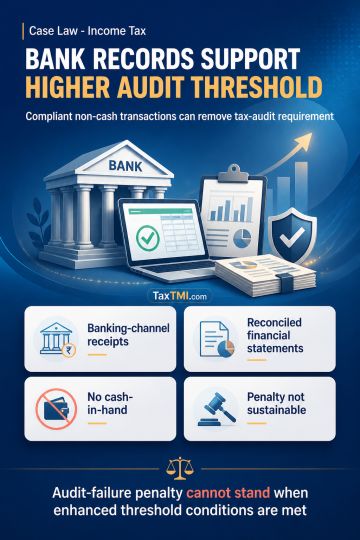
Enhanced tax-audit threshold applies where banking records establish compliant non-cash receipts and payments, eliminating penalty exposure for audit ...
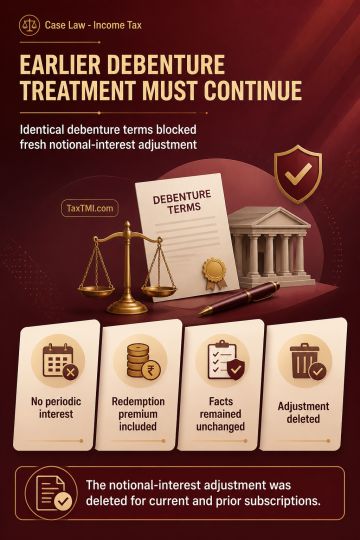
Transfer pricing consistency protects identical non-interest-bearing debenture terms from a later notional-interest adjustment without valid statutory...
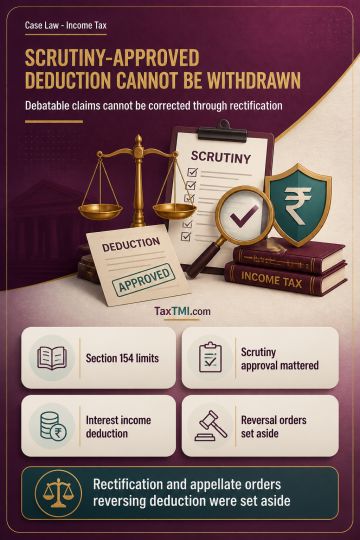
Rectification of debatable deduction claims cannot reverse scrutiny-approved co-operative society interest income deductions as apparent record errors...
Cash-method accounting bars presumptive interest taxation, while unsupported securities and share-trading additions require reliable material and veri...
Penalty under section 43 of the Black Money Act was treated as discretionary rather than automatic, and was deleted for a bona fide failure to disclose foreign ESOP shares in Schedule FA. The Tribunal accepted that the shares formed part of employment compensation, the related perquisite and later capital gains had already been taxed, and the only lapse was non-disclosure in the initial reporting year while the assets were held through a fiduciary structure. Applying the principles that a technical or inadvertent breach without deliberate concealment or guilty intent does not justify penalty, the Tribunal also followed prior ITAT and Supreme Court guidance. The jurisdictional challenge was left open as unnecessary.
Penalty under section 43 of the Black Money Act was treated as discretionary rather than automatic, and was deleted for a bona fide failure to disclose foreign ESOP shares in Schedule FA. The Tribunal accepted that the shares formed part of employment compensation, the related perquisite and later capital gains had already been taxed, and the only lapse was non-disclosure in the initial reporting year while the assets were held through a fiduciary structure. Applying the principles that a technical or inadvertent breach without deliberate concealment or guilty intent does not justify penalty, the Tribunal also followed prior ITAT and Supreme Court guidance. The jurisdictional challenge was left open as unnecessary.
Note: It is a system-generated summary and is for quick reference only.
 TaxTMI
  TaxTMI
 of 4809














 Join Channel