Transaction value cannot be rejected solely on non-statutory valuation guidelines without corroborative evidence supporting reassessment of final cust...
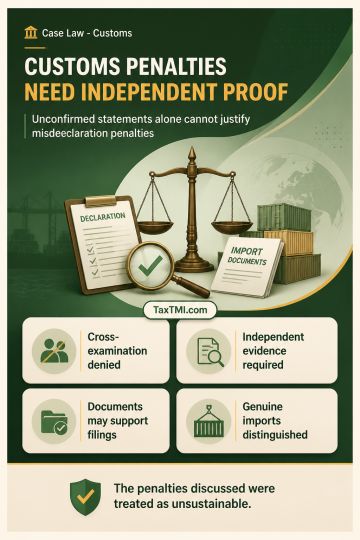
Cross-examination rights and corroborated evidence limit customs penalties for misdeclaration in genuine import transactions involving documented clea...
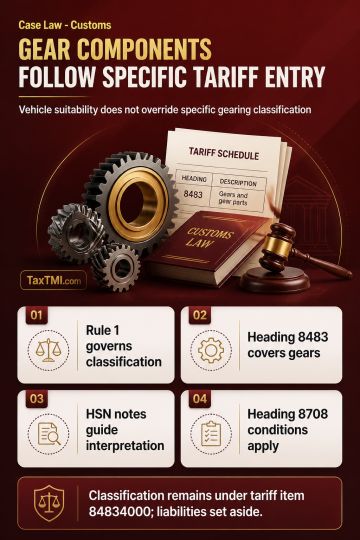
Tariff classification of vehicle gear components follows the specific gearing entry, displacing motor-vehicle parts classification and related liabili...
Necessary-party requirements limit impleadment of independent entities, while deferred consideration does not create an appealable adverse determinati...
Food supplement classification requires common parlance and authoritative tests, preventing treatment as proprietary Ayurvedic medicines without suppo...
Penalty under section 43 of the Black Money Act was treated as discretionary rather than automatic, and was deleted for a bona fide failure to disclose foreign ESOP shares in Schedule FA. The Tribunal accepted that the shares formed part of employment compensation, the related perquisite and later capital gains had already been taxed, and the only lapse was non-disclosure in the initial reporting year while the assets were held through a fiduciary structure. Applying the principles that a technical or inadvertent breach without deliberate concealment or guilty intent does not justify penalty, the Tribunal also followed prior ITAT and Supreme Court guidance. The jurisdictional challenge was left open as unnecessary.
Penalty under section 43 of the Black Money Act was treated as discretionary rather than automatic, and was deleted for a bona fide failure to disclose foreign ESOP shares in Schedule FA. The Tribunal accepted that the shares formed part of employment compensation, the related perquisite and later capital gains had already been taxed, and the only lapse was non-disclosure in the initial reporting year while the assets were held through a fiduciary structure. Applying the principles that a technical or inadvertent breach without deliberate concealment or guilty intent does not justify penalty, the Tribunal also followed prior ITAT and Supreme Court guidance. The jurisdictional challenge was left open as unnecessary.
Note: It is a system-generated summary and is for quick reference only.
 TaxTMI
 of 4805


















 Join Channel


 TaxTMI
