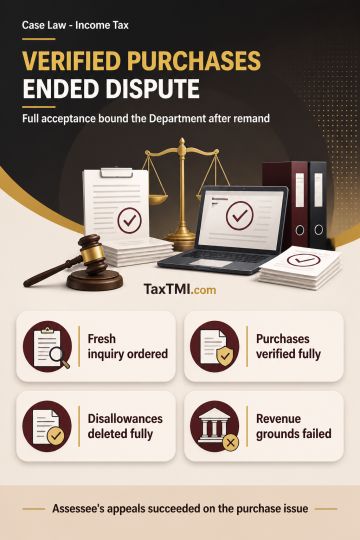
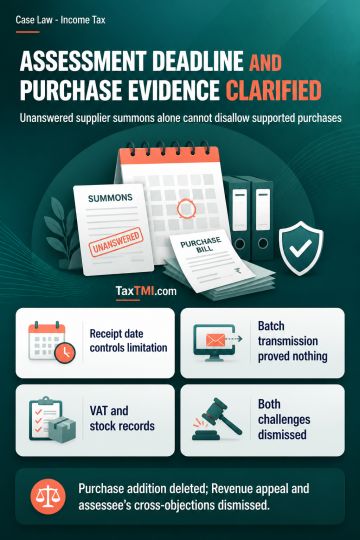
Limitation for consequential assessments runs from prescribed authority receipt, while verified purchases cannot be disallowed merely for unanswered s...
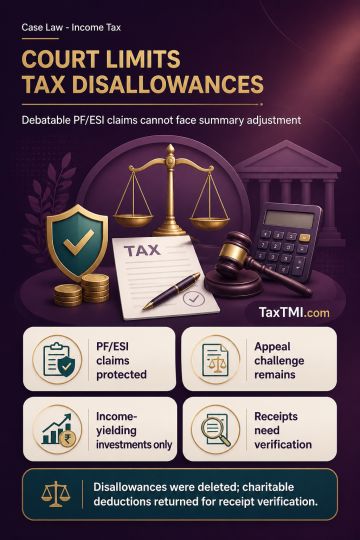
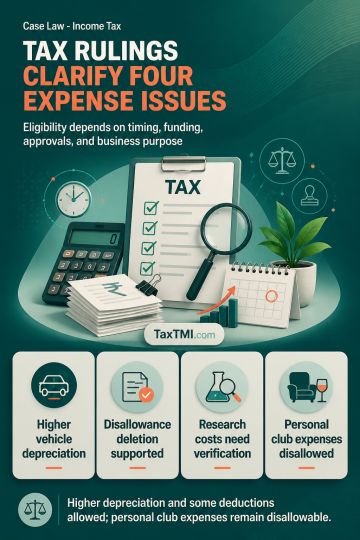
Higher depreciation for qualifying commercial vehicles, exempt-income disallowance, research deduction verification, and club-expense treatment clarif...
Charitable registration renewal cannot become an assessment of receipts, profitability or annual exemption compliance, requiring renewal and donation ...
AMP expenditure for own business is not an international transaction without an associated-enterprise arrangement, eliminating transfer pricing adjust...
ITAT upheld rejection of the books under section 145(3) and best judgment assessment under section 144 because the assessee did not furnish complete details or supporting evidence. After rejection of the books, income had to be estimated on a reasonable basis; the Tribunal found the AO's 10% net profit rate unsupported by comparable cases or the assessee's past results and reduced it to 6% of gross turnover, with credit for income already declared. It further held that separate section 68 additions for sundry creditors and unsecured loans could not survive once business income was estimated, absent independent incriminating material, and deleted those additions in full.
ITAT upheld rejection of the books under section 145(3) and best judgment assessment under section 144 because the assessee did not furnish complete details or supporting evidence. After rejection of the books, income had to be estimated on a reasonable basis; the Tribunal found the AO's 10% net profit rate unsupported by comparable cases or the assessee's past results and reduced it to 6% of gross turnover, with credit for income already declared. It further held that separate section 68 additions for sundry creditors and unsecured loans could not survive once business income was estimated, absent independent incriminating material, and deleted those additions in full.
Note: It is a system-generated summary and is for quick reference only.
 TaxTMI
  TaxTMI
 of 4809









 Join Channel


