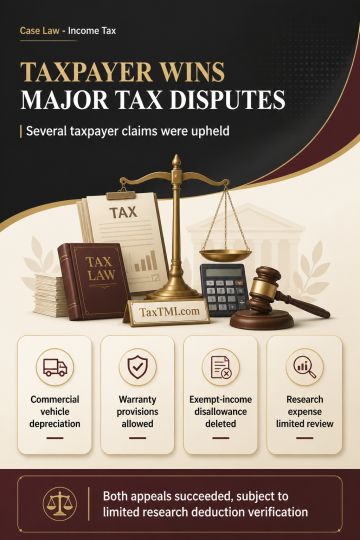
Commercial vehicle depreciation, scientifically determined warranty provisions and exempt-income disallowances were resolved in favour of the taxpayer...
Inherited property sale proceeds require capital-gains treatment where ownership is supported by evidence, not suspicion or unverified signature doubt...
Cross-examination of retracted statements is essential where foundational evidence supports a benami allegation and documented funding explanations re...
Capital-goods exemption covers plant-modernisation accessories, while the import restriction applies only to earlier capital-goods components and spar...
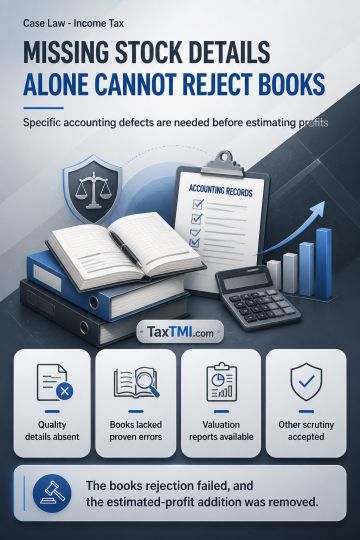
ITAT upheld rejection of the books under section 145(3) and best judgment assessment under section 144 because the assessee did not furnish complete details or supporting evidence. After rejection of the books, income had to be estimated on a reasonable basis; the Tribunal found the AO's 10% net profit rate unsupported by comparable cases or the assessee's past results and reduced it to 6% of gross turnover, with credit for income already declared. It further held that separate section 68 additions for sundry creditors and unsecured loans could not survive once business income was estimated, absent independent incriminating material, and deleted those additions in full.
ITAT upheld rejection of the books under section 145(3) and best judgment assessment under section 144 because the assessee did not furnish complete details or supporting evidence. After rejection of the books, income had to be estimated on a reasonable basis; the Tribunal found the AO's 10% net profit rate unsupported by comparable cases or the assessee's past results and reduced it to 6% of gross turnover, with credit for income already declared. It further held that separate section 68 additions for sundry creditors and unsecured loans could not survive once business income was estimated, absent independent incriminating material, and deleted those additions in full.
Note: It is a system-generated summary and is for quick reference only.
 TaxTMI
 of 4805










 Join Channel


 TaxTMI