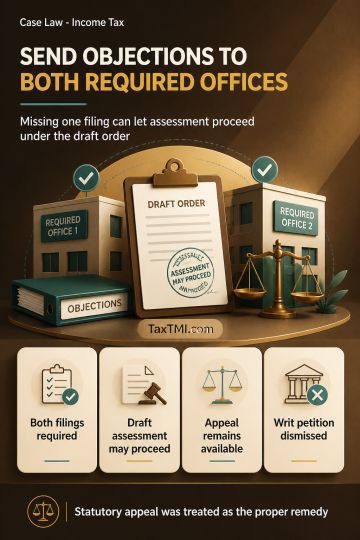
Dispute Resolution Panel objections must reach both prescribed forums; otherwise assessment may proceed and statutory appeal remains the proper remedy...
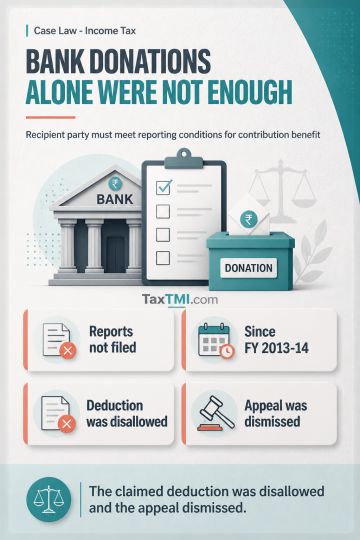
Political contribution deductions require recipient party compliance with contribution-reporting conditions; banking-channel donations alone do not qu...
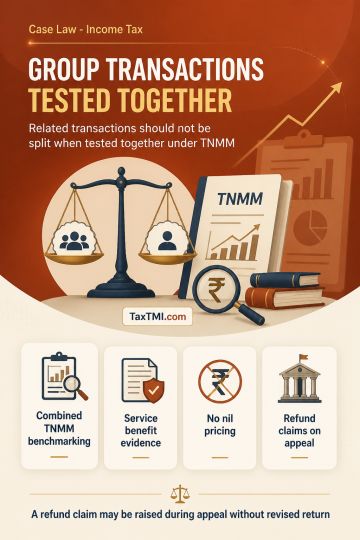
Aggregation under TNMM prevents selective testing of intra-group services without comparable uncontrolled transactions, while appellate additional cla...
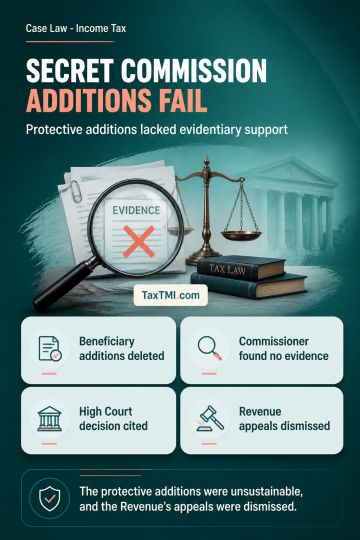
Protective assessment cannot duplicate identical receipts under competing characterisations; remote services did not establish a taxable permanent est...
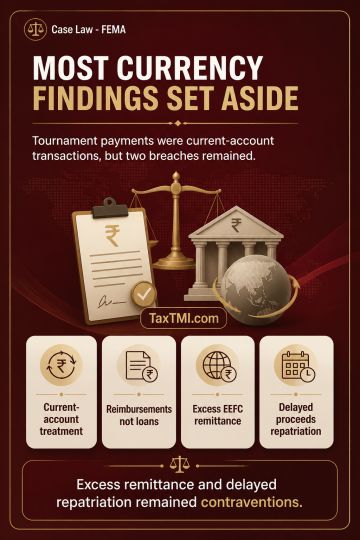
Current account treatment of overseas tournament services removed most FEMA findings, but excess EEFC remittance and delayed repatriation remained bre...
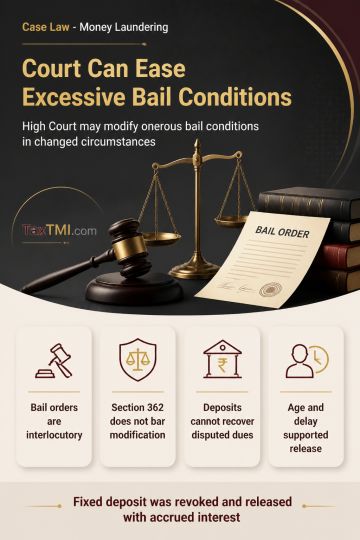
Modification of bail conditions remains available through inherent jurisdiction where onerous deposits undermine justice and cannot recover disputed d...
EPCG conditions may be relaxed where export obligation cannot be fulfilled because of force majeure or other unforeseen circumstances. The Tribunal applied this principle where the importer lost possession and control of the capital goods after auction by lenders before expiry of the first block period, making performance impossible, and held that interest under the notification and bond could not be levied; the demand had also been effectively secured through bank guarantees already realised. On the same facts, confiscation under section 111(o) and penalty under section 112(a) were set aside because the breach was not deliberate, the goods were no longer under the importer's control, and mens rea was required for penalty. The customs duty demand itself remained undisturbed.
EPCG conditions may be relaxed where export obligation cannot be fulfilled because of force majeure or other unforeseen circumstances. The Tribunal applied this principle where the importer lost possession and control of the capital goods after auction by lenders before expiry of the first block period, making performance impossible, and held that interest under the notification and bond could not be levied; the demand had also been effectively secured through bank guarantees already realised. On the same facts, confiscation under section 111(o) and penalty under section 112(a) were set aside because the breach was not deliberate, the goods were no longer under the importer's control, and mens rea was required for penalty. The customs duty demand itself remained undisturbed.
Note: It is a system-generated summary and is for quick reference only.
 TaxTMI
  TaxTMI
 of 4807









 Join Channel


