Transitioned CENVAT credit may validly satisfy mandatory pre-deposit requirements for legacy service tax appeals through Electronic Credit Ledger debi...
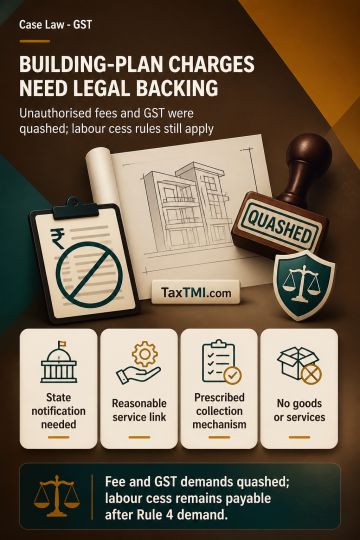
Building-plan sanction charges require statutory authority; unauthorised fees and GST were quashed, while labour cess must follow prescribed collectio...
Pure-agent exclusion fails where hotel booking facilitators receive third-party services themselves, making entire customer consideration taxable as r...
Transfer pricing requires evidence for AMP transactions, functionally reliable comparables, and appropriate aggregation or Berry Ratio benchmarking me...
Revisionary jurisdiction cannot reopen share capital assessments where adequate inquiry supports a permissible view and no independent error is establ...
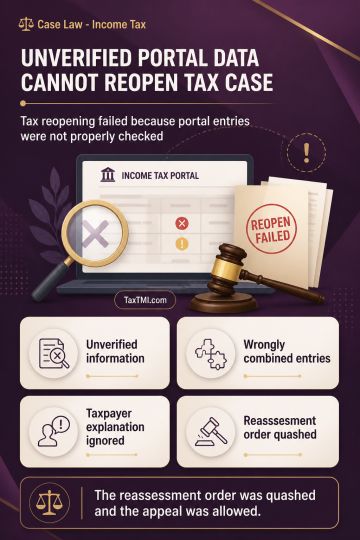
Reassessment jurisdiction fails where unverified portal information is aggregated without examining the taxpayer's explanation or relevance of entries...
Statutory sanction for delayed reassessment requires approval from the prescribed authority; approval by an inferior authority invalidates jurisdictio...
EPCG conditions may be relaxed where export obligation cannot be fulfilled because of force majeure or other unforeseen circumstances. The Tribunal applied this principle where the importer lost possession and control of the capital goods after auction by lenders before expiry of the first block period, making performance impossible, and held that interest under the notification and bond could not be levied; the demand had also been effectively secured through bank guarantees already realised. On the same facts, confiscation under section 111(o) and penalty under section 112(a) were set aside because the breach was not deliberate, the goods were no longer under the importer's control, and mens rea was required for penalty. The customs duty demand itself remained undisturbed.
EPCG conditions may be relaxed where export obligation cannot be fulfilled because of force majeure or other unforeseen circumstances. The Tribunal applied this principle where the importer lost possession and control of the capital goods after auction by lenders before expiry of the first block period, making performance impossible, and held that interest under the notification and bond could not be levied; the demand had also been effectively secured through bank guarantees already realised. On the same facts, confiscation under section 111(o) and penalty under section 112(a) were set aside because the breach was not deliberate, the goods were no longer under the importer's control, and mens rea was required for penalty. The customs duty demand itself remained undisturbed.
Note: It is a system-generated summary and is for quick reference only.
 TaxTMI
  TaxTMI
 of 4811















 Join Channel


