Origin Declaration authentication governs preferential tariff claims under India-UK CETA, requiring a validated reference number before import clearan...
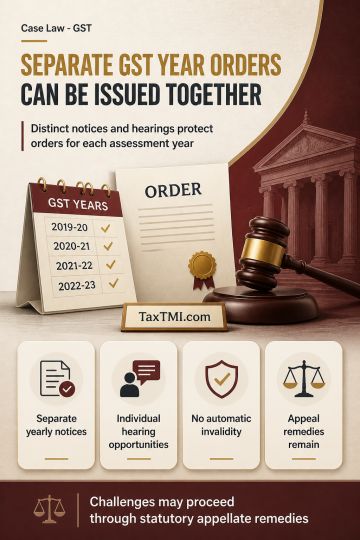
Separate assessment orders for different years remain valid when distinct notices and hearing opportunities prevent prejudice from combined proceeding...
Defined public benefit can retain charitable character; registration renewal requires examining genuine activities and legal compliance, not surplus a...
Capital reduction is distinct from share buy-back, preventing buy-back tax; restructuring interest and related business deductions also survive scruti...
Delayed filing of the annual return in GSTR-9 attracted a specific late fee under the GST enactments, but the Court applied its earlier ruling to hold that general penalty under Section 125 could not be imposed for the same default. It further held that the late fee could not be demanded beyond the permissible limit recognised in that precedent, and the demand in excess of the limit under the CGST and SGST enactments was unsustainable. The impugned order was therefore set aside to that extent, while the petitioner was directed to pay the admitted tax liability within the time granted.
Delayed filing of the annual return in GSTR-9 attracted a specific late fee under the GST enactments, but the Court applied its earlier ruling to hold that general penalty under Section 125 could not be imposed for the same default. It further held that the late fee could not be demanded beyond the permissible limit recognised in that precedent, and the demand in excess of the limit under the CGST and SGST enactments was unsustainable. The impugned order was therefore set aside to that extent, while the petitioner was directed to pay the admitted tax liability within the time granted.
Note: It is a system-generated summary and is for quick reference only.
 TaxTMI
 of 4803














 Join Channel


 TaxTMI
