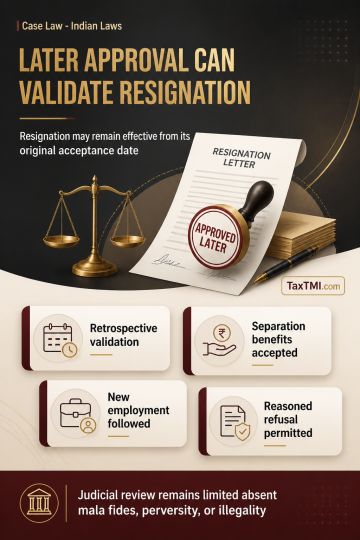
Ratification of resignation acceptance validates separation retrospectively, while withdrawal may be refused through reasoned administrative discretio...
Nature-dependent electricity contracts receive new Ind AS accounting, hedge designation, transition and financial-statement disclosure requirements fr...
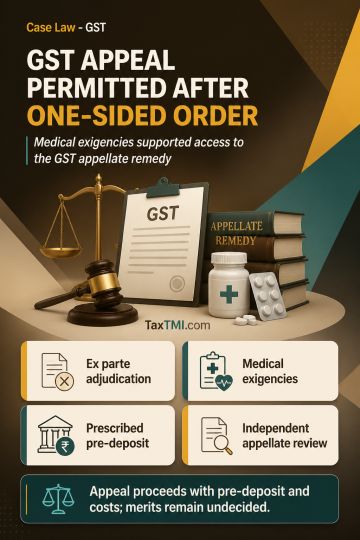
Alternative GST remedy permitted protective writ intervention for ex parte adjudication, preserving independent appellate review of input tax credit d...
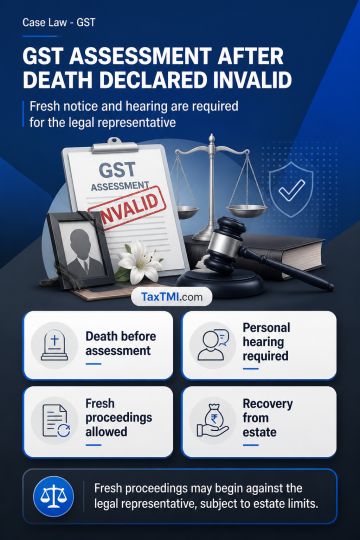
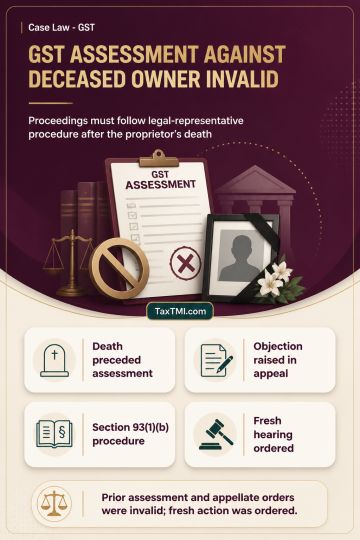
Assessment against deceased sole proprietor requires proceedings against the legal representative, rendering prior assessment and appellate orders inv...
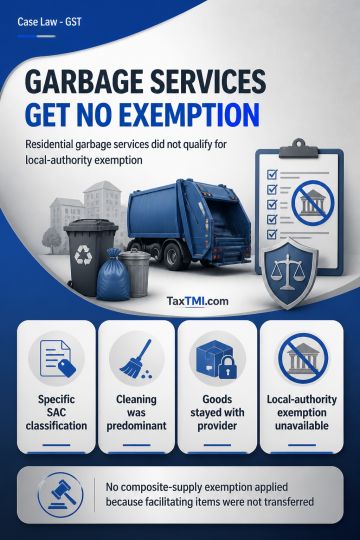
Residential waste collection classification under SAC 999423 defeats composite-supply exemption where facilitating goods are not transferred to the lo...
Under the GST appellate scheme, the High Court held that the statute is a self-contained code and the appellate authority can condone delay only up to one additional month beyond the prescribed three-month period. Because the outer limit is fixed by the GST Act, Section 5 of the Limitation Act is impliedly excluded and cannot be used to enlarge time further. An appeal filed beyond that maximum condonable period is outside jurisdiction, so the appellate order was left undisturbed and the writ petition was dismissed.
Under the GST appellate scheme, the High Court held that the statute is a self-contained code and the appellate authority can condone delay only up to one additional month beyond the prescribed three-month period. Because the outer limit is fixed by the GST Act, Section 5 of the Limitation Act is impliedly excluded and cannot be used to enlarge time further. An appeal filed beyond that maximum condonable period is outside jurisdiction, so the appellate order was left undisturbed and the writ petition was dismissed.
Note: It is a system-generated summary and is for quick reference only.
 TaxTMI
  TaxTMI
 of 4809







 Join Channel


