Anonymous donation classification fails where charitable trusts maintain undisputed donor identity records and evidence corpus contributions' intended...
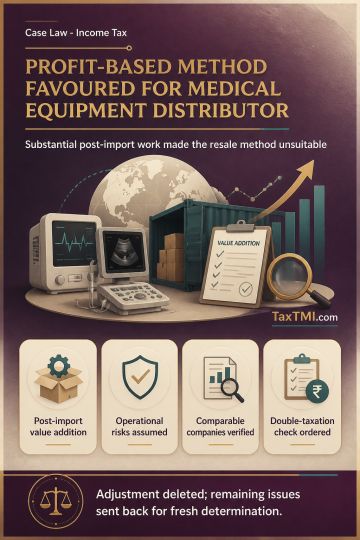
Transfer pricing method selection favours TNMM where medical-equipment distribution involves substantial post-import value addition and operational ri...
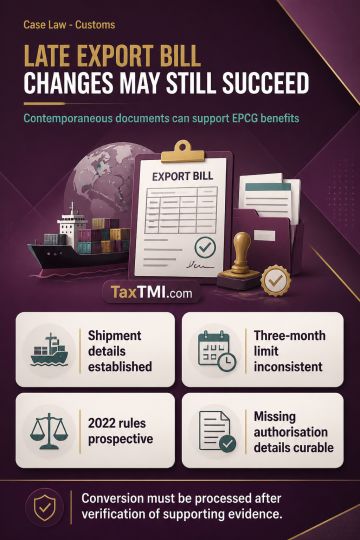
Post-export shipping bill conversion remains available where contemporaneous evidence supports EPCG benefits despite curable procedural omissions and ...
The Tribunal held that the 10% tolerance band under the stamp valuation framework applies retrospectively as a curative measure, so no addition survived where the difference between agreement value and stamp duty value was only 2.3%. It also accepted that indexation of cost for flat allotment rights runs from the date of the agreement, since rights accrued on execution and not from the dates of later instalments, leading to deletion of the recomputed disallowance. For the unexplained investment issue, the Tribunal found factual verification was needed and remanded the matter to the Assessing Officer after granting adequate hearing.
The Tribunal held that the 10% tolerance band under the stamp valuation framework applies retrospectively as a curative measure, so no addition survived where the difference between agreement value and stamp duty value was only 2.3%. It also accepted that indexation of cost for flat allotment rights runs from the date of the agreement, since rights accrued on execution and not from the dates of later instalments, leading to deletion of the recomputed disallowance. For the unexplained investment issue, the Tribunal found factual verification was needed and remanded the matter to the Assessing Officer after granting adequate hearing.
Note: It is a system-generated summary and is for quick reference only.
 TaxTMI
  TaxTMI
 of 4814













 Join Channel


