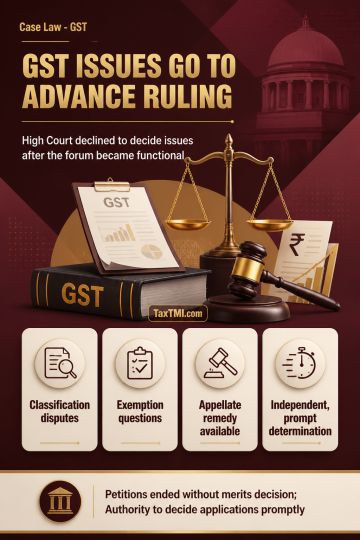
Advance-ruling mechanism governs pending GST classification, exemption and taxability disputes, limiting writ review once the specialised forum functi...
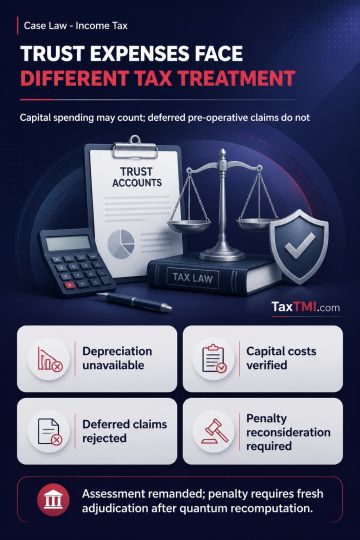
Charitable trust income application permits verified capital expenditure but rejects deferred pre-operative claims and requires reconsideration of con...
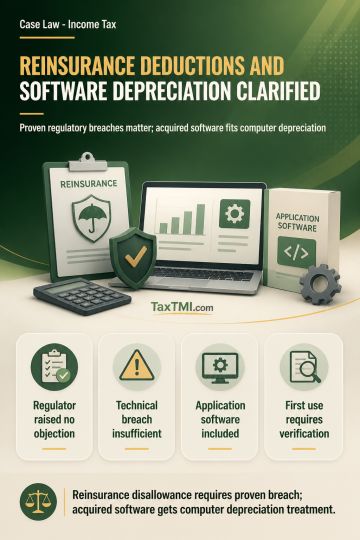
Reinsurance premium deductions require established regulatory breaches, while independently acquired software qualifies within the computer depreciati...
The HC held that an alternative statutory remedy is a self-imposed restraint, not an absolute bar to writ jurisdiction, and entertained the petition after the appeal period, including grace time, had expired and business had been disrupted. It treated cancellation of GST registration for non-filing of returns and other procedural defaults as curable, applying the principle that substantive rights should not fail for formal non-compliance. The cancellation order and appellate order were quashed, and registration was directed to be restored subject to filing pending returns and paying tax, interest, fine and penalty within the stipulated time, failing which the benefit would stand withdrawn.
The HC held that an alternative statutory remedy is a self-imposed restraint, not an absolute bar to writ jurisdiction, and entertained the petition after the appeal period, including grace time, had expired and business had been disrupted. It treated cancellation of GST registration for non-filing of returns and other procedural defaults as curable, applying the principle that substantive rights should not fail for formal non-compliance. The cancellation order and appellate order were quashed, and registration was directed to be restored subject to filing pending returns and paying tax, interest, fine and penalty within the stipulated time, failing which the benefit would stand withdrawn.
Note: It is a system-generated summary and is for quick reference only.
 TaxTMI
 of 4807






 Join Channel


 TaxTMI
