 TaxTMI
 Login
 TaxTMI
Login
Loading...
Press 'Enter' to add multiple search terms. Rules for Better Search

Press 'Enter' after typing page number.
Press 'Enter' after typing page number.


No Folders have been created
Are you sure you want to delete "My most important" ?
NOTE:
Press 'Enter' after typing page number.
Press 'Enter' after typing page number.

All News
Press 'Enter' after typing page number.
All News

Note

Bookmark

Share


The Guidebook marks a pivotal milestone in the journey of India towards Viksit Bharat@2047 by serving as a catalyst for sharper policy interventions and effective trade negotiations through mapping of products to their relevant Ministries and Departments: Shri Goyal
Union Minister of Commerce and Industry, Shri Piyush Goyal, released the Guidebook on Mapping of Harmonized System of Nomenclature (HSN) Codes prepared by the Department for Promotion of Industry and Internal Trade (DPIIT) on 20th September 2025 during the event on “Celebrating 10 Years of Make in India and Discussion on Next Gen-Reforms 2.0” in New Delhi. The Guidebook which provides allocation of 12,167 HSN Codes to 31 Ministries and Departments of the Government of India, aims to promote the adoption of data-driven approach for manufacturing development, investment promotion, and trade facilitation. It shall serve as the foundation for building a resilient and competitive manufacturing ecosystem.
Emphasizing the significance of this exercise, Shri Goyal mentioned that the Guidebook is a significant stride towards strengthening domestic production capacity and fostering sectoral growth. Additionally, it will also support more effective Trade Agreement negotiations which are aligned with national economic priorities and domain strengths. With the facilitation for identification of the relevant Ministry or Department for specific HSN Codes, this initiative will streamline regulatory processes and further enhance ease of doing business. He added that the Guidebook shall play an integral role in accomplishing the vision of Viksit Bharat by 2047, where governance is responsive to the needs of the industry.
The origin of the development of the Guidebook lies in the observation of persistent challenges arising during trade negotiations, import substitution efforts and redressal of industry concerns due to the absence of definitive mapping of HSN Codes. Further, unmapped Codes were misclassified as ‘Residual Products’ due to unclear ownership. To address the matter, DPIIT followed a holistic and proactive approach, by undertaking the value-chain and use-case analysis for each of the 12,167 HSN Codes sourced from the Central Board of Indirect Taxes and Customs (CBIC) Tariff Manual.
Following this, a thorough review of the Allocation of Business (AoB) Rules, 1961, was done for mapping of each HSN Code based on the nature and end-use of the product. Once the preliminary mapping was completed, several Inter-Ministerial Consultations, multiple Joint Working Group meetings, over 300 one-on-one meetings with Ministries and Departments, and numerous Industry Stakeholder consultations were conducted. The feedback received was systematically analyzed and incorporated to ensure reflection of ground-level realities.
The exercise eventually led to the mapping of 12,167 HSN Codes to 31 Ministries and Departments. This extensive and consultative effort culminated in the development of the Guidebook, which now stands as a foundational resource for advancing manufacturing and trade related goals.
The Guidebook on Mapping of HSN Codes is a critical enabler for Ministries and Departments to translate policy intent into actionable outcomes. To support its effective use, a dedicated section titled “How to Use the Guidebook?” has also been developed, anchored in three operational pillars. The first segment on “Manufacture in India”, focuses on positioning India as a global manufacturing hub by emphasizing on sector-specific policy alignment, value chain strengthening, and workforce development. Building on this foundation, the “Strengthen Brand India” pillar aims to elevate the global perception of the ‘Made in India’ label through prioritization of quality enhancement. Complementing these efforts, the “Make for the World” pillar is dedicated to support more effective trade negotiations, thereby, enabling Indian products to capture a greater share in international markets.
In conclusion, the Guidebook on Mapping of HSN Codes is not merely a classification exercise but a strategic instrument for shaping the industrial future of India. It empowers Ministries and Departments to adopt an outcome-oriented approach to economic growth and development by streamlining custodianship of products. As India advances towards establishing itself as a global manufacturing hub, this Guidebook becomes pivotal in aligning policy, investment, and trade related matters. With the Guidebook as a catalyst, India is equipped to convert its industrial ambition into international leadership by laying the foundation for a robust and future-ready economy by 2047.

Picture 1: Shri Piyush Goyal, Minister of Commerce and Industry Releases the Guidebook on Mapping of Harmonized System of Nomenclature (HSN) Codes
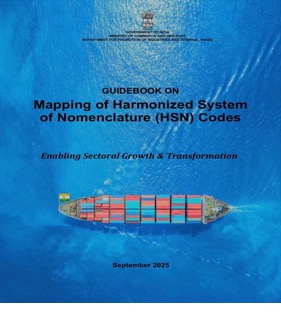
Picture 2: Guidebook on Mapping of Harmonized System of Nomenclature (HSN) Codes

