 TaxTMI
 Login
 TaxTMI
Login
Loading...
Press 'Enter' to add multiple search terms. Rules for Better Search

Press 'Enter' after typing page number.
Press 'Enter' after typing page number.


No Folders have been created
Are you sure you want to delete "My most important" ?
NOTE:
Press 'Enter' after typing page number.
Press 'Enter' after typing page number.

All News
Press 'Enter' after typing page number.
All News

Note

Bookmark

Share


IBC Has Helped Transform India’s Credit Culture Beyond Just Reducing NPAs : IICA DG, Shri Gyaneshwar Kumar Singh
MCA Secretary and IICA Leadership Highlight IBC’s Transformative Role in India’s Credit Culture
The 7th Batch of the Postgraduate Insolvency Programme (PGIP) was officially launched on 21st July 2025 at the Indian Institute of Corporate Affairs (IICA), Manesar, Gurugram. The inaugural ceremony was graced by Hon’ble Justice S.J. Mukhopadhyay, former Chairperson of the National Company Law Appellate Tribunal (NCLAT), and Hon’ble Justice M.M. Kumar, former President of the National Company Law Tribunal (NCLT).
Delivering the inaugural address, Hon’ble Justice S.J. Mukhopadhyay emphasized the critical importance of adhering to strict timelines under the Insolvency and Bankruptcy Code (IBC), noting that any deviation must be formally justified. He also underscored the role of resolution professionals in ensuring comprehensive due diligence and compliance before presenting resolution plans to the Committee of Creditors, cautioning that presenting unverified plans is not acceptable.
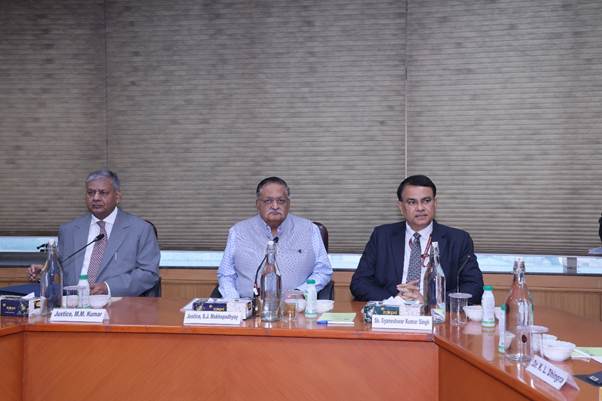
In his special address, Hon’ble Justice M.M. Kumar observed that the IBC, as a dynamic economic legislation, continues to evolve in response to changing market conditions. He highlighted key areas requiring greater clarity, including limitation laws, treatment of large RBI-referred cases, the principle of time value of money, and the classification of buyers as financial creditors. While welcoming the introduction of pre-packaged insolvency processes as a progressive reform, he noted that its adoption remained limited, and the increased default threshold from ₹1 lakh to ₹1 crore had not led to a significant rise in cases. Encouraging the students to embrace values of honesty and sincerity, he also stressed the importance of cultivating reading habits, recommending biographies of eminent personalities as valuable learning tools.
A message from Smt. Deepti Gaur Mukherjee, Secretary, Ministry of Corporate Affairs, was read during the event. She congratulated IICA for establishing itself as a centre of excellence and acknowledged the positive impact of its programmes on India’s governance landscape through quality training. She extended her best wishes to the new batch of students.
Addressing the participants, Shri Gyaneshwar Kumar Singh, Director General of IICA, credited the visionary leadership of the dignitaries for successfully steering the IBC from its inception to effective implementation. He noted that the success of the IBC extends beyond recovery rates and reduced NPAs to its broader role in transforming the nation’s credit culture.
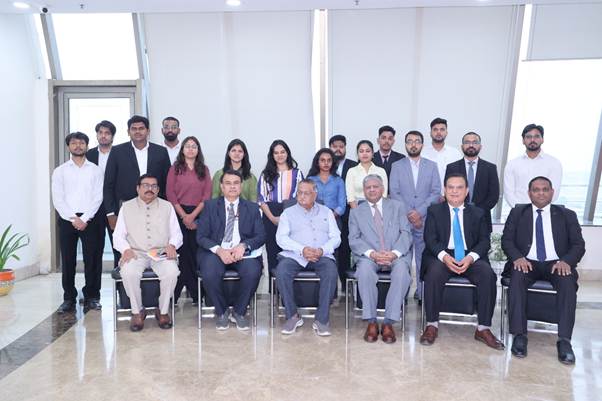
Welcoming the esteemed guests, Mr. Sudhaker Shukla, former Member of IBBI and newly appointed Course Director of PGIP, highlighted their foundational contributions to shaping and strengthening the IBC during its formative years through their leadership at key institutions.
The ceremony concluded with a vote of thanks delivered by Dr. K.L. Dhingra, Head of the Centre of Insolvency and Bankruptcy

