

Loading...

Top
Help
×

By creating an account you can:

Logo TaxTMI
Call Us / Help / Feedback

Contact Us At :

E-mail: [email protected]

Call / WhatsApp at: +91 99117 96707

For more information, Check Contact Us

FAQs :

To know Frequently Asked Questions, Check FAQs

Most Asked Video Tutorials :

For more tutorials, Check Video Tutorials

Submit Feedback/Suggestion :

Email :
Please provide your email address so we can follow up on your feedback.
Category :
Description :
Min 15 characters 0/2000
Make Most of Text Search
  1. Checkout this video tutorial: How to search effectively on TaxTMI.
  2. Put words in double quotes for exact word search, eg: "income tax"
  3. Avoid noise words such as : 'and, of, the, a'
  4. Sort by Relevance to get the most relevant document.
  5. Press Enter to add multiple terms/multiple phrases, and then click on Search to Search.
  6. Text Search
  7. The system will try to fetch results that contains ALL your words.
  8. Once you add keywords, you'll see a new 'Search In' filter that makes your results even more precise.
  9. Text Search
Add to...
You have not created any category. Kindly create one to bookmark this item!
Create New Category
Hide
Title :
Description :
❮❮ Hide
Default View
Expand ❯❯
Close ✕
🔎 News - Adv. Search
TEXT SEARCH:

Press 'Enter' to add multiple search terms. Rules for Better Search

Search In:
Main Text + AI Text
  • Main Text
  • Main Text + AI Text
  • AI Text
Category: ?
Categorized by AI
---- All Categories ----
  • ---- All Categories ----
  • Income Tax
  • GST
  • Customs, DGFT & SEZ
  • FEMA & RBI
  • Corp. Laws, SEBI & IBC
  • PMLA, Black Money & ED
  • Budget
  • News and Press Release
  • PTI News
Month:
---- All Months ----
  • ---- All Months ----
  • January
  • February
  • March
  • April
  • May
  • June
  • July
  • August
  • September
  • October
  • November
  • December
Year:
---- All Years ----
  • ---- All Years ----
  • 2026
  • 2025
  • 2024
  • 2023
  • 2022
  • 2021
  • 2020
  • 2019
  • 2018
  • 2017
  • 2016
  • 2015
  • 2014
  • 2013
  • 2012
  • 2011
Sort By: ?
In Sort By 'Default', exact matches for text search are shown at the top, followed by the remaining results in their regular order.
Relevance Default Date
    ED raids multiple locations in Keralam in hybrid ganja smuggling money laundering case
    Rupee jumps 47 paise to 94.26 against US dollar in early trade
    ED raids multiple locations in Kolkata in bank loan fraud case
    Commerce & Industry Minister Shri Piyush Goyal Calls Upon Auto Component Industry To Go Global
    18th Meeting of Heads of IP Offices of BRICS Countries Held in New Delhi
    India’s Sovereign Credit Rating upgraded to 'A-' with Stable Outlook by Japan Credit Rating Agency
    Secretary, DFS Chairs Review Meeting on Financial and Business Performance of Public Sector General Insurance Companies (PSGICs)
    GIFT IFSC emerges as a strong and vibrant international banking hub, mobilises over $52.8 billion under RBI’s FCNR(B) Swap Facility, $11.62 bn in EC...
    Ex-CII executive Shuchita Sonalika appointed COO of Canada-India Business Council
    India's 7.8% growth despite global disruptions remarkable: FM Sitharaman at investors meet in US
    After 35 years, India's sovereign rating upgraded to 'A-' by JCR on solid growth, resilient financial system
    Rupee rises 22 paise to close at 94.73 against US dollar
    India draws record USD 127 bn forex deposit in special drive
    Banks mobilise USD 127.23 billion in deposits from Indian diaspora: RBI
    CBI Arrests CGST Additional Commissioner and Two others in Rs. 40 Lakh Bribery Case in Raigad, Maharashtra
    Haryana: SGST collections grow 29 pc in first 5 months of 2026-27
    Lokta Opens Its Agentic Loan Servicing Platform to NBFCs Up to Rs 100 crore, with No Platform Fee for Up to Two Years
    RTI seeks Aadhaar date-of-birth changes after pre-poll Bihar pension hike; UIDAI says no such data
    IC Electricals Secures Approx. ₹6 Crore Railway Orders and ₹1 Crore Export Order
❯❯
Maximize Maximize Maximize
0 / 200
Expand Note
Add to Folder

No Folders have been created

+

Are you sure you want to delete "My most important" ?

NOTE:

News
Showing Results for :
Reset Filters
Results Found:
Show All Summaries Hide All Summaries
September 3, 2026
Show AI Summary
Money laundering linked to hybrid ganja smuggling involves alleged illicit cross-border transfers and foreign-exchange violations.
Enforcement Directorate searches form part of a money-laundering investigation into alleged hybrid ganja smuggling from Thailand. A case under the Prevention of Money Laundering Act concerns suspected laundering of drug-trafficking proceeds and transfer of funds to Thailand through illegal channels. The inquiry also examines possible foreign-exchange violations and an alleged arrangement involving carriers, visas and funds for transporting narcotic substances.
September 3, 2026
Show AI Summary
Foreign-currency deposit mobilisation supports currency appreciation while creating surplus-liquidity sterilisation pressures through deposit swaps in domestic banking markets.
Foreign-currency deposit mobilisation strengthened foreign-exchange liquidity and supported rupee appreciation. FCNR(B) deposits, together with overseas foreign-currency borrowings and external commercial borrowings, increased aggregate foreign-currency resources. Bank swaps of such deposits with the central bank may create surplus banking-system liquidity and a sterilisation challenge, while oil prices, global yields, dollar movements and foreign equity inflows remain relevant currency-market factors.
September 3, 2026
Show AI Summary
Money laundering investigation examines alleged diversion of bank loans from a power project to group entities and personal use.
Money laundering investigation under the Prevention of Money Laundering Act concerns alleged diversion of bank loans obtained by Kohinoor Power for a power plant in Jharkhand. The loan proceeds were allegedly transferred to other group entities and used personally. Searches were conducted at eleven premises associated with the group's promoters, directors and auditors. The company entered liquidation proceedings before the National Company Law Tribunal, with limited recovery for creditors.
September 3, 2026
Show AI Summary
Globalisation of auto component manufacturing is linked to trade access, resilient supply chains, technology adoption, safety, and vehicle scrappage.
The auto component industry is encouraged to expand globally through reciprocal market access, overseas manufacturing, international investment and trade partnerships. Supply-chain resilience is to be strengthened through indigenisation of vulnerable products, access to critical minerals, and domestic capacity in auto components, speciality steel, technical textiles and semiconductors. Priority is also given to high-value integrated solutions, artificial intelligence-enabled quality control, vehicle safety and industrial parks offering manufacturing infrastructure. Vehicle scrappage requires coordinated government incentives and fair industry valuation to support replacement demand for new-age vehicles.
September 3, 2026
Show AI Summary
Updated IP cooperation guidelines strengthen cross-border innovation, patent examination coordination, traditional knowledge protection, and geographical indication commercialisation.
IP BRICS Heads adopted Updated Operational Guidelines to direct result-oriented intellectual property cooperation, promote cross-border innovation, and reinforce joint engagement in global IP standards. Priority areas include protection of traditional knowledge and traditional systems of medicine, reinforced patent examination cooperation, exchange of search results, patent analytics, and geographical indication protection and commercialisation. Coordination mechanisms and periodic progress reviews are emphasised for effective implementation and continuity of cooperation.
September 3, 2026
Show AI Summary
Sovereign credit rating upgrade reflects resilient growth, improved fiscal expenditure quality, stronger financial systems, and a robust external position.
India's long-term foreign-currency and local-currency issuer ratings were upgraded from 'BBB+' to 'A-', with a Stable Outlook, reflecting resilient economic growth, improved fiscal expenditure quality, strengthened financial-sector soundness, and a robust external position. Fiscal improvement is linked to greater capital expenditure and lower fiscal deficit. Financial resilience is supported by improved banking and non-banking sector asset quality and capital adequacy. External strength arises from a contained current account deficit, services surplus, and foreign-exchange reserves exceeding short-term external debt.
September 3, 2026
Show AI Summary
Public sector general insurance performance requires profitable underwriting, lower claim ratios, digitalisation, standardised monitoring, and quality grievance redressal.
Public Sector General Insurance Companies were advised to focus on profitable business lines, reduce the Incurred Claim Ratio, and accelerate technology use and digitalisation while optimising related expenditure. They are to improve insurance penetration, density, outreach and customer awareness, particularly in underserved segments, while reducing protection gaps. A robust, standardised KPI framework should enable comparable financial and non-financial performance assessment and be reviewed quarterly. Customer grievances require expeditious and quality redressal.
September 3, 2026
Show AI Summary
Cross-border financing through GIFT-IFSC expands foreign currency mobilisation, external commercial borrowing disbursements, and international bond market access.
GIFT-IFSC's IBUs mobilised foreign-currency liquidity under the RBI's FCNR(B) deposit swap facility, with 20 IBUs sanctioning USD 54.02 billion and disbursing approximately USD 52.82 billion as at 31 August 2026. Between April and August 2026, IBUs disbursed USD 11.62 billion in External Commercial Borrowings, while Indian banks raised USD 11.12 billion through bond listings on IFSC exchanges. These activities support cross-border financing, international capital-market access and foreign-exchange inflows.
September 3, 2026
Show AI Summary
Bilateral business council leadership appointment strengthens operational capacity to advance Canada-India economic and investment partnerships.
Operational leadership for bilateral economic engagement is strengthened through the appointment of Shuchita Sonalika as the first Chief Operating Officer of the Canada-India Business Council. The appointment is directed toward enhancing the council's capacity to support expanding investment and economic relations between Canada and India, in coordination with its board, members and partners. Sonalika brings international affairs experience in advancing India's economic partnerships across global markets.
September 3, 2026
Show AI Summary
Regulatory certainty and compliance reforms support investment facilitation, infrastructure development, MSME credit access, and reduction of bank non-performing assets.
Regulatory certainty, ease of compliance and investment facilitation are identified as central elements of India's economic reform orientation. The Insolvency and Bankruptcy Code is included among reforms supporting regulatory certainty, reduced paperwork and easier compliance. Policy priorities include infrastructure development, artificial intelligence and data centres, credit access for MSMEs, reduction of banks' non-performing assets, fiscal discipline, and investment facilitation by central and state governments.
September 2, 2026
Show AI Summary
Sovereign credit rating upgrade reflects resilient economic growth, fiscal quality, financial-system soundness, and external-sector resilience.
Japan Credit Rating Agency upgraded India's foreign-currency and local-currency long-term issuer ratings to A-, citing solid economic growth, strengthened growth-oriented policies and improved financial-system soundness. Improved banking asset quality, insolvency mechanisms, government capital infusion and stronger central-bank supervision support financial resilience. Fiscal quality has improved through greater infrastructure-focused capital expenditure and restraint in current spending, while a contained current-account deficit, services surplus and substantial foreign-exchange reserves support resilience to external shocks.
September 2, 2026
Show AI Summary
Currency-market intervention and foreign capital inflows supported rupee resilience amid higher crude prices and dollar strength.
Foreign capital inflows and modest foreign institutional equity purchases supported rupee appreciation against the US dollar despite weak domestic equities, elevated crude oil prices and a stronger dollar. RBI monitoring and apparent currency-market intervention supported the rupee amid risk aversion, higher US Treasury yields and concerns over crude supply disruptions. Forthcoming US employment data remained relevant to dollar and rupee direction.
September 2, 2026
Show AI Summary
Foreign-currency non-resident deposits bolster external liquidity through hedging support and lending flexibility during global market uncertainty.
Foreign Currency Non-Resident (Bank) [FCNR(B)] deposits are fixed-term foreign-currency deposits for non-resident Indians, with principal and interest repayable in the deposit currency and without direct rupee exchange-rate risk. A special central-bank programme mobilised substantial FCNR(B) deposits, alongside overseas foreign-currency borrowings and external commercial borrowings, to strengthen foreign-exchange liquidity. Banks received hedging-cost support and permission to lend against the deposits. The facility was closed earlier than scheduled after its mobilisation objective was met.
September 2, 2026
Show AI Summary
Foreign currency swap facility accelerated FCNR(B) deposit window closure after substantial diaspora inflows, while borrowing windows remain open.
Special USD-INR foreign-exchange swap facility for FCNR(B) deposits, Overseas Foreign Currency Borrowings and External Commercial Borrowings was introduced to strengthen the external sector and support foreign-exchange liquidity. FCNR(B) deposits, under which principal and interest are repayable in the same foreign currency, generated the principal share of inflows. Strong diaspora participation led to advancement of the FCNR(B) window closure. The swap facility for Overseas Foreign Currency Borrowings and External Commercial Borrowings remains open until December 31, 2026.
September 2, 2026
Show AI Summary
GST bribery allegations led to a trap operation against officials and an intermediary in a quarrying matter.
Criminal investigation concerns alleged solicitation and acceptance of an undue advantage by CGST officials in connection with settling a GST/royalty matter involving a stone-quarrying firm. The officials allegedly arranged for a private person to collect the payment. A trap operation resulted in the private person being caught while accepting the alleged undue advantage. Searches at the accused persons' premises led to recovery of cash and jewellery, while further investigation continues.
September 2, 2026
Show AI Summary
State GST collection growth outpaced national expansion during the first five months, alongside increased VAT and CST receipts.
Haryana's SGST collections increased by 29 per cent during April-August of financial year 2026-27, exceeding the national growth rate of 16 per cent. August 2026 post-settlement SGST revenue rose by 21 per cent, compared with national average growth of 13 per cent. Haryana accounted for less than 4 per cent of national GST taxpayers but contributed approximately 7.7 per cent of aggregate national SGST, CGST and IGST collections. VAT/CST collections rose by 13.8 per cent during the same period.
September 2, 2026
Show AI Summary
NBFC loan servicing governance retains lender control through deterministic decision rules, maker-checker controls, reconciled migration and optional AI assistance.
Lokta Next 100 offers RBI-registered NBFCs with loan books up to Rs 100 crore post-approval loan servicing, accounting, reporting, analytics, collections, recovery and partner-management functions, excluding pure-play microfinance NBFCs. Credit, approval and money decisions remain with the lender. Maker-checker approval applies to every change, and migration requires line-by-line reconciliation before cutover. Records remain lender-owned, hosted in India and exportable. AI may propose changes but cannot post to the ledger; deterministic lender-policy rules decide changes. Platform fees are deferred for up to 24 months, subject to stated loan-book thresholds.
September 2, 2026
Show AI Summary
RTI access to maintained records does not require creation of Aadhaar date-of-birth update data on demand.
UIDAI did not maintain separate Aadhaar data on date-of-birth updates in Bihar following the announced social security pension enhancement, including month-wise or district-wise compilations. No internal review or flagging of unusual update patterns was available or applicable in its records. The Central Information Commission clarified that the RTI framework does not require a public authority to create, compile or generate information that it does not maintain in the form requested. The initial CPIO response treating the information as outside the RTI Act was considered inappropriate.
September 2, 2026
Show AI Summary
Transgender arrest and detention safeguards prompt calls for a standard operating procedure and clearer procedural protections.
Legal and regulatory issues include safeguards for arrest and detention of transgender persons, consultation requirements in Bar Council policy-making, and procedural accountability in electoral administration and policing. Personal insolvency proceedings raise questions about tribunal powers to constitute an expanded bench. Hospitality operators are expected to comply strictly with food-safety and hygiene norms. Proposed restrictions on minors' social-media accounts address cyberbullying, online exploitation, and harmful screen exposure.
September 2, 2026
Show AI Summary
Railway equipment purchase orders and export order expand IC Electricals' domestic and international business pipeline.
IC Electricals Company Limited has secured railway purchase orders for electrical and electronic supplies and an export order, creating combined order inflow across domestic railway operations and international markets. Its product portfolio includes regulators, battery chargers, emergency lights, inverters, microprocessor-based control systems, alternators, traction motors, and permanent magnet alternators with controllers. Forward-looking statements on business plans, projects, and research and development remain subject to risks and uncertainties and may differ materially from actual results.

News

Back

All News

Showing Results for :
Reset Filters
No Records Found

News

Showing Results for : Reset Filters
Corp. Laws, SEBI & IBC

Minister of State for Corporate Affairs Shri Harsh Malhotra Inaugurates third edition of the National Conference on Responsible Business Conduct (NCRBC) 2025

July 4, 2025

Contents
Summary
Note

Note

-

Bookmark

Print

Print

“India Embracing Trust-Based corporate Governance Rooted in Vasudhaiva Kutumbakam”: Shri Harsh Malhotra

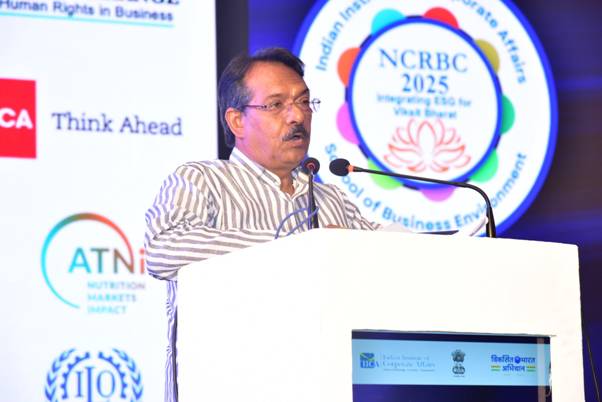
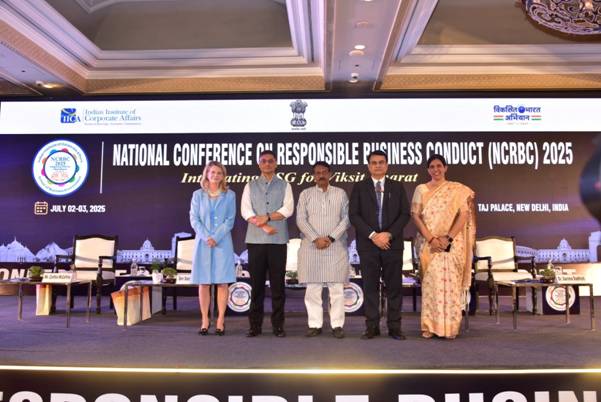
The third edition of the National Conference on Responsible Business Conduct (NCRBC) 2025 was inaugurated by Shri Harsh Malhotra, Minister of State for Corporate Affairs and Road Transport & Highways, Government of India, on 2nd July at the Taj Palace, New Delhi. Organised by the Indian Institute of Corporate Affairs (IICA), an autonomous institution under the Ministry of Corporate Affairs, the two-day flagship national conference is being held under the theme “Integrating ESG for Viksit Bharat.”
WhatsApp Image 2025-07-03 at 11.14.50 AM.jpeg

Addressing a distinguished audience comprising 300 plus senior corporate leaders, ESG (Environmental, Social, and Governance) professionals, policymakers, and international delegates, th Minister emphasised that India is transitioning from a regime of regulatory prosecution to one of trust-based corporate governance. He observed that responsible business conduct is no longer peripheral to business strategy, but foundational. He also asserted that “India is no longer catching up, India is ready to lead”. Reflecting on the spirit of ‘Vasudhaiva Kutumbakam,’ he noted that the Indian approach to ESG is not merely ‘climate-first’ but ‘climate-plus,’ integrating environmental stewardship with social inclusion, ethical governance, and intergenerational equity.

He highlighted several reform milestones of the Ministry, including the introduction of the National Guidelines on Responsible Business Conduct (NGRBC), Business Responsibility and Sustainability Reporting (BRSR), MCA21 Version 3.0 for digital governance, and the decriminalisation of over 180 statutory provisions through the Jan Vishwas Act. Applauding IICA’s contributions in strengthening board ethics and capacity-building, he remarked that the transition from compliance to conscience must be institutionalised across all business forms, including startups, MSMEs, and listed entities alike.

Delivering a special address, Shri Sanjeev Sanyal, Member of the Economic Advisory Council to the Prime Minister of India, brought a historical and analytical lens with his remarks, cautioning against the indiscriminate import and application of subjective ESG metrics, motivated and influenced by the developed world without reference to India’s priorities. He stressed the need for robust, context-specific and just indicators that reflect India’s developmental priorities and aspirations while cautioning against global indices that often undervalue grounded and situational responsible business conduct. Revering to India’s rich Indian history, he observed that Kautilya’s Arthashastra already embedded principles similar to modern ESG ethos, affirming that India possesses a civilisational heritage of ethical governance and responsible conduct. He urged stakeholders to pursue ESG pathways that are not only compliant but economically and socially coherent within India’s unique institutional context.

Thereafter, in her special address, Ms. Cynthia McCaffrey, UNICEF Representative to India, emphasised that ESG frameworks must reflect the lived realities of families and children. She asserted, “ESG is incomplete without healthy children and families,” and called for businesses to align their governance and social strategies with the rights of the youngest and most vulnerable stakeholders. Noting that inclusive development cannot ignore the social foundations of sustainability, she urged corporate actors to integrate child rights, access to nutrition, education, and community resilience deeper into the broader responsible business conduct architecture.

Shri Gyaneshwar Kumar Singh, Director General and CEO of IICA,  delivered a visionary Welcome address, reiterating India’s imperative to develop indigenous ESG frameworks rooted in national development goals. While charting the decade long history of initiating timely actions by Ministry of Corporate Affairs and IICA to strengthen the ESG framework in India, Shri Singh stated that imported templates would prove to be inadequate to address India’s diverse business ecosystem, while suggesting robust, evidence-based strategic models must lead to future ecosystem of both voluntary ESG compliance and transformation. Underscoring IICA’s central role in ESG evidence-based research, policy advocacy, and targeted capacity-building, he affirmed that the Institute is committed to fostering a regulatory culture where trust, accountability, and innovation are mutually reinforcing.
WhatsApp Image 2025-07-03 at 11.14.49 AM.jpeg

Welcoming dignitaries and delegates, Prof. Garima Dadhich, Head of the School of Business Environment at IICA, highlighted the evolution of NCRBC from its first edition on “Embracing ESG in India” to this year’s focus on integration. She noted that “this year marks a shift from awareness to action, from commitment to convergence,” as ESG becomes embedded within India’s broader developmental discourse. She reaffirmed that IICA, through its School of Business Environment, resolves to serve as a national knowledge and action hub for mainstreaming responsible business conduct, developing sector-specific frameworks, and fostering ecosystem-wide collaboration.

Following the inaugural session, Day 1 of the conference featured four high-level thematic panels that explored key dimensions of ESG transformation. The first panel, “The Rise of ESG in the Boardroom,” initiating with a Key note Address from Smt. Ravneet Kaur, Chairperson, Competition Commission of India and National Financial Regulatory Authority (NFRA), brought together eminent representatives from the Mahindra Group, Engineers India Ltd, ICAI, NSE, and ONGC. The discussion focused on embedding ESG into corporate governance structures and strategic oversight, with emphasis on the fiduciary duties of boards in advancing sustainability objectives. The second panel, “Sustainable Finance: Transforming Capital for a Green Future,” examined how financial instruments such as green bonds, sustainability-linked loans, and impact investing are enabling the transition to a low-carbon economy. Participants from SEBI, NABARD, India INX, the Indian Banks’ Association, and CEEW highlighted that capital must now flow toward long-term societal impact, not just quarterly returns. The third session focused on the “Relevance of the EU Corporate Social Due Diligence Directive (CSDDD) for India,” where experts discussed the need for Indian exporters and value chain actors to proactively align with international due diligence standards in order to retain global market access. The final panel of the day, “Envisioning the Workforce of the Future in the Age of Disruptive Trends,” convened leaders from the skill development ecosystem, academia, and industry to explore strategies for integrating ESG into workforce planning, upskilling for green jobs, and designing inclusive employment models for a dynamic economic future.

With substantive participation of over 300 plus senior corporate leaders, ESG professionals, policymakers, and international delegates, and thought-provoking deliberations led by eminent experts, Day 1 of NCRBC 2025 laid a strong foundation for the sessions to follow. The second day will witness further discussions on decarbonising India’s industrial base, advancing sector-specific ESG adoption, aligning BRSR disclosures with global reporting frameworks, and building resilient and sustainable supply chains. A high-level diplomatic panel will engage with ambassadors from key partner countries to deliberate on multilateral cooperation for responsible and equitable economic systems. Therefore, with an elaborate two-day agenda, the IICA’s NCRBC 2025, with support from Ministry of Corporate Affairs and partner organisations such as UNICEF India, Partners-in-Change, ICAI, ACCA, Global Alliance for Improved Nutrition (GAIN), Access to Nutrition Initiative (ATNi), International Labour Organisation (ILO) and Responsible Business Alliance (RBA), aims to position responsible business conduct as integral to India’s journey toward becoming a developed, inclusive, and ethically grounded nation by 2047.

Topics

Acts Income Tax
