

Loading...

Top
Help
×

By creating an account you can:

Logo TaxTMI
Call Us / Help / Feedback

Contact Us At :

E-mail: [email protected]

Call / WhatsApp at: +91 99117 96707

For more information, Check Contact Us

FAQs :

To know Frequently Asked Questions, Check FAQs

Most Asked Video Tutorials :

For more tutorials, Check Video Tutorials

Submit Feedback/Suggestion :

Email :
Please provide your email address so we can follow up on your feedback.
Category :
Description :
Min 15 characters 0/2000
Make Most of Text Search
  1. Checkout this video tutorial: How to search effectively on TaxTMI.
  2. Put words in double quotes for exact word search, eg: "income tax"
  3. Avoid noise words such as : 'and, of, the, a'
  4. Sort by Relevance to get the most relevant document.
  5. Press Enter to add multiple terms/multiple phrases, and then click on Search to Search.
  6. Text Search
  7. The system will try to fetch results that contains ALL your words.
  8. Once you add keywords, you'll see a new 'Search In' filter that makes your results even more precise.
  9. Text Search
Add to...
You have not created any category. Kindly create one to bookmark this item!
Create New Category
Hide
Title :
Description :
❮❮ Hide
Default View
Expand ❯❯
Close ✕
🔎 News - Adv. Search
TEXT SEARCH:

Press 'Enter' to add multiple search terms. Rules for Better Search

Search In:
Main Text + AI Text
  • Main Text
  • Main Text + AI Text
  • AI Text
Category: ?
Categorized by AI
---- All Categories ----
  • ---- All Categories ----
  • Income Tax
  • GST
  • Customs, DGFT & SEZ
  • FEMA & RBI
  • Corp. Laws, SEBI & IBC
  • PMLA, Black Money & ED
  • Budget
  • News and Press Release
  • PTI News
Month:
---- All Months ----
  • ---- All Months ----
  • January
  • February
  • March
  • April
  • May
  • June
  • July
  • August
  • September
  • October
  • November
  • December
Year:
---- All Years ----
  • ---- All Years ----
  • 2026
  • 2025
  • 2024
  • 2023
  • 2022
  • 2021
  • 2020
  • 2019
  • 2018
  • 2017
  • 2016
  • 2015
  • 2014
  • 2013
  • 2012
  • 2011
Sort By: ?
In Sort By 'Default', exact matches for text search are shown at the top, followed by the remaining results in their regular order.
Relevance Default Date
    Experts Call for Intelligence-Led Action to Break Cross-Border Illicit Trade Networks at ASIA Security Conference 2026
    How NRIs Can Structure Bank Accounts in India When They Have Both Indian and Overseas Financial Commitments
    Sugar ex-mill prices down 18 pc to Rs 55/kg after import move, curbs on hoarding: Food secretary
    SBI eyes USD 10 bln from NRIs, foreign investors ahead of RBI swap window closure
    Industrial power tariff hike: WBSEDCL says proposed rise capped to DVC area, rates still competitive
    India-Japan Investment Partnership Gains Momentum; Commerce and Industry Minister Shri Piyush Goyal Invites Greater Japanese Institutional Capital
    Commerce and Industry Minister Piyush Goyal addresses Japanese Business Federation in Tokyo
    Third Meeting of India-Cambodia Joint Working Group on Trade and Investment (JWGTI) Held in Phnom Penh, Cambodia
    Central Bureau of Narcotics (CBN) and PHARMEXCIL Sign Memorandum of Understanding to Boost Legitimate Pharmaceutical Exports and Strengthen Regulatory...
    RBI's USD-INR Swap Facility Sparks Unprecedented Forex Inflows into India, Banks Raise USD 73 Billion in eleven weeks
    Rupee falls 4 paise to 95.74 against US dollar in early trade
    Former cop Waze files fresh plea in Mumbai court, wants PMLA case against him dropped
    Rupee settles 1 paisa higher at 95.70 against US dollar
    Ontario's premier: Canada should be ready to cut electricity, critical minerals as trade woes worsen
    UIDAI, Army launch Aadhaar biometric update camps for students in Assam's Tamulpur
    J&K PCC chief opposes electricity tariff hike, demands immediate rollback
    Govt lifts ban on wheat exports to protect farmers interest amid depressed local prices
    FDA suspends licences of five food outlets on Mumbai Cricket Association premises
    Govt appoints ex-diplomat Akbaruddin, 2 other new members to RBI central board
    'Only 6.83 per cent after 4 years': Omar Abdullah defends J&K power tariff hike
❯❯
Maximize Maximize Maximize
0 / 200
Expand Note
Add to Folder

No Folders have been created

+

Are you sure you want to delete "My most important" ?

NOTE:

News
Showing Results for :
Reset Filters
Results Found:
Show All Summaries Hide All Summaries
August 25, 2026
Show AI Summary
Intelligence-led enforcement against illicit trade requires coordinated data-sharing, risk profiling, digital accountability and disruption of organised supply networks.
Cross-border illicit trade enforcement should move beyond isolated seizures to intelligence-led disruption of organised criminal networks. Risk-based profiling, predictive analytics, container scanning and shipment-data analysis should support targeted action against misdeclaration, port-hopping, concealment and digital distribution. Right holders should share specific intelligence with customs targeting mechanisms, and goods entering Domestic Tariff Areas from warehousing and special economic zones require enhanced examination. Digital enforcement should trace suppliers, financial flows, data trails and small-parcel movements, supported by coordinated feedback between online marketplaces, police and customs.
August 25, 2026
Show AI Summary
NRI banking account segregation aligns overseas earnings, domestic income, foreign-currency savings, remittances, and borrowing with cross-border commitments.
NRI banking arrangements require segregation of overseas earnings, India-sourced income, savings, remittances and expenditure after residential status changes. An NRE account holds overseas income remitted to India, with interest exempt from income tax in India. An NRO account is intended for Indian income, including rent, dividends and pension, while FCNR deposits retain funds in a chosen foreign currency. A structured arrangement can align these accounts with domestic obligations, overseas spending, remittances, investments and compliant digital banking access.
August 25, 2026
Show AI Summary
Sugar import authorisation and anti-hoarding controls aim to moderate ex-mill prices amid adequate domestic stocks.
Raw sugar imports were permitted, while stock limits were imposed on bulk consumers. States were directed to strengthen inspections, and nationwide flying squads were deployed to identify hoarding and speculative conduct. These measures target sugar availability and distribution across wholesale and retail channels. Ex-mill prices declined following the measures, although wholesale and retail prices had not yet reflected the reduction.
August 25, 2026
Show AI Summary
Foreign-currency swap window closure focuses non-resident deposit mobilisation, while ECB hedging support continues for public-sector borrowers.
RBI's concessional Foreign Currency Non-Resident Bank deposit swap window closes on August 31, replacing the previous September 30 cut-off. Separately, the special US dollar-rupee foreign-exchange swap window remains available until December 31, 2026, providing concessional currency-hedging support to public sector undertakings raising external commercial borrowings. SBI expects to mobilise predominantly through deposits from non-resident Indians and foreign investors, with external commercial borrowings also visible.
August 25, 2026
Show AI Summary
Industrial power tariff revision applies only within the shared distribution area, while steel producers seek rollback and fuel supply support.
Industrial electricity tariff revision is proposed from 1 September for 33 KV and 11 KV consumers within the Damodar Valley Corporation command area. The increase is confined to the shared distribution-licence area, while a separate and higher tariff structure applies outside it. Steel and sponge-iron industry associations oppose the revision on the basis that it will raise energy costs and affect investment conditions. They seek withdrawal of the increase and request continuing supplies of high-grade coal and iron ore for sponge-iron production.
August 25, 2026
Show AI Summary
Institutional capital facilitation prioritises repatriation, market access, regulatory predictability, and cross-border partnerships supporting technology-led long-term investment.
India-Japan investment engagement focuses on increasing long-term Japanese institutional capital flows through an enabling business environment, intellectual property protection, policy reforms and integration with global value chains. Facilitation measures include simpler profit repatriation processes, improved access to Indian capital markets, greater regulatory predictability and a seamless cross-border investment environment. GIFT City is explored as a gateway for international capital and Japan-India investment flows.
August 25, 2026
Show AI Summary
Strategic investment partnership prioritises semiconductor manufacturing, resilient supply chains and advanced industrial collaboration between Indian and Japanese businesses.
India-Japan economic cooperation is directed toward deeper trade, investment, technology and business-to-business linkages, including economic security, supply-chain resilience, clean energy and innovation. Collaboration is focused on capital goods, machinery, automotive and advanced manufacturing, with stronger connections between Japanese enterprises and India's Tier-II and Tier-III suppliers, including Micro, Small and Medium Enterprises. Semiconductor manufacturing is identified as a significant investment area. The India-Japan Special Strategic and Global Partnership supports expanded engagement with manufacturing ecosystems, global value chains and resilient supply chains.
August 25, 2026
Show AI Summary
Bilateral trade and investment cooperation advances through customs alignment, digital payment integration, market access discussions and investment treaty completion.
India-Cambodia trade and investment cooperation addressed trade diversification, market access, customs alignment, digital payments and investment facilitation. Discussions covered traditional medicine, e-governance, recognition of the Indian pharmacopeia, trade statistics, agricultural cooperation, banking and insurance. The parties agreed on an MoU on Customs Cooperation to promote uniform customs procedures and considered early completion and signature of the Bilateral Investment Treaty. UPI-KHQR payment integration, investment promotion, priority-sector cooperation and a private-sector feedback mechanism were also discussed.
August 25, 2026
Show AI Summary
Voluntary pharmaceutical export compliance framework promotes legitimate trade while safeguarding controlled substances through information sharing and coordinated capacity building.
The Memorandum of Understanding creates a cooperative framework for legitimate pharmaceutical exports and safeguards against diversion of narcotic drugs, psychotropic substances and controlled precursors. A voluntary, non-binding code of conduct will recommend industry practices without imposing obligations beyond applicable law. Cooperation includes identifying export bottlenecks, streamlining procedures for compliant exporters, capacity-building programmes, lawful and confidential information sharing, and nomination of company contact persons to coordinate voluntary compliance measures.
August 25, 2026
Show AI Summary
USD-INR forex swap facility accelerates foreign-currency mobilisation through non-resident deposits and institutional borrowing, strengthening India's external buffers.
USD-INR forex swap facility for FCNR(B) deposits, overseas foreign-currency borrowings and external commercial borrowings enabled banks to access foreign-currency funding through a special swap window. FCNR(B) deposits formed the principal component of the reported foreign-exchange inflows, reflecting participation by non-resident Indians. The FCNR(B) window was scheduled for early closure after the stated mobilisation objective was achieved ahead of schedule, and the inflows were presented as strengthening external buffers through long-term non-resident deposits and institutional funding.
August 25, 2026
Show AI Summary
Foreign-exchange intervention moderated rupee depreciation as crude prices, importer dollar demand and geopolitical uncertainty sustained currency-market pressure.
Foreign-exchange conditions reflected a marginal weakening of the rupee against the US dollar, influenced by elevated crude-oil prices, importer demand for dollars, weaker Asian equities and geopolitical uncertainty. The currency remained within a narrow trading band, with RBI dollar sales described as moderating sharper depreciation. The RBI's special USD-INR forex swap facility for FCNR(B) deposits, Overseas Foreign Currency Borrowings and External Commercial Borrowings mobilised substantial foreign-exchange inflows, indicating support from non-resident Indian participants.
August 24, 2026
Show AI Summary
Prior government sanction for public servants is contested as essential before money-laundering proceedings may validly proceed for official-duty acts.
Prior prosecution sanction is asserted to be a jurisdictional precondition for money-laundering proceedings against a public servant for acts connected with official duty. A former police officer challenges cognizance and process for want of sanction under the criminal procedure framework and the Maharashtra Police Act, relying on sanctions subsequently granted for co-accused public servants. The allegations concern collection of funds through the officer and their alleged laundering through an educational trust.
August 24, 2026
Show AI Summary
Rupee exchange-rate movement gained marginal support from foreign equity inflows despite crude oil, importer demand and geopolitical pressures.
Rupee exchange-rate movement against the US dollar reflected a marginal appreciation, supported by foreign fund inflows into domestic equities. Trading remained within a narrow range amid pressures from higher crude oil prices, continuing importer demand, and geopolitical concerns. Market conditions also included a stronger dollar index, lower Brent crude futures, domestic equity declines, and net foreign institutional investment. Elevated oil prices and geopolitical uncertainty indicated a slight negative bias, while possible US dollar weakness could support the rupee.
August 24, 2026
Show AI Summary
Retaliatory trade measures may target electricity, critical minerals and integrated automotive supply chains amid escalating cross-border tariff disputes.
Canada-United States trade relations involve escalating tariffs and contemplated reciprocal restrictions affecting goods, automotive production, electricity exports and critical-mineral supplies. Potential Canadian countermeasures include limiting or increasing the price of Ontario electricity exports and restricting supplies of critical minerals, with oil and potash also identified as possible leverage. The automotive sector faces particular exposure because Ontario production and supply chains are integrated with United States manufacturing. Negotiations also raised concern over limits on Canada's ability to conclude trade agreements with other countries without United States approval.
August 24, 2026
Show AI Summary
Mandatory biometric updates for students support continued Aadhaar authentication and access to education, scholarship and benefit-related services.
Mandatory Biometric Update camps have been launched in schools across Tamulpur district, Assam, for eligible students aged 5 to 17 years to update Aadhaar biometrics. Aadhaar biometrics require updating on attaining five years of age and again on attaining fifteen years. Timely updating supports continued Aadhaar authentication and helps avoid difficulties in accessing services where authentication is applicable, including school admissions, entrance-examination registration, scholarships and Direct Benefit Transfer schemes.
August 24, 2026
Show AI Summary
Electricity tariff affordability requires immediate review, withdrawal of higher consumer charges, and relief measures for economically weaker households.
Electricity tariff increase in Jammu and Kashmir has been opposed as imposing an unjustified and unaffordable financial burden on domestic consumers amid rising household costs. Immediate review and withdrawal of the increase are sought, together with measures to reduce electricity costs for domestic consumers, particularly economically weaker sections, and ensure affordable, reliable power supply.
August 24, 2026
Show AI Summary
Wheat export liberalisation replaces prohibitions to support farm prices while domestic stocks are expected to protect consumer supply.
Wheat and wheat-product exports are liberalised with immediate effect by revising their export policy from prohibited to free. The change covers wheat, wheat flour, maida, semolina and wholemeal atta, replacing the earlier export-ban framework and simplifying exports previously permitted through licences. The measure aims to support farmers amid depressed domestic prices, while adequate domestic availability and buffer stocks are expected to meet demand and moderate consumer prices.
August 24, 2026
Show AI Summary
Food safety compliance failures trigger licence suspensions for deficient hygiene, storage, refrigeration, sanitation and valid licensing practices.
Food safety enforcement measures resulted in suspension of food licences or registrations where establishments failed hygiene, food handling, storage, refrigeration, sanitation and licensing requirements. Deficiencies included unsafe temperature control, unclean refrigeration equipment, improper food storage and thawing, inadequate sanitisation, deteriorated or expired materials, deficient oil-quality checks, artificial colouring, pest infestation, cross-contamination risks and inadequate drainage. One outlet was also found to be operating under the name of an establishment without a valid food licence, resulting in suspension of its registration certificate.
August 24, 2026
Show AI Summary
Central Board Governance expands through appointments of part-time non-official directors for defined terms, alongside central bank and government representatives.
Appointments to the Reserve Bank of India's Central Board expand its part-time, non-official director membership. Syed Akbaruddin, Annie George Mathew and Janmejaya Kumar Sinha have been appointed for four years from 24 August 2026, or until further orders, whichever occurs earlier. The Central Board also includes the Governor, deputy governors, the economic affairs secretary and the financial services secretary.
August 24, 2026
Show AI Summary
Electricity tariff adjustment is linked to inflation and transmission losses, while free household units remain separately implemented.
Electricity tariff increase of 6.83 per cent after four years is presented as necessary in light of inflation and rising costs. Reducing transmission and distribution losses is identified as a means of limiting future tariff increases. Provision of 200 units of free electricity for poor and needy households through solar panels under the Muft Bijli Yojana is treated as distinct from tariff revisions.

News

Back

All News

Showing Results for :
Reset Filters
No Records Found

News

Showing Results for : Reset Filters
Corp. Laws, SEBI & IBC

Minister of State for Corporate Affairs Shri Harsh Malhotra Inaugurates third edition of the National Conference on Responsible Business Conduct (NCRBC) 2025

July 4, 2025

Contents
Summary
Note

Note

-

Bookmark

Print

Print

“India Embracing Trust-Based corporate Governance Rooted in Vasudhaiva Kutumbakam”: Shri Harsh Malhotra

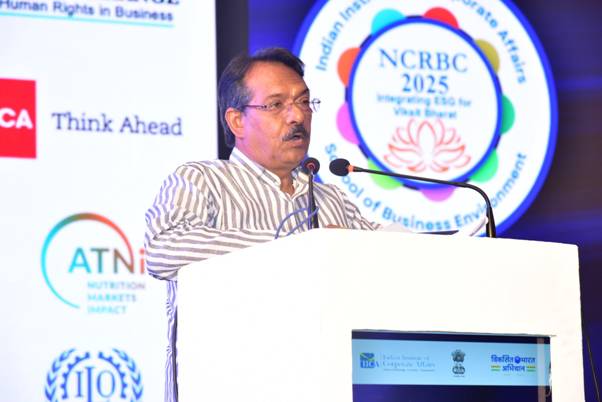
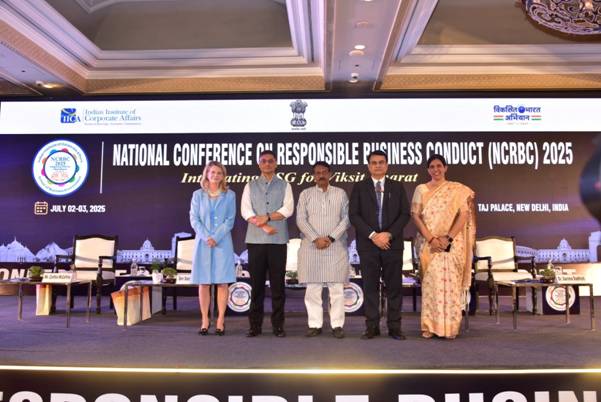
The third edition of the National Conference on Responsible Business Conduct (NCRBC) 2025 was inaugurated by Shri Harsh Malhotra, Minister of State for Corporate Affairs and Road Transport & Highways, Government of India, on 2nd July at the Taj Palace, New Delhi. Organised by the Indian Institute of Corporate Affairs (IICA), an autonomous institution under the Ministry of Corporate Affairs, the two-day flagship national conference is being held under the theme “Integrating ESG for Viksit Bharat.”
WhatsApp Image 2025-07-03 at 11.14.50 AM.jpeg

Addressing a distinguished audience comprising 300 plus senior corporate leaders, ESG (Environmental, Social, and Governance) professionals, policymakers, and international delegates, th Minister emphasised that India is transitioning from a regime of regulatory prosecution to one of trust-based corporate governance. He observed that responsible business conduct is no longer peripheral to business strategy, but foundational. He also asserted that “India is no longer catching up, India is ready to lead”. Reflecting on the spirit of ‘Vasudhaiva Kutumbakam,’ he noted that the Indian approach to ESG is not merely ‘climate-first’ but ‘climate-plus,’ integrating environmental stewardship with social inclusion, ethical governance, and intergenerational equity.

He highlighted several reform milestones of the Ministry, including the introduction of the National Guidelines on Responsible Business Conduct (NGRBC), Business Responsibility and Sustainability Reporting (BRSR), MCA21 Version 3.0 for digital governance, and the decriminalisation of over 180 statutory provisions through the Jan Vishwas Act. Applauding IICA’s contributions in strengthening board ethics and capacity-building, he remarked that the transition from compliance to conscience must be institutionalised across all business forms, including startups, MSMEs, and listed entities alike.

Delivering a special address, Shri Sanjeev Sanyal, Member of the Economic Advisory Council to the Prime Minister of India, brought a historical and analytical lens with his remarks, cautioning against the indiscriminate import and application of subjective ESG metrics, motivated and influenced by the developed world without reference to India’s priorities. He stressed the need for robust, context-specific and just indicators that reflect India’s developmental priorities and aspirations while cautioning against global indices that often undervalue grounded and situational responsible business conduct. Revering to India’s rich Indian history, he observed that Kautilya’s Arthashastra already embedded principles similar to modern ESG ethos, affirming that India possesses a civilisational heritage of ethical governance and responsible conduct. He urged stakeholders to pursue ESG pathways that are not only compliant but economically and socially coherent within India’s unique institutional context.

Thereafter, in her special address, Ms. Cynthia McCaffrey, UNICEF Representative to India, emphasised that ESG frameworks must reflect the lived realities of families and children. She asserted, “ESG is incomplete without healthy children and families,” and called for businesses to align their governance and social strategies with the rights of the youngest and most vulnerable stakeholders. Noting that inclusive development cannot ignore the social foundations of sustainability, she urged corporate actors to integrate child rights, access to nutrition, education, and community resilience deeper into the broader responsible business conduct architecture.

Shri Gyaneshwar Kumar Singh, Director General and CEO of IICA,  delivered a visionary Welcome address, reiterating India’s imperative to develop indigenous ESG frameworks rooted in national development goals. While charting the decade long history of initiating timely actions by Ministry of Corporate Affairs and IICA to strengthen the ESG framework in India, Shri Singh stated that imported templates would prove to be inadequate to address India’s diverse business ecosystem, while suggesting robust, evidence-based strategic models must lead to future ecosystem of both voluntary ESG compliance and transformation. Underscoring IICA’s central role in ESG evidence-based research, policy advocacy, and targeted capacity-building, he affirmed that the Institute is committed to fostering a regulatory culture where trust, accountability, and innovation are mutually reinforcing.
WhatsApp Image 2025-07-03 at 11.14.49 AM.jpeg

Welcoming dignitaries and delegates, Prof. Garima Dadhich, Head of the School of Business Environment at IICA, highlighted the evolution of NCRBC from its first edition on “Embracing ESG in India” to this year’s focus on integration. She noted that “this year marks a shift from awareness to action, from commitment to convergence,” as ESG becomes embedded within India’s broader developmental discourse. She reaffirmed that IICA, through its School of Business Environment, resolves to serve as a national knowledge and action hub for mainstreaming responsible business conduct, developing sector-specific frameworks, and fostering ecosystem-wide collaboration.

Following the inaugural session, Day 1 of the conference featured four high-level thematic panels that explored key dimensions of ESG transformation. The first panel, “The Rise of ESG in the Boardroom,” initiating with a Key note Address from Smt. Ravneet Kaur, Chairperson, Competition Commission of India and National Financial Regulatory Authority (NFRA), brought together eminent representatives from the Mahindra Group, Engineers India Ltd, ICAI, NSE, and ONGC. The discussion focused on embedding ESG into corporate governance structures and strategic oversight, with emphasis on the fiduciary duties of boards in advancing sustainability objectives. The second panel, “Sustainable Finance: Transforming Capital for a Green Future,” examined how financial instruments such as green bonds, sustainability-linked loans, and impact investing are enabling the transition to a low-carbon economy. Participants from SEBI, NABARD, India INX, the Indian Banks’ Association, and CEEW highlighted that capital must now flow toward long-term societal impact, not just quarterly returns. The third session focused on the “Relevance of the EU Corporate Social Due Diligence Directive (CSDDD) for India,” where experts discussed the need for Indian exporters and value chain actors to proactively align with international due diligence standards in order to retain global market access. The final panel of the day, “Envisioning the Workforce of the Future in the Age of Disruptive Trends,” convened leaders from the skill development ecosystem, academia, and industry to explore strategies for integrating ESG into workforce planning, upskilling for green jobs, and designing inclusive employment models for a dynamic economic future.

With substantive participation of over 300 plus senior corporate leaders, ESG professionals, policymakers, and international delegates, and thought-provoking deliberations led by eminent experts, Day 1 of NCRBC 2025 laid a strong foundation for the sessions to follow. The second day will witness further discussions on decarbonising India’s industrial base, advancing sector-specific ESG adoption, aligning BRSR disclosures with global reporting frameworks, and building resilient and sustainable supply chains. A high-level diplomatic panel will engage with ambassadors from key partner countries to deliberate on multilateral cooperation for responsible and equitable economic systems. Therefore, with an elaborate two-day agenda, the IICA’s NCRBC 2025, with support from Ministry of Corporate Affairs and partner organisations such as UNICEF India, Partners-in-Change, ICAI, ACCA, Global Alliance for Improved Nutrition (GAIN), Access to Nutrition Initiative (ATNi), International Labour Organisation (ILO) and Responsible Business Alliance (RBA), aims to position responsible business conduct as integral to India’s journey toward becoming a developed, inclusive, and ethically grounded nation by 2047.

Topics

Acts Income Tax
